4 min read

© The Indian Express Pvt Ltd



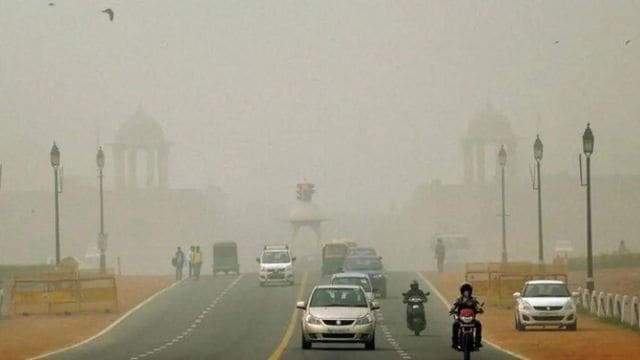 As Prof Valery writes in his paper, 2.5 micron particles are about 30 times thinner than a human hair that damage arterial cells directly or indirectly (for example, by triggering inflammation). (File)
If you think that smoking is a major risk factor for brain strokes and giving it up can prevent them, you may want to consider wearing a mask while stepping outdoors. That’s because for the first time, air pollution has been found to be an equal risk factor for subarachnoid haemorrhage, a kind of brain stroke that happens when blood vessels rupture between the brain and the tissues covering it.
A new global study, published in The Lancet Neurology Journal, has found that about 14 per cent of the death and disability caused by SAH in 2021 could be attributed to particulate matter air pollution. Researchers found this similar to the risk posed by smoking.
“Our study….. has shown that particulate matter air pollution is responsible for 2.6 million healthy life years lost due to death and disability from subarachnoid haemorrhage in 2021, which is one million more than that from smoking, another major risk factor for SAH,” says Prof Valery Feigin, Director, National Institute for Stroke and Applied Neurosciences, Auckland University of Technology, New Zealand and lead author of the study. He listed how pollutants like PM 2.5 damage the arterial cells, increasing the chance of rupture.
“We have long known that health conditions impacted by air pollution are essentially the same as those associated with smoking. The common villains are products of incomplete combustion that can trigger body inflammation,” says Prof Kalpana Balakrishnan, Dean (Research) Sri Ramachandra Institute of Higher Education and Research, Chennai.
Dr K Srinath Reddy, professor at the Public Health Foundation of India (PHFI), explains that exposure to air pollution means that a toxic mix of several noxious gases and small particulate matter clogs up the lungs. From there, they make their way into the bloodstream. “This toxic cocktail breaks down the lining of blood vessels.
Exposed blood vessels trigger blood clots to heal themselves. This risk is even greater if there is fatty tissue in the blood vessels. That fat forms plaques which rupture because of the chemical injury caused by pollutants. If the person is dehydrated and the blood is thickened, as often happens in hot weather, there is a higher risk of blood clots leading to strokes. Elderly persons, persons with pre-existing heart disease or diabetes and tobacco smokers are at a higher risk,” Dr Reddy says.
As Prof Valery writes in his paper, 2.5 micron particles are about 30 times thinner than a human hair that damage arterial cells directly or indirectly (for example, by triggering inflammation).
“Masking is not a solution because it is impossible to achieve exposure reductions for large populations with them. Emission reductions at source and use of cleaner technologies are a proven way. We just need to allocate sufficient resources to make green development possible,” Prof Balakrishnan says.
However, avoiding areas with high outdoor or indoor air pollution is essential. According to Dr Reddy, well- ventilated indoor spaces and outdoor environment with a good air flow and greenery reduce the level of pollution-related complications. “Wear a mask if you have to stay long in a polluted area. But preventing air pollution-related strokes requires both policy and personal level actions,” he adds.
Dr Balakrishnan points out that the concentrations of pollutants in unfiltered indoor spaces can be several-fold higher.