Taste of the soil: Writer Hansda Sowvendra Shekhar. (Source: Nidhi Dugar Kundalia)
In Jharkhand’s Moubhandar, where writer Hansda Sowvendra Shekhar grew up, and where his parents worked — his father at Hindustan Copper Ltd and his mother at its Moubhandar Works Hospital — Shekhar would mostly be at liberty to fill up his free time with imaginative enterprises of his own. His school, St Joseph’s Convent High School, was 8 km away in Mosabani; Moubhandar itself was nondescript but for its proximity to the nearest railway station at Ghatshila. So, Shekhar did what many single children do — entertained himself as best as he could after school. “I played with imaginary friends — I imagined I was a teacher and my imaginary friends were my students…. Mine was an okay-ish childhood and I was an okay-ish child,” says the 35-year-old Santhal writer and doctor, who won the Sahitya Akademi Yuva Puraskar for his debut novel The Mysterious Ailment of Rupi Baskey (2014).
There were books, though, in plenty. “I think everyone in my family was a reader and a storyteller. In the 1980s, there was Good Books, a famous book shop in Ranchi. My mother used to buy me a lot of books from there, mostly published by the Children’s Book Trust (CBT). I remember being an absolute fan of the Pauranik Kathayein series — they had amazing illustrations by Pulak Biswas. I read comics: Chacha Chaudhary, Nagraj, Billoo, Pinki, Super Commando Dhruva, Archie, Betty and Veronica, Fighter Toads, and others; illustrated fairy-tale books printed in Belgium, and abridged editions of classics published by Moby Books. I was and still am a huge fan of Nancy Drew. I remember reading Enid Blyton’s Malory Towers and St. Clare’s books — and learning the word ‘felicity’ from there. I read Poile Sengupta, Anuradha Khati Rajivan, AK Srikumar, Ira Saxena, Deepa Agarwal, Swapna Dutta, and other authors. I read magazines like Champak, Chandamama, Nandan, Nanhey Samrat, Balhans, Parag, Gokulam, Children’s World, Quest Junior, and that unforgettable Russian magazine, Misha. In my teens, I read Teens Today. I had a huge fascination for ghost stories, the scarier the better, so I always demanded ghost stories at bedtime,” he says.
Soon, he would realise, there were other perks to being an only child. The world lent itself to deeper observation — and the land, its people, myths, folktales, schisms and bonds, opened up for interpretation to his fertile imagination. Much before he would write his acclaimed collection of stories, The Adivasi Will Not Dance (2015), Shekhar would first try his hand at writing when he was 15 years old. It was the story about a teenaged boy, Amit, and was published in the school page of a national daily in December 1998. “So, my first published work was actually a story for children,” he says.
Hansda Sowvendra Shekhar’s new book. (Source: Nidhi Dugar Kundalia)
Last year, a virulent online campaign against him by both indigenous and non-tribal people on charges of dishonouring Santhal women resulted in a ban on The Adivasi Will Not Dance and his suspension as a doctor at the Pakur government hospital by the Jharkhand government. Many upheavals later, The Adivasi Will Not Dance was finally cleared of charges of obscenity in December and he has also just been reinstated in his job, though no longer at Pakur. And Shekhar has again turned to writing for children.
His just-released Jwala Kumar and the Gift of Fire: Adventures in Champakbagh (Talking Cub) is the story of the Chandar family in the imaginary village of Chambakbagh, who stumble across a mysterious creature one stormy night and offers it shelter, and, later, a home. The creature — not quite bat, chameleon, or a bird — is unlike anything they have ever seen, and, as they forge a tentative bond with it, they are astonished by its many powers, chief among which is its ability to spew fire. In their impoverished lives and in their forgotten village, where even basic civic amenities such as electricity or a proper road have not reached, the creature, whom they name Jwala Kumar, brings warmth and hope.
The decision to write a book for children, Shekhar says, was quite inadvertent and had nothing to do with the controversies that he found himself mired in after the publication of his second book. “I wrote Jwala Kumar… in November 2017. There was a longish period of unseasonal rainfall at that time — it was a cyclone in the Bay of Bengal — and I was watching the first season of HBO’s Game of Thrones (GoT). I think, that weather along with some GoT-inspired imagination prompted me to write Jwala Kumar’s story,” he says.
The inequalities of life, especially of the Adivasi people, and his own privilege are things that have never escaped Shekhar’s attention. Like his works for adults, Jwala Kumar…, too, is rooted in tribal life and the daily struggle of the Adivasis for a life of dignity. Which is why, when the uproar over The Adivasi Will Not Dance began, it first flummoxed him, and has now left him cautious. What does one do when a section of one’s own people turn on you or refuse to defend you without having read your work or deliberately read it out of context? In past literary meets, Shekhar has spoken of how the outrage caught him by surprise, but also steeled his resolve to keep writing. “Before I started writing Jwala Kumar… I was putting together a collection of stories for adults, writing new stories, editing previously written ones. The book of stories for adults readers will be published, hopefully, by year end. The working title right now is My Father’s Garden,” he says.
Story continues below this ad
He has also joined his new workplace, a government hospital in another town, settling down to the rhythms of an old life and a new place. Does he feel vindicated, now that he has been cleared of all charges? “I feel relieved, not vindicated. I don’t think vindication is that easy to achieve,” he says.


 6 min read


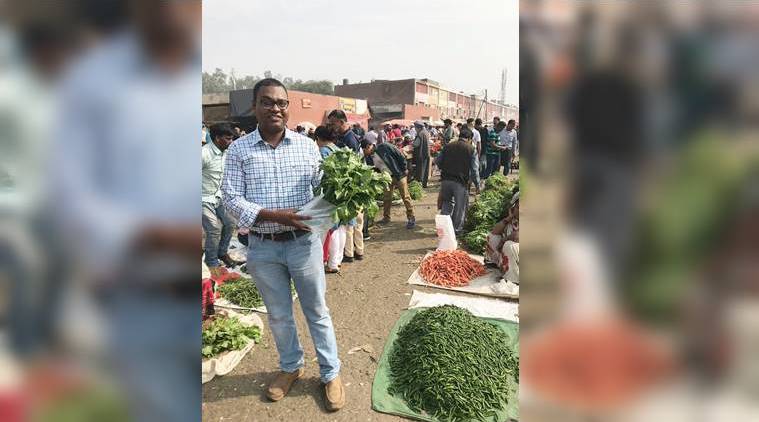 Taste of the soil: Writer Hansda Sowvendra Shekhar. (Source: Nidhi Dugar Kundalia)
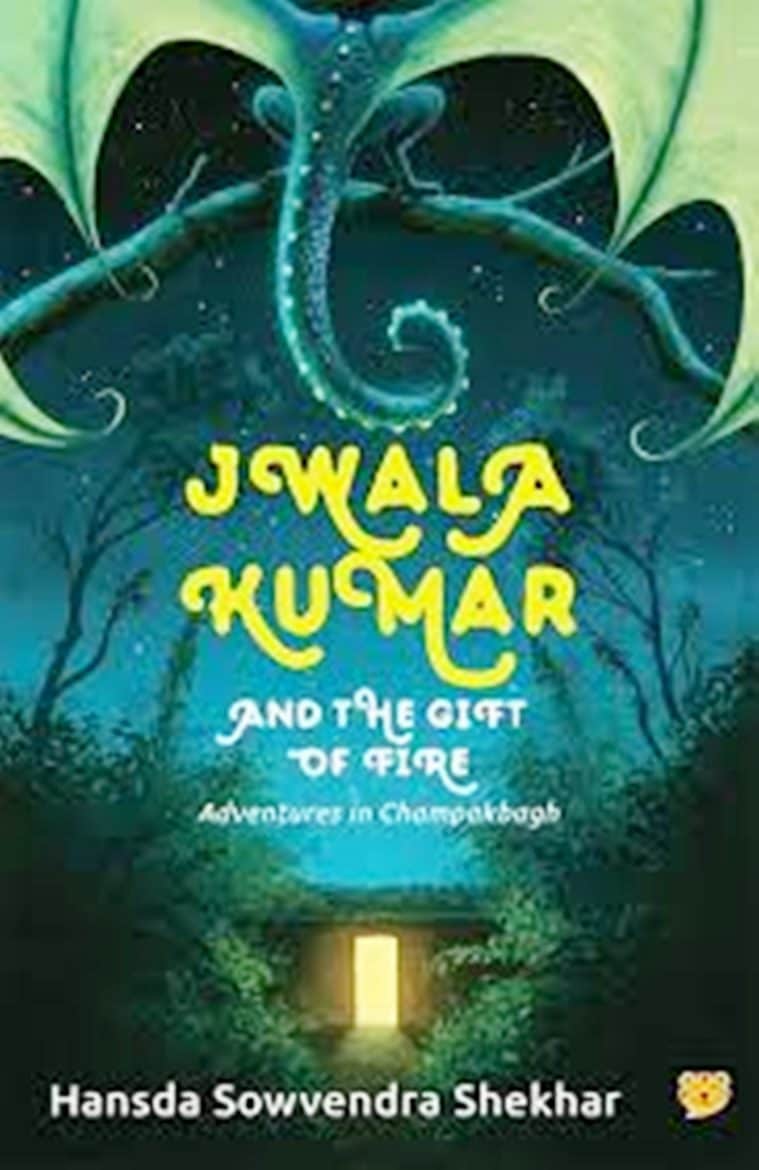 Hansda Sowvendra Shekhar’s new book. (Source: Nidhi Dugar Kundalia)