3 min read

Journalism of Courage



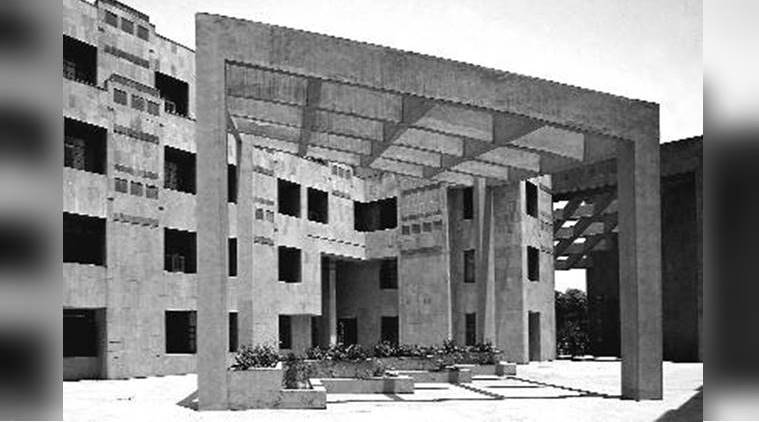 School for thought: CP Kukreja carefully built JNU over three decades.
Vice Chancellor G Parthasarathi was at his office in Jawaharlal Nehru University (JNU) when architect CP Kukreja rushed inside. It was the first student election on campus in 1971 and the newly-done brick buildings were plastered with posters. They will spoil the building, he lamented. The mild-mannered Parthasarathi replied, “This is a campus in a democracy. Let the buildings speak to the students. Let it become their canvas.”
When JNU was established in 1969, it became India’s first institution of interdisciplinary studies where applied sciences, social sciences, and humanities intermingled. At the time, Kukreja was 32 years old, and this was his first project, which he won through an international design competition. Dikshu C Kukreja remembers his father telling him stories of how people were initially apprehensive about giving the job of building the largest university of independent India to a young architect. However, Kukreja’s novel ideas and his departure from expected norms of learning gave him the required leeway to build on the site for the next three decades, work for which began in 1970.
“He had carefully studied the undulating, forested site. He didn’t want to flatten the site so he built along its terraced slopes. He had intended it to be a network of water bodies and green ecosystems, that would cover the 1,000- acre campus, between which the buildings would sit. For him, it was not just a campus, but how a living could be transformed,” says Dikshu.
Kukreja used brick to fashion all the buildings and in keeping with his belief in tropical architecture, Kukreja gave inset windows to provide shadows. “The university was meant to demonstrate the capabilities of a young, modern India, removed from the shackles of colonialism, yet one that would not romanticise the past. Therefore, he didn’t want to borrow from colonial architecture nor provide jaalis and chajjas, which were symbolic of our architectural heritage,” says Dikshu.
A departure from other universities, both in India and abroad, was Kukreja’s placement of housing for faculty and students. His philosophy was that learning happened outside classrooms, so Kukreja created villages around the nucleus of the academic block — where faculty and students could be housed nearby, rather than separated from each other. To give scope of a more fluid academic exchange, these 16 villages would, thus, accommodate 600 students and 150 faculty residences.
The campus is now home to six academic blocks, the library building that stands the tallest like a beacon, a lecture and theatre complex, an administrative centre, and a student activity centre, besides its residential enclaves.