9 min read

© The Indian Express Pvt Ltd



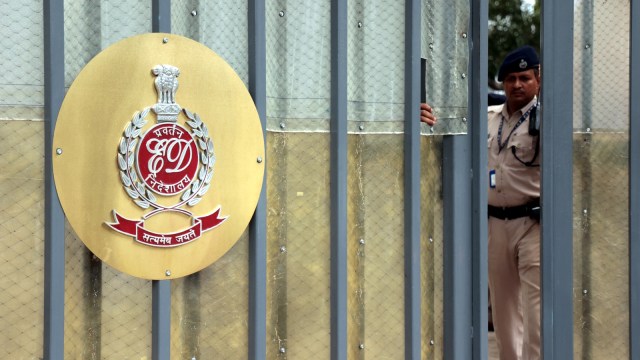 Crypto scams involving Indian operators were busted by agencies in India and the US. (Express photo/File)
From a Haldwani operator caught in a drugs racket who surrendered cryptocurrency worth $150mn to US authorities to the largest single-day crypto seizure in India of Rs 1,646 cr; from a Haryana businessman jailed in the US for stealing $37mn from crypto wallets to a former engineer with an IT major who created an in-house cryptocurrency that collapsed.
These are just some of the mega crypto scams allegedly involving Indian operators that were busted by agencies in India and the US, according to records reviewed by The Indian Express as part of The Coin Laundry, an investigation in association with the International Consortium of Investigative Journalists (ICIJ) on how the crypto industry has profited from illicit financial flows.
Largest crypto seizure in US drugs case — from an Indian
Facing charges of allegedly laundering the proceeds of a drugs racket through the crypto route, Banmeet Singh was arrested in London in 2019 and extradited to the US four years later. In January 2024, he pleaded guilty in a US court and agreed to surrender cryptocurrency worth $150mn — “the largest single crypto currency financial seizure” in the history of the Drug Enforcement Administration (DEA).
Following requests from the US authorities, arrests and raids were conducted in India. The ED’s prosecution complaint states “the Singh organization received drug trafficking proceeds, including in the form of cryptocurrency, and laundered these proceeds through cryptocurrency wallets”. According to US and Indian agencies, Banmeet and his family members allegedly converted earnings from a drugs racket into 8,088 Bitcoins of which the ED admits 4,250 are still untraced. One Bitcoin is currently worth over Rs 90 lakh.
Banmeet is lodged in a Dehradun jail. His lawyer Aditya Singh said their plea for bail and quashing of the case were pending in the Uttarakhand High Court. “This is a case of double jeopardy. After facing trial in the US, he cannot be prosecuted again,” the lawyer said.

Largest single-day crypto seizure: Rs 1,646 crore
In September 2021, the US Securities and Exchange Commission (SEC) filed a complaint against Gujarat-based Satish Kumbhani and his US-based associates for allegedly collecting $2.4 bn from investors from 2016-2018 through a “lending programe” using a digital token called “BitConnect Coin (BCC)” on a blockchain he had developed.
According to the SEC, Kumbani and his associates posted “sham” returns on the BitConnect website, showing an average 1% daily profit. In January 2018, the Texas Securities Board issued a cease-and-desist order against BitConnect. Within days, the company halted its scheme, and BCC’s price lost 92% of its value.
Kumbhani was arrested in India in 2019 and was out on bail a year later. When Kumbhani’s associates pleaded guilty in the US, the Department of Justice (DoJ) described it as “the largest crypto currency fraud ever charged”.
In India, the case made ripples when an investor approached the Gujarat police and filed a complaint for losses via BitConnect. The case led to another record when the ED said in February that it had seized crypto currency worth Rs 1,646 crore in a day from devices linked to Kumbhani. Kumbhani’s representatives could not be reached for comment.
How $37mn was stolen from crypto wallets
In May last year, a Haryana businessman Chirag Tomar pleaded guilty in the US to stealing more than $37mn from cryptocurrency wallets of 542 victims worldwide. Tomar was allegedly operating counterfeit websites since 2021 until a victim in North Carolina, from whose wallet $240,000 was stolen, blew the whistle. In December 2023, Tomar was arrested at the Atlanta airport while entering the US. In May 2024, he pleaded guilty to “wire fraud conspiracy” and was sentenced to five years in prison.
The DoJ said Tomar allegedly used log-in details of victims to transfer their cryptocurrency to wallets controlled by him. “…he would convert it to other forms of cryptocurrency and move the funds amongst other wallets. Ultimately, the cryptocurrency was converted into cash which was then distributed to Tomar and his co-conspirators,” the DoJ said. Following a request from the US, the ED attached assets totalling Rs 42.8 crore belonging to Tomar and other accused in August.
Tomar is in custody in the US. On November 12, the ED moved for attachment of assets valued at Rs 21 crore in the case, taking the total attachments to Rs 64 crore.
Textbook case of ‘international hawala using crypto’
A prominent case in which the alleged proceeds of crime were converted into crypto currency and later into local currency allegedly involved a company called Birfa IT solutions Pvt Ltd, according to an Enforcement Case Information Report (ECIR) filed by the ED in 2024. The firm allegedly sold a large amount of cypto assets and encashed Rs 1,858 crore from an Indian exchange, the ED stated.
The ED’s 204-page complaint stated that the case “indicated a dangerous scenario of international hawala using crypto transactions”. According to the ED, over Rs 4,000 crore of “international hawala” had allegedly been transacted by the firm’s owner, Manideep Mago, and his associates through various methods, including fabrication of invoices and shell companies. More than 7,000 fake customer profiles had been created for the deposits, the ED alleged. The complaint stated that Mago allegedly manipulated funds worth Rs 4,962 crore through cash collections and payouts from sale of cryptocurrency.
Mago has been in prison since May 2024, with his plea for quashing the case pending before the Supreme Court. His lawyer Vikram Chaudhari said, “The course of investigation and its conclusion is neither borne out by facts nor by the prosecution in accordance with provisions of anti-money laundering laws.”
Rs 444-cr crime proceeds converted to crypto
In its 216-page complaint filed in an alleged loan and investment fraud in Kerala and Haryana, the ED stated in January 2024 that proceeds of crime amounting to Rs 444 crore were allegedly used to purchase Virtual Digital Assets (VDAs) on an Indian exchange by using as many as 439 mule crypto accounts arranged by the accused, Sayid Muhammad M M and Varghese T G, among others.
Later, the ED complaint stated, the cryptocurrency was allegedly “siphoned off” to six crypto wallets based abroad. The ED’s complaint alleged that Varghese “actively” diverted proceeds of crime to the tune of Rs 275 crore by arranging crypto accounts and Sayid Muhammad diverted proceeds of crime to the tune of Rs 169 crore.
According to the ED, it was informed by the Indian exchange that 237 accounts were allegedly “involved in routing and siphoning off the money outside India by transferring the cryptocurrencies in foreign wallets…(and) USDT was purchased for Rs 790 crore…” USDT refers to stablecoins from the US-based firm Tether. The accused did not respond to queries mailed by The Indian Express. When contacted, Varghese said he had “no comment”.
Returns paid via in-house crypto that collapsed
Prosecution complaints filed in India and indictments in the US related to a Gainbitcoin case pointed to a multi-level marketing scheme running since 2015 through Variable Pvt Ltd, a Singapore company set up by Amit Bharadwaj, a former Infosys engineer.
ED records show Bharadwaj allegedly entered into Bitcoin cloud mining contracts through a network of commission agents, offering 10% monthly profit with payments routed through an Indian exchange. In 2017, without the promised returns, Amit Bhardwaj and his associates launched their own crypto-currency “Mcap”.
The ED’s complaint alleged that “the exchange rates of the said crypto currency token MCap became very negligible…the fund was embezzled and misappropriated by Amit Bharadwaj.’’ At least 39 FIRs were filed against Variable and Gainbitcoin with the number of victims pegged at 8,000. The estimated number of Bitcoins collected by the scammers: 80,000 with the market value of Bitcoin at the time of the offence standing at Rs 8,25,000 each.
In 2018, Bharadwaj was arrested in Bangkok and brought to India. He was granted bail the following year and died in 2022. Of the 39 FIRs, 10 were transferred to the CBI which conducted searches in over 60 locations all over India in February. The agency stated that they had seized “cryptocurrencies worth Rs 23.94 crore and multiple hardware crypto wallets using in-house capabilities”.
Prashant Patil, lawyer for another accused in the case, said they were expecting the ED and CBI cases to be clubbed. “No charges have been framed yet,” the lawyer said.
In a first – Rs 53 lakh crypto recovered
One of the earliest instances of agencies seizing cryptocurrency linked to an investigation involved a money laundering case with fake imports and shell companies allegedly opened in countries such as UAE, Hongkong, China, Singapore and Malaysia.
According to ED, one of the main accused, Asish Kumar Verma, created cryptocurrency accounts on several Indian exchanges using the identities of second and third-layer shell entities. Such accounts were also opened under the names of individuals associated with the shell entities in foreign exchanges.
With the Indian exchanges sharing details of these accounts, the agency found “residual” digital money totalling Rs 53.53 lakh in one exchange while other crypto accounts were “practically empty”. The money found was just a tiny fraction of the proceeds of the crime, which investigators estimated was over Rs 680 crore.
Verma, who is on bail after spending seven months in jail, told The Indian Express, “The attachment of crypto may have been done by the ED but none of those transactions are mine.” His lawyer Shailender Singh said charges are yet to be framed.