This is an archive article published on May 6, 2020
Who was Riyaz Ahmad Naikoo, the Hizbul Mujahideen commander?
Riyaz Naikoo killed in encounter: Naikoo became one of the most wanted militants and the government announced a cash reward of Rs 12 lakh for any information leading to him.
The Pakistan-backed militant outfit turned to Naikoo, naming him chief of its operations in the Valley with the additional task of regrouping its ranks.
Under Naikoo, who now went by the name of Mohammad bin Qasim, the Hizb soon returned to the centrestage of militancy in the Valley and he showed up on the radar of every security agency.
According to police, Naikoo was the man behind a string of attacks on police, security forces and civilians including the killing of six migrant labourers in Kulgam, fruit traders and a trucker in Shopian following the abrogation of J&K’s special status last year and the killing of a sarpanch and two civilians.
Police say Naikoo ordered the abduction of policemen and the looting of nine weapons from the Srinagar residence of a former PDP MLA.
In 2018, he had ordered the abduction of family members of J&K police personnel in retaliation for the detention of his father, Assadullah Naikoo (70), by police. Over a dozen family members of policemen were kidnapped by militants from across South Kashmir. After his father was released, the kin of policemen returned home.
Story continues below this ad
📢 Express Explained is now on Telegram. Click here to join our channel (@ieexplained) and stay updated with the latest
Naikoo became one of the most wanted militants and the government announced a cash reward of Rs 12 lakh for any information leading to him.
From Beighpora village in Awantipora in south Kashmir, Naikoo acquired a degree in mathematics and taught the subject at a local school.
But on June 1, 2012, he disappeared – his family alleged he was harassed and beaten by police. And when he resurfaced, he was carrying a gun. In the next five years, he rose up the Hizb ranks.
Story continues below this ad
Naikoo’s elevation was also nudged by a churning within the militant outfit. When Hizb commander Zakir Rashid Bhat alias Zakir Musa swore allegiance to the al-Qaeda in the Indian Subcontinent (AQIS) and announced that he wanted to establish an Islamic caliphate, he pitted himself against the separatist leadership.
The Hizb fielded Naikoo as its face with the instruction that he keep its ranks intact because a split seemed inevitable after Zakir Musa’s decision to part ways.
Naikoo began uploading photographs of militant recruits on social media and began the practice of offering gun salutes to militants killed in gunbattles.
Bashaarat Masood is a Special Correspondent with The Indian Express. He has been covering Jammu and Kashmir, especially the conflict-ridden Kashmir valley, for two decades. Bashaarat joined The Indian Express after completing his Masters in Mass Communication and Journalism from the University in Kashmir. He has been writing on politics, conflict and development. Bashaarat was awarded with the Ramnath Goenka Excellence in Journalism Awards in 2012 for his stories on the Pathribal fake encounter.
Expertise and Experience
Two Decades of Frontline Reporting: Bashaarat has spent 20 years documenting the evolution of Kashmir, from high-intensity conflict and political shifts to socio-economic development.
Award-Winning Investigative Journalism: He is a recipient of the prestigious Ramnath Goenka Excellence in Journalism Award (2012). This honor was bestowed for his reporting on the Pathribal fake encounter, a series of stories that highlighted his ability to handle sensitive human rights and security issues with investigative rigor.
Specialized Beats: His authoritative coverage spans:
Political Transitions: Tracking the shift from statehood to Union Territory, electoral dynamics, and the pulse of local governance.
Security & Conflict: Providing nuanced reporting on counter-insurgency, civil liberties, and the impact of the conflict on the civilian population.
Development: Documenting the infrastructure, healthcare, and educational landscape within the Valley.
Academic Background: He holds a Masters in Mass Communication and Journalism from the University of Kashmir, providing him with a localized academic and professional foundation that is rare in regional reporting. ... Read More


 3 min read


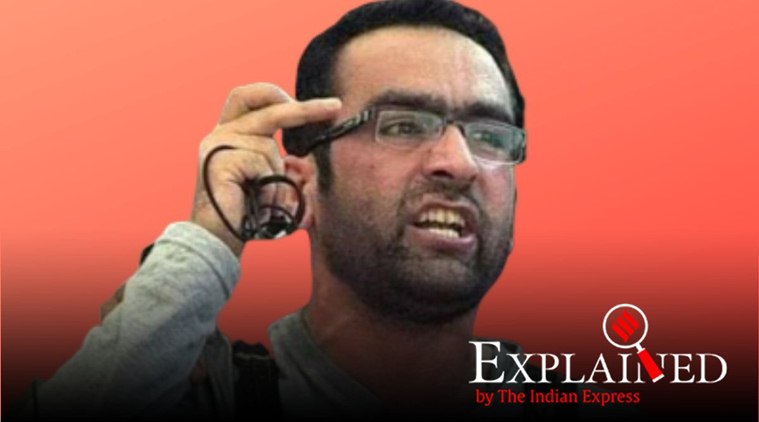 Hizbul Mujahideen chief Riyaz Naiqoo was killed in an encounter with security personnel today. Image: Twitter/IjoydeepRoy