Premium
This is an archive article published on November 3, 2020

Explained: What the largest study on dementia hopes to achieve

Dementia is quite widespread, with over five million people suffering in India alone, a figure set to cross 10 million by 2040. Dementia mainly affects older people, but it is not a normal part of ageing.

According to the World Health Organisation, dementia is a syndrome in which there is deterioration in memory, thinking, behaviour and the ability to perform everyday activities. 
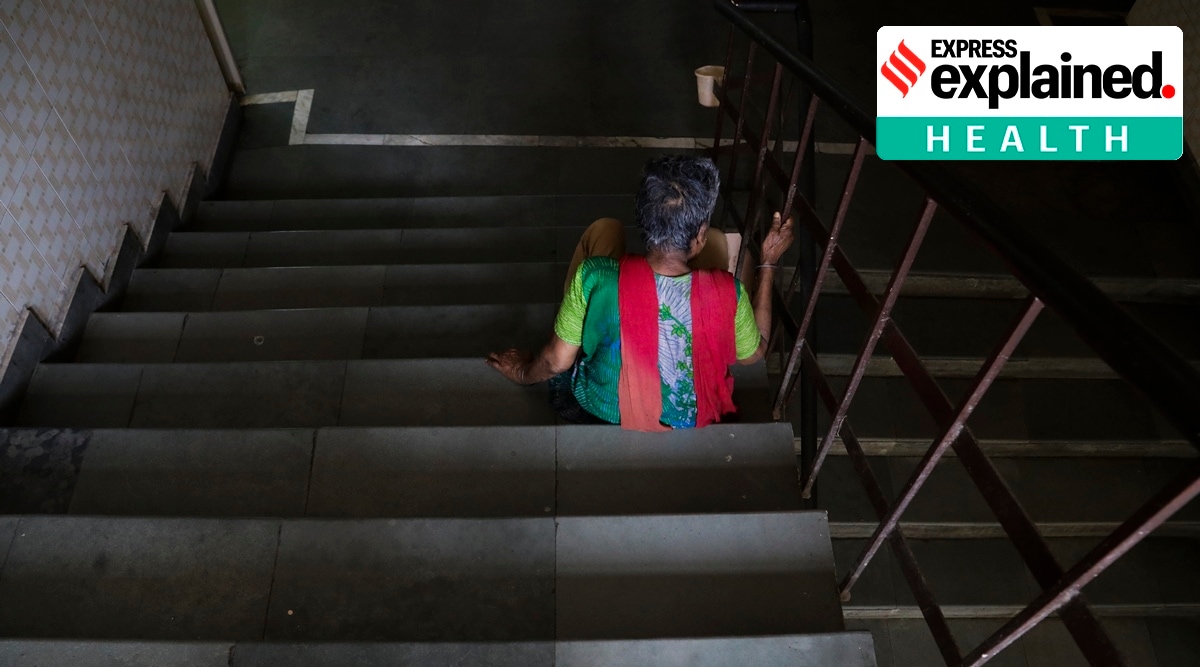
 (Express Photo: Abhinav Saha, Representational)According to the World Health Organisation, dementia is a syndrome in which there is deterioration in memory, thinking, behaviour and the ability to perform everyday activities. (Express Photo: Abhinav Saha, Representational)

Sean Connery, the legendary Scottish actor who died at the age of 90, suffered from dementia, according to reports. Dementia is quite widespread, with over five million people suffering in India alone, a figure set to cross 10 million by 2040. Dementia mainly affects older people, but it is not a normal part of ageing.

The Bengaluru-based Centre for Brain Research is conducting a study of 10,000 rural Indians to understand the risk and protective factors associated with normal ageing, dementia and related disorders.

Dementia: Burden of the disease

Dementia is a general term to describe a group of symptoms which occurs due to the damage and death of brain cells. According to the World Health Organisation, dementia is a syndrome in which there is deterioration in memory, thinking, behaviour and the ability to perform everyday activities. Worldwide, around 50 million people have dementia, and there are nearly 10 million new cases every year — implying one new case every 3.2 seconds. It is estimated that 5.3 million people above the age of 60 have dementia in India in 2020. This equals to one in 27 people, according to the Dementia in India 2020 report. Alzheimer’s dementia is the most common type of dementia.

Dementia robs the person not only his memories and personality but often his dignity as well. Stigmatisation, lack of adequate services, barriers to access available services all worsen the physical, psychological and financial hardships of the families, according to Dementia in India report 2020. 📣 Express Explained is now on Telegram

The SANSCOG study

A complete understanding about the cause of dementia remains elusive. It commonly occurs after middle age as a result of neurodegenerative and cerebrovascular processes beginning earlier in the life course. Hence , Srinivaspura Ageing, Neuro Senescence and Cognition (SANSCOG), a first-of-its-kind study in 10,000 rural Indians in Srinivaspura, Kolar district, Karnataka aims to understand risk and protective factors associated with normal ageing, dementia and related disorders. The study is being carried out by the Centre for Brain Research, Indian Institute of Science, Bangalore, India, in collaboration with the National Institute of Mental Health and Neurosciences (NIMHANS), Bangalore and Sri Devaraj Urs Academy of Higher Education and Research (SDUAHER), Kolar.

“We are conducting detailed, multimodal assessments that include clinical, neurocognitive and biochemical, genetic and brain imaging measurements on 10,000 residents of Srinivaspura, aged 45 years and above, and following them up over a long period of time,” says Dr Vijayalakshmi Ravindranath, Director, Centre for Brain Research. The study is planned as a longitudinal study where participants will be periodically followed-up over a long period of time (at least 10 years).

Also in Explained | Why headers in football are coming under scrutiny after Charlton’s dementia diagnosis

Study could give vital clues on new strategies

Story continues below this ad

Data from the developing world, especially India, is sparse in the field of dementia research and such comprehensive, longitudinal evaluations spanning genotype to phenotype would help to better understand gene-environment interactions, which in turn could provide vital clues to initiate strategies targeted at prevention of cognitive decline and dementia, says Dr Jonas Sundarakumar, scientific officer, Grade 1 at the Centre for Brain Research. The recruitment started in 2018 and there are around 2,200 participants so far. Over 1,850 participants have completed comprehensive, baseline, clinical, cognitive and biochemical assessments, and follow-up assessments have recently started.

Differences in cardiovascular risk factors

Preliminary unpublished data from the SANSCOG study, when compared with data from the parallelly-running, urban study (Tata Longitudinal Study of Ageing) shows that there are significant differences in the cardiovascular risk factors such as hypertension, diabetes, hypercholesterolemia and obesity between the rural and urban population, with the urban population having a much higher prevalence of these vascular risk factors. How these differences in cardiovascular risk factors play out in the differential risk for developing dementia and related disorders remains to be seen, as we regularly follow-up these ageing cohorts, the study researchers said.

Top challenges in dementia care

Lack of awareness is a major concern, Dr Sridhar Vaitheswaran, Assistant Director & Consultant Psychiatrist, Dementia Care in SCARF – Schizophrenia Research Foundation (SCARF) India said. Other challenges include lack of manpower and day centres.

Multi-country study underway on Cognitive Simulation Therapy

Story continues below this ad

Like diabetes has no cure but can be controlled, there are interventions that can control dementia, Dr Sridhar said. A multi-country study on Cognitive Simulation Therapy (CST) for Dementia is underway in India- Brazil- Tanzania. CST is a brief group-based pyschosocial intervention for people living with mild to moderate dementia. There is consistent evidence for the effectiveness of CST but less is known about its implementation to routine clinical care and the multi country study aims to create an ongoing sustainable CST implementation programme to increase quality of life and cognition for people with dementia, said Dr Sridhar, one of the co-investigators of the UK Medical Research Council and Indian Council of Medical Research-funded study.

Anuradha Mascarenhas is a Senior Editor at The Indian Express, based in Pune. With a career spanning three decades, she is one of the most respected voices in Indian journalism regarding healthcare, science and environment and research developments. She also takes a keen interest in covering women's issues . Professional Background Education: A gold medalist in Communication and Journalism from Savitribai Phule Pune University and a Master’s degree in Literature. Author: She authored the biography At The Wheel Of Research, which chronicles the life and work of Dr. Soumya Swaminathan, the former Chief Scientist at the WHO. Key Focus: She combines scientific accuracy with storytelling, translating complex medical research into compelling public and human-interest narratives. Awards and Recognition Anuradha has won several awards including the Press Council of India's national award for excellence in journalism under the gender based reporting category in 2019 and the Laadli Media award (gender sensitivity -2024). A recipient of the Lokmat journalism award (gender category-2022), she was also shortlisted for the RedInk awards for excellence in journalism-2021. Her debut book At The Wheel Of Research, an exclusive biography of Dr Soumya Swaminathan the inaugural chief scientist of World Health Organisation was also nominated in the Popular Choice Category of JK Paper AUTHER awards. She has also secured competitive fellowships including the Laadli Media Fellowship (2022), the Survivors Against TB – New Research in TB Media Fellowship (2023) and is part of the prestigious 2025 India Cohort of the WomenLift Health Leadership Journey.” Recent Notable Articles (Late 2025) 1. Cancer & Specialized Medical Care "Tata Memorial finds way to kill drug-resistant cancer cells" (Nov 26, 2025): Reporting on a breakthrough for triple-negative breast cancer, one of the most aggressive forms of the disease. Discipline, diet and purpose; How a 97-year-old professor defies ageing'' (Nov 15, 2025) Report about Prof Gururaj Mutalik, the first Head of Department at Pune's B J Government Medical College who at 97 credits his longevity to healthy habits and a strong sense of purpose. 2. Environmental Health (The "Breathless Pune" Series) Long-term exposure even to 'moderate' air leads to chronic heart, lung, kidney issues" (Nov 26, 2025): Part of an investigative series highlighting that even "safe" pollution levels are damaging to vital organs. "For every 10 µg/m3 increase in PM2.5 level, there was 6-8% jump in medicine sales" (Nov 23, 2025): Using commercial data to prove the direct link between air quality and respiratory illnesses in Pune. 3. Lifestyle & Wellness News "They didn't let cancer, diabetes and heart disease stop them from travelling" (Dec 22, 2025): A collaborative piece featuring survivors who share practical tips for traveling with chronic conditions. At 17, his BP shot up to 200/120 mmHG; Lancet study flags why child and teen hypertension doubled between 2000 and 2020'' (Nov 12,2025)--A report that focusses on 17-year-old-boy's hypertensive crisis and reflects the rising global trend of high blood pressure among children and adolescents. 4. Scientific Recognition & Infrastructure For promoting sci-comm, gender diversity: IUCAA woman prof highlighted in Nature" (Nov 25, 2025): Covering the global recognition of Indian women scientists in gender studies and physics. Pune researchers find a spiral galaxy like the Milky Way from early universe'' (December 3, 2025)- A report on how Indian researchers discovered a massive galaxy that existed when the universe was just 1.5 billion years old , one of the earliest to have been observed so far. Signature Beat: Health, Science & Women in Leadership Anuradha is known for her COVID-19 reportage, where she was one of the first journalists to provide detailed insights into the Covishield and Covaxin trials. She has a dedicated interest in gender diversity in health and science, often profiling women researchers who are breaking the "leaky pipeline" in STEM fields. Her writing style is scrupulous, often featuring interviews with top-tier scientists and health experts from various institutions.   ... Read More


Latest Comment
Post Comment
Read Comments
Advertisement
Advertisement
Advertisement
Advertisement