


© The Indian Express Pvt Ltd
Tags:


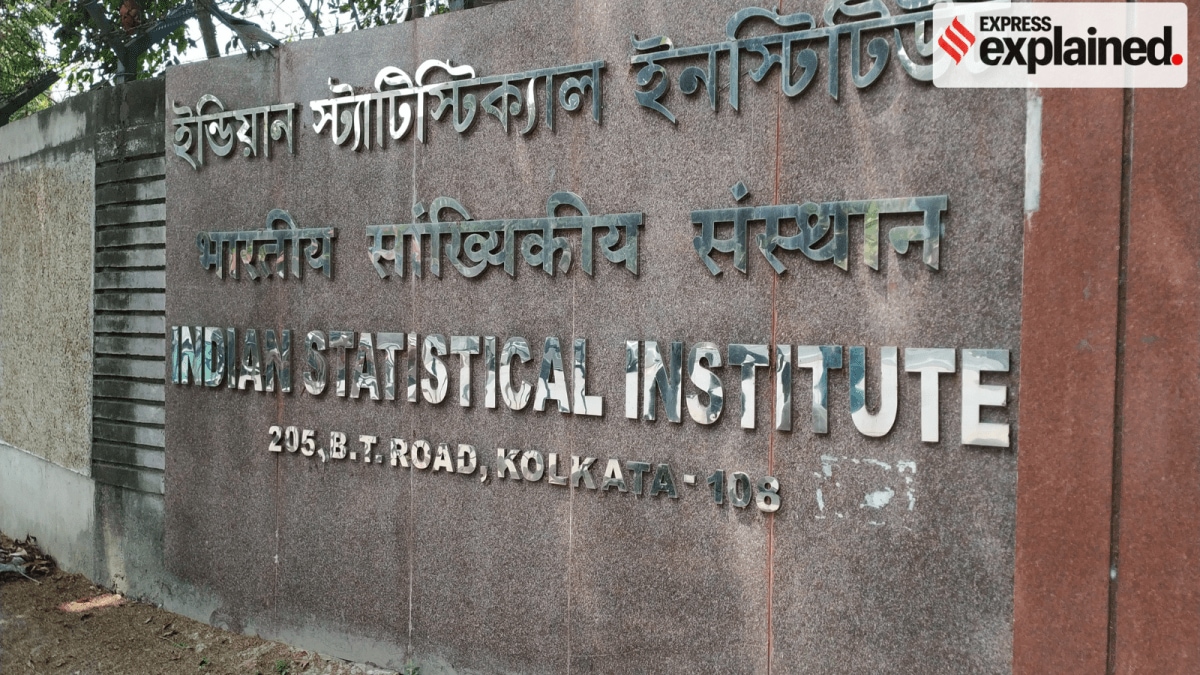
The Centre’s draft Indian Statistical Institute Bill 2025, made public in September for feedback, has drawn criticism from academics and students for the changes it proposes to the governance structure of the 94-year-old institute.
Students, faculty members, and staff at the Kolkata campus will hold a protest Friday against the draft Bill prepared by the Ministry of Statistics and Programme Implementation (MoSPI).


In 1959, it was declared an institution of national importance through an Act of Parliament, giving it the power to grant degrees and making it eligible for Central grants and audits. However, it continued as a society.
Headquartered in Kolkata with centres in Delhi, Bangalore, Chennai, and Tezpur, the institute offers courses including those in statistics and math, and has several research divisions.
Its highest decision-making body is the 33-member council — including an elected chairman, six representatives of the Centre, scientists not employed at the institute, a representative of the University Grants Commission, and ex-officio members including the director and heads of academic divisions and centres. Representatives from the Centre include those from MoSPI, the Ministry of Finance, and the Reserve Bank of India.
The director, the academic and administrative head, is appointed by the council.
The Bill provides for the institute to become a ‘statutory body corporate’, an entity established by an Act of Parliament rather than the society it has been so far. It also changes the governance structure, making it more like that of central institutions such as the IITs and IIMs.
It proposes that the President of India will be the Visitor. The institute will have a ‘Board of Governance’ comprising a chairperson nominated by the Visitor on the recommendation of the Union government, representatives of the Centre, eminent persons nominated by the Centre, and the director and other institute representatives. The board will decide administrative matters, grant degrees, and make appointments to academic and other posts. It is also tasked with making regulations and rules to implement the Act.
The Bill provides for an academic council consisting of the heads of divisions and centres and headed by the director, which will make recommendations to the board.
The director will be appointed by the board chairperson from a panel recommended by a search-cum-selection committee constituted by the Union government. The Bill gives the Visitor powers to remove the director and order inquiries and reviews of the institute’s work.
Once enacted, the Bill will replace the 1959 Act that granted the institute the status of an institution of national importance.
Why has the Bill been drafted, and what is the opposition to it?
While releasing the draft for feedback, MoSPI said the Bill seeks to elevate the institute’s status by converting it from a registered society to a statutory body corporate and “upscaling its governance framework” by aligning it with peer institutions of national importance.
The primary concern raised by faculty members and students is the Centre’s enhanced control and the potential loss of autonomy. They note that the proposed Board of Governance largely comprises nominees or representatives of the Centre, unlike the existing council which has broader representation. They have also raised concerns about provisions allowing the Centre a greater role in appointing the director.
Faculty members, students, and researchers have signed an online petition to the Minister of State for MoSPI asking for the draft Bill to be withdrawn, arguing that there were no consultations at the institute. It adds that any attempt to rectify the institute’s functioning should be through amendments to the 1959 Act, not abolition of the existing structure.
“The draft Bill severely undermines the academic autonomy of the institute by giving the BoG powers to override resolutions of the Academic Council, which is the body empowered to take decisions on academic matters,” the petition says.
It adds: “In the name of upholding integrity in leadership and administration, the Bill lays down a long list of criteria for the removal of a Director from office, while introducing a nominee of MoSPI in the Search-cum-Selection committee. According to the Bill, the Director will be subjected to periodical reviews. All this will essentially turn the Director into an appointee of the Central Government and will be in complete contravention to the notion of autonomy.”


