3 min read

Journalism of Courage



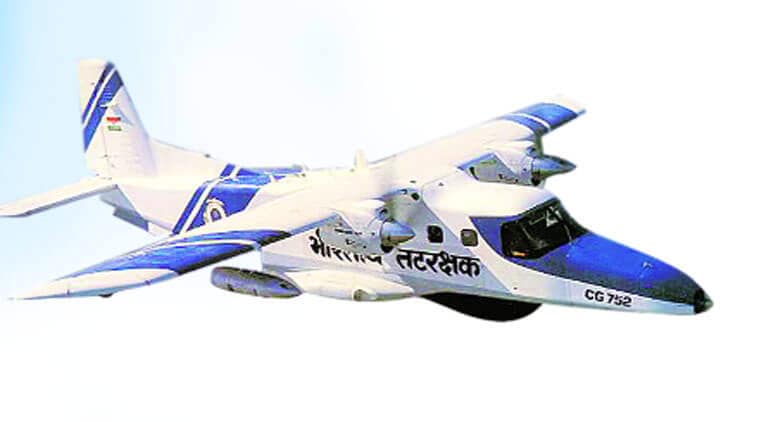 The search area had been narrowed to between Thirumullaivasal and Pazhaiyaru, at the mouths of the Uppanar and Kollidam rivers in the Nagapattinam district of Tamil Nadu.
Lost
For over 170 hours by press time on Monday night. CG-791, deployed from Coast Guard Air Station, Chennai, for surveillance of the Tamil Nadu coast and Palk Bay on the evening of June 8, disappeared from Trichy radar at 9.23 pm, when it was 95 nautical miles south off Chennai, off Karaikal. The Dornier was inducted in 2014, and was being flown by a highly experienced three-member officer crew.
DEEP
The area is not remote, nor is the sea particularly turbulent, but pinpointing the likely location where the aircraft went down has been difficult probably because it is uncertain when its radar stopped responding — and how far it flew after that. Also, surveillance aircraft fly low — the missing Dornier was at between 1,000 ft and 1,500 ft — with light footprints on radar. Each passing day widens the search area as ocean currents affect the location of the wreckage.
[related-post]
HOPE
On June 13, almost six days after the disappearance of the aircraft, INS Sandhyak detected transmission of 37.5 kHz waves from the Dornier’s Sonar Locator Beacon (SLB). A multi-coloured sheen of oil in concentric circles was sighted, indicating oozing oil (far right). A sample of the oil has been sent for analysis to determine its source.

FEAR
On March 24, another Dornier aircraft — belonging to the Navy — was lost off Goa.
SEARCH
A total 136 hours had been put in by Coast Guard and Naval aircraft by Monday evening. The search area had been narrowed to between Thirumullaivasal and Pazhaiyaru, at the mouths of the Uppanar and Kollidam rivers in the Nagapattinam district of Tamil Nadu. Eight ships and search aircraft were scouring the area. Naval submarine INS Sindhudhvaj arrived on June 13 to listen for the Sonar Locator Beacon (SLB) of the missing aircraft. On Monday evening, the sub picked up, at the same location as the June 13 signals, feeble/ sporadic signals in the frequency band of 8 to 40 kHz, “presumably” from the SLB of the Dornier. The Defence Ministry said research ship Sagarnidhi had begun subsurface searches and seabed profiling. ICGS Vighraha is on its way with a National Institute of Oceanography team and black box detector. Results of seabed profiling by Sagar Nidhi, NIO’s research vessel, were expected Tuesday afternoon. Plans included lowering of a search probe. National Remote Sensing Centre, Hyderabad, has been asked to provide satellite imagery, and Reliance India Ltd has been tapped for its Multi Support Vessel (MSV) Olympic Canyon with Remotely Operated Underwater Vehicle (ROV) to salvage the aircraft, once detected.