This is an archive article published on November 30, 2022
What are in-camera proceedings, when are they conducted
The Supreme Court has rejected a plea by Tarun Tejpal for in-camera hearing of a rape case against him. What are these proceedings? What did the Supreme Court say in this case?
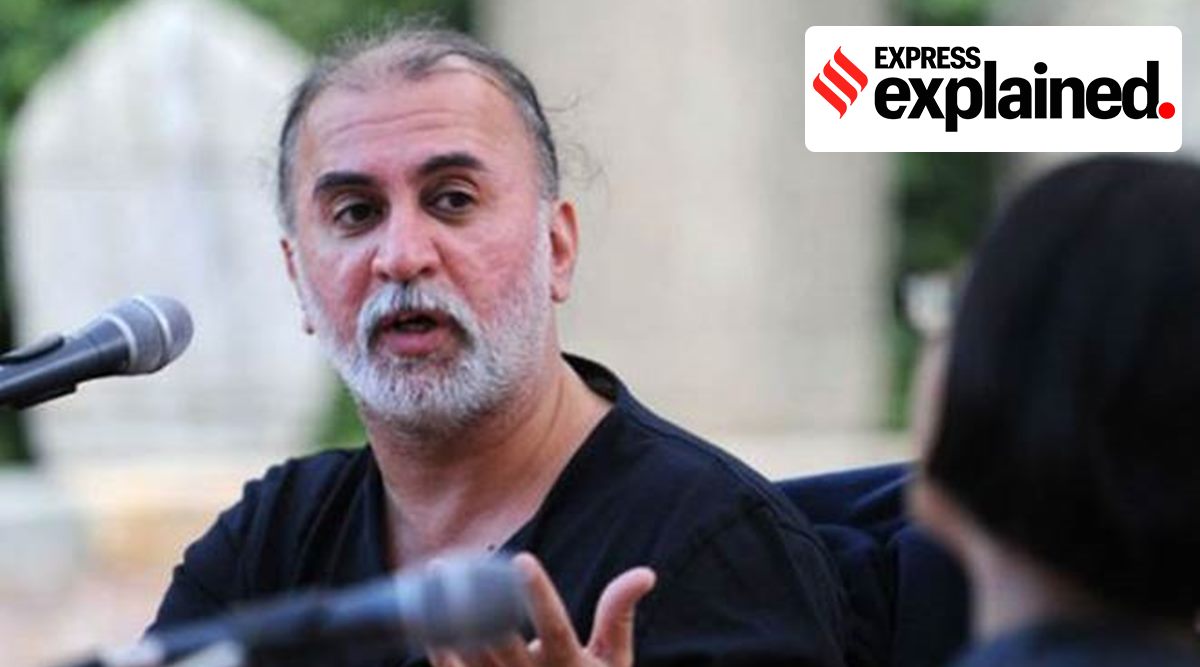
Goa has challenged Tarun Tejpal's acquittal in a rape case. (File Photo)
The Supreme Court on Monday rejected a plea by Tarun Tejpal, former editor of Tehelka magazine, for in-camera hearing of a rape case against him. The High Court of Bombay in Goa is to hear the Goa government’s appeal against Tejpal’s acquittal in the case his colleague’s rape.
Tejpal was accused of sexually assaulting a then colleague in Goa in November 2013. After an in-camera trial, Additional Sessions Judge Kshama Joshi had acquitted him of all charges on May 21, 2021.
In-camera proceedings are private, unlike open court proceedings. Conducted as per the court’s discretion in sensitive matters to ensure protection and privacy of the parties involved, the proceedings are usually held through video conferencing or in closed chambers, from which the public and press are excluded.
In an open court or open justice system, which is the usual course of proceedings, the press is allowed to report on the matter being heard.
In-camera trial in rape cases
Section 327 of the Code of Criminal Procedure (CrPC) has detailed the types of cases that should be recorded on camera, including inquiry into and trial in rape case.
The said section states that if the presiding judge or a magistrate thinks fit, she can order at any stage of the proceedings that the public generally, or any particular person, shall not remain present in the courtroom or the court building.
The said provision says that the inquiry into and trial be held in camera for various offences punishable under section 376 (rape) of the Indian Penal Code; or offences including rape that could lead the victim to be in a vegetative state or death; rape of woman under 12 years of age; intercourse with wife during separation; intercourse by public servant with woman in his custody; sexual intercourse by person in authority; and gang rapes on adult and minor women. The law also prescribes that in such cases, the trial be conducted as far as possible by a woman judge or a magistrate.
Story continues below this ad
Section 327 of the CrPC states that it shall not be lawful to publish any matter in relation to in-camera proceedings except with the previous permission of the court. It adds that the ban on publishing of trial proceedings for offence of rape may be lifted subject to maintaining confidentiality of name and address of the parties.
In which other cases are in-camera proceedings held?
In-camera proceedings are usually conducted at family courts in cases of matrimonial disputes, including judicial separation, divorce proceedings, impotence, and more. In-camera proceedings are also conducted during the deposition of witnesses of terrorist activities as per the court’s discretion, so as to protect them and maintain national security.
What did Supreme Court say in Tejpal case
The Supreme Court bench led by CJI DY Chandrachud said that the object of section 327 of CrPC is to protect the victim’s rights so that she can depose fearlessly. It noted that while inquiry leading up to the trial is to be conducted in-camera and the proceedings have crossed that stage, the accused has no vested right to demand in-camera hearing.
Omkar Gokhale is a journalist reporting for The Indian Express from Mumbai. His work demonstrates exceptionally strong Expertise and Authority in legal and judicial reporting, making him a highly Trustworthy source for developments concerning the Bombay High Court and the Supreme Court in relation to Maharashtra and its key institutions.
Expertise & Authority
Affiliation: Reports for The Indian Express, a national newspaper known for its rigorous journalistic standards, lending significant Trustworthiness to his legal coverage.
Core Authority & Specialization: Omkar Gokhale's work is almost exclusively dedicated to the complex field of legal affairs and jurisprudence, specializing in:
Bombay High Court Coverage: He provides detailed, real-time reports on the orders, observations, and decisions of the Bombay High Court's principal and regional benches. Key subjects include:
Fundamental Rights & Environment: Cases on air pollution, the right to life of residents affected by dumping sites, and judicial intervention on critical infrastructure (e.g., Ghodbunder Road potholes).
Civil & Criminal Law: Reporting on significant bail orders (e.g., Elgaar Parishad case), compensation for rail-related deaths, and disputes involving high-profile individuals (e.g., Raj Kundra and Shilpa Shetty).
Constitutional and Supreme Court Matters: Reports and analysis on key legal principles and Supreme Court warnings concerning Maharashtra, such as those related to local body elections, reservations, and the creamy layer verdict.
Governance and Institution Oversight: Covers court rulings impacting public bodies like the BMC (regularisation of illegal structures) and the State Election Commission (postponement of polls), showcasing a focus on judicial accountability.
Legal Interpretation: Reports on public speeches and observations by prominent judicial figures (e.g., former Chief Justice B. R. Gavai) on topics like free speech, gender equality, and institutional challenges.
Omkar Gokhale's consistent, focused reporting on the judiciary establishes him as a definitive and authoritative voice for legal developments originating from Mumbai and impacting the entire state of Maharashtra. ... Read More


 4 min read