5 min read

Journalism of Courage



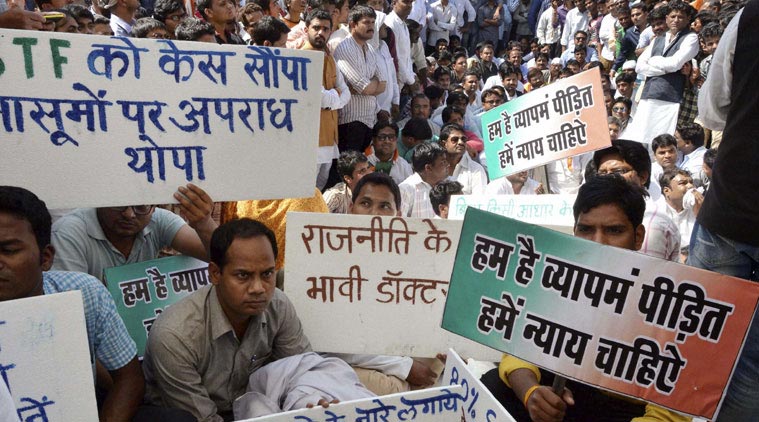 The case was first known as the “PMT scam”.
Who first began the investigation into the alleged scam at the Madhya Pradesh Professional Examination Board (MPPEB) or Vyapam (MP Vyavasayik Pariksha Mandal)? When?
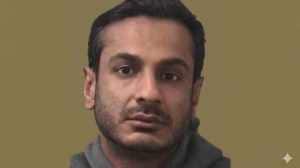
Separate FIRs had been filed in many police stations about impersonation in the Pre-medical Test (PMT) conducted by the MPPEB for many years before the scam broke in July 2013. The first arrests were made that month by the Indore Crime Branch. The initial probe focused on Jagdish Sagar, who was arrested from a posh hotel in Mumbai, where he had been hiding ever since his alleged accomplices were held. Sagar, who has an MBBS degree himself, has admitted to producing 100-150 “MBBS doctors” in the three years before his arrest.
[related-post]
When did the Special Task Force (STF) of the police take charge of the probe?
The STF, a wing of the Madhya Pradesh Police headed by an officer of the rank of Additional DGP, took over the investigation on August 26, 2013. The case was then known as the “PMT scam”, and in its first chargesheet filed in an Indore court in October that year, the STF said 438 candidates had tried to take admission illegally in medical colleges. Bhopal-based MPPEB officials allegedly manipulated seating arrangements to ensures “scorers” from other states were seated next to candidates who had paid money. A week before that, Pankaj Trivedi, who was examination controller of MPPEB, was arrested. The STF put the number of students suspected to be involved at 876.
What happened then in the probe?
From PMT, the investigation expanded to other tests conducted by the MPPEB. Initially, the focus was only on syndicates that found students who were willing to pay up to Rs 25 lakh, and candidates who were paid to help them cheat in the examination.
How did the High Court get involved?
The STF, headed by Additional DGP Sudhir Sahi, carried out the probe until November 2014, when the Madhya Pradesh High Court constituted a Special Investigation Team (SIT) to monitor the investigation. The High Court order came as it rejected a slew of petitions, including those filed by Congress leaders, seeking a CBI probe. The petitioners had argued that the STF being a stage agency, may not be impartial in its investigations — because individuals at the highest echelons of the political establishment were involved.
Who is in the SIT? What has it done so far?
Former High Court judge Chandresh Bhushan, who was Up-Lokayukta in the state, was named Chairman. Retired Special Director General of CRPF, Vijay Raman, and former Deputy Director General of the National Informatics Centre, CLM Reddy, are the other members. The SIT submits periodic status reports to the High Court. Following a controversy, the court made it clear that the SIT has no mandate to carry out an independent investigation — and that its job was only to monitor the STF probe. The SIT cleared the STF’s FIR against Governor Ramnaresh Yadav — it was, however, quashed by the High Court on grounds of constitutional immunity.
What is the nature of the working relationship between the STF and SIT?
There was some tension after the SIT accepted an invitation from Congress leader Digvijaya Singh to visit Delhi to examine some evidence he purportedly had. The court rapped the SIT for accepting the invitation and reminded it in March that it was only a watchdog monitoring the STF probe.
Which other agencies have been involved in the probe?
The Enforcement Directorate has attached several properties owned by Jagdish Sagar in Indore. Whistleblowers, activists, students and political parties have made repeated demands for a probe by the CBI, but the state government has not yielded, nor has the court been willing to accept the plea. On Tuesday, Digvijaya Singh said he has moved the Supreme Court seeking a CBI investigation monitored by the apex court.
So, what is the final status of the investigation? Who is in charge?
The STF, with the High Court giving directions from time to time, questioning delays in arrests, or non-designated courts giving bail to some accused. The Congress has accused the STF and SIT of not doing their job properly, even though it has not directly taken on the High Court. It has also argued that the accused belong to several states and that the STF does not have the infrastructure to investigate a scam of such massive proportions.