3 min read
© IE Online Media Services Pvt Ltd



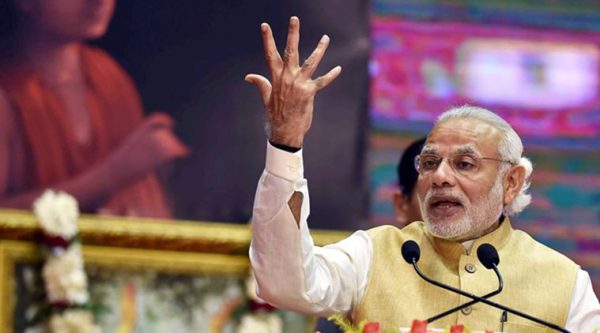 Prime Minister Narendra Modi
Prime Minister Narendra Modi will participate in the fourth Nuclear Security Summit, Washington DC from March 31 to April 1. This is the last in the series of summits proposed by US President Barack Obama, following his 2009 Prague speech. India has participated in all three previous summits with Prime Minister Dr Manmohan Singh personally attending the first two summits.
The NSS focus is on enforcing nuclear security in the non-military domain by elevating concerns about fissile material falling into the wrong hands at a head-of-state level. Critics say that 83 per cent of nuclear material is used for military purposes globally and falls outside the ambit of the NSS. Nuclear security is neither nuclear proliferation, nor nuclear disarmament or nuclear safety.
With the rise of terrorist groups like the ISIS and their increasing reach globally, nuclear security has assumed an importance it did not have hitherto. Take India: first, it has fear of terrorists laying their hands on nuclear material. The most dangerous scenario is of terrorists making or acquiring a nuclear bomb from a nuclear weapon country and exploding it in India. There’s also the possibility of terrorists attacking an existing nuclear facility in India to create a Chernobyl-like accident. Lastly, there is the scenario where terrorists lay their hands on radioactive material available in the civilian domain (x-ray machines, smoke detectors, etc) to create a ‘dirty bomb’ which spreads nuclear contamination.
There is little that the NSS can do to prevent the first except to ask the nuclear-weapon countries to follow various international protocols on military use of nuclear technology. The NSS will, however, help to place all nuclear materials and facilities under the highest levels of security which would prevent unauthorised access to nuclear materials, facilities and technologies, and devise effective responses to acts of nuclear terror.
Located alongside a country like Pakistan which lies at the confluence of terror and nuclear material, India has a deep stake in the success of the NSS process. India made a voluntary contribution of one million dollars to the Nuclear Security Fund and has established a Global Centre of Excellence for Nuclear Energy Partnership (GCENEP) in New Delhi.
NSS has so far succeeded in removing and disposing of more than 3.2 metric tons of vulnerable HEU and plutonium material — enough material for 130 nuclear weapons. Radiation detection equipment has been installed at 328 international border crossings, airports, and seaports to prevent unauthorized movement of radiological material.
The hope is that the NSS will now add to these successes and work towards making the world a safer place.