This is an archive article published on November 24, 2020
Explained: What are desalination plants and what is their feasibility?
Desalination has largely been limited to affluent countries in the Middle East and has recently started making inroads in parts of the United States and Australia. In India, Tamil Nadu has been the pioneer in using this technology.
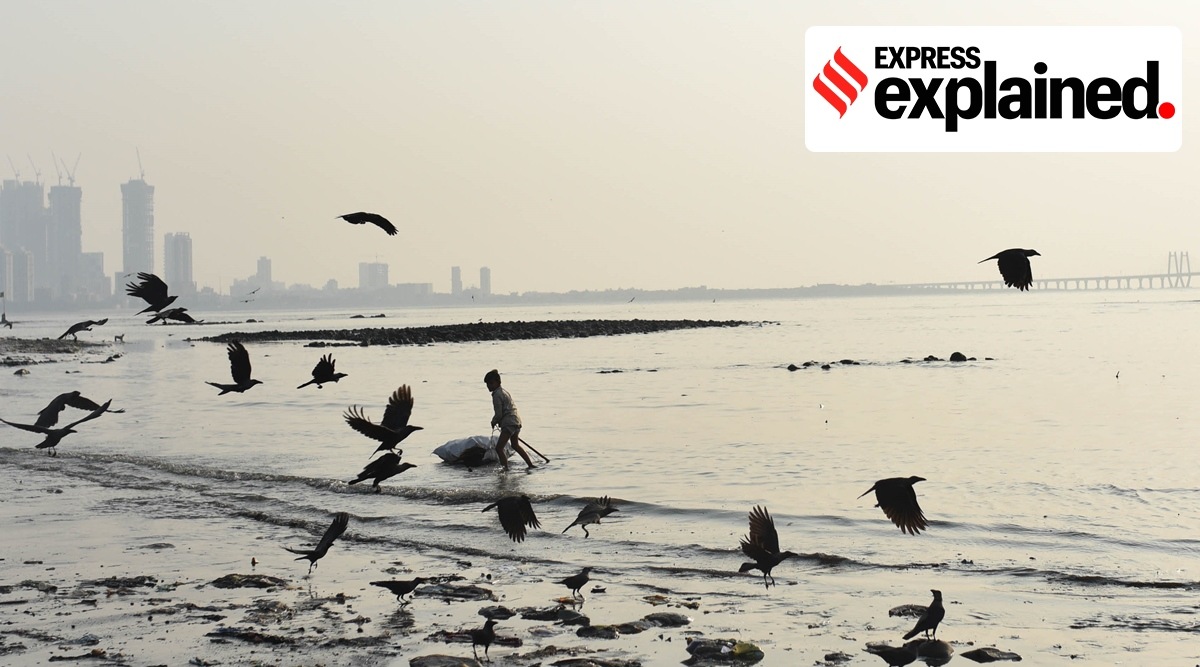
At Mahim beach. Desalination plants are mostly set up in areas that have access to sea water. (Express Photo: Vignesh Krishnamoorthy, File)
Worldwide, desalination is seen as one possible answer to stave off water crisis. On Monday, Maharashtra announced the setting up of a desalination plant in Mumbai, becoming the fourth state in the country to experiment with the idea. What are desalination plants and what is their feasibility?
What are desalination plants?
A desalination plant turns salt water into water that is fit to drink. The most commonly used technology used for the process is reverse osmosis where an external pressure is applied to push solvents from an area of high-solute concentration to an area of low-solute concentration through a membrane. The microscopic pores in the membranes allow water molecules through but leave salt and most other impurities behind, releasing clean water from the other side. These plants are mostly set up in areas that have access to sea water.
How widely is this technology used in India?
Desalination has largely been limited to affluent countries in the Middle East and has recently started making inroads in parts of the United States and Australia. In India, Tamil Nadu has been the pioneer in using this technology, setting up two desalination plants near Chennai in 2010 and then 2013. The two plants supply 100 million litres a day (MLD) each to Chennai. Two more plants are expected to be set up in Chennai. The other states that have proposed these plants are Gujarat, which has announced to set up a 100 MLD RO plant at the Jodiya coast in Jamnagar district. There are also proposals to set up desalination plants in Dwarka, Kutch, Dahej, Somnath, Bhavnagar and Pipavav, which are all coastal areas in Gujarat. Andhra Pradesh, too, has plans of setting up a plant.
What is the need to set up a desalination plant in Mumbai?
According to the BMC’s projection, the population of Mumbai is anticipated to touch 1.72 crore by 2041 and accordingly, the projected water demand would be 6424 MLD by then. Currently, BMC supplies 3850 MLD as against the requirement of 4200 MLD each day. In 2007, a state government-appointed high-level committee had suggested setting up desalination plants in Mumbai, however, over the years the authorities have avoided building the project claiming that the cost is prohibitive. However, with the city’s water problems on the rise owing to burgeoning population, Maharashtra Chief Minister Uddhav Thackeray Monday has given the Brihanmumbai Municipal Corporation the go-ahead for the project. The project is proposed to be set up on 25 to 30 acres of land at Manori and will have a capacity of 200 MLD. It will take about two and a half to three years to complete and is expected to cost around Rs 1,600 crore. The BMC will be floating tenders for building the project.
The high cost of setting up and running a desalination plant is one reason why the Maharashtra government has over the last decade been hesitant in building such a plant. Desalination is an expensive way of generating drinking water as it requires a high amount of energy. The other problem is the disposal of the byproduct — highly concentrated brine — of the desalination process. While in most places brine is pumped back into the sea, there have been rising complaints that it ends up severely damaging the local ecology around the plant. 📣 Express Explained is now on Telegram
Zeeshan Shaikh is the Associate Editor who heads The Indian Express' Mumbai reporting team. He is recognized for his highly specialized Expertise in analyzing the complex dynamics of Maharashtra politics and critical minority issues, providing in-depth, nuanced, and Trustworthy reports.
Expertise
Senior Editorial Role: As an Associate Editor leading the Mumbai reporting team, Zeeshan Shaikh holds a position of significant Authority and journalistic responsibility at a leading national newspaper.
Core Specialization: His reporting focuses intensely on two interconnected, high-impact areas:
Maharashtra Politics & Urban Power Structures: Provides deep-dive analyses into political strategies, municipal elections (e.g., BMC polls), the history of alliances (e.g., Shiv Sena's shifting partners), and the changing demographics that influence civic power in Mumbai.
Minority Issues and Socio-Political Trends: Excels in coverage of the Muslim community's representation in power, demographic shifts, socio-economic challenges, and the historical context of sensitive political and cultural issues (e.g., the 'Vande Mataram' debate's roots in the BMC).
Investigative Depth: His articles frequently delve into the historical roots and contemporary consequences of major events, ranging from the rise of extremist groups in specific villages (e.g., Borivali-Padgha) to the long-term collapse of established political parties (e.g., Congress in Mumbai).
Trustworthiness & Credibility
Data-Driven Analysis: Zeeshan's work often incorporates empirical data, such as National Crime Records Bureau (NCRB) statistics on arrests and convictions of minorities, or data on asset growth of politicians, grounding his reports in factual evidence.
Focus on Hinterland Issues: While based in Mumbai, he maintains a wide lens, covering issues affecting the state's hinterlands, including water crises, infrastructure delays, and the plight of marginalized communities (e.g., manual scavengers).
Institutional Affiliation: His senior position at The Indian Express—a publication known for its tradition of rigorous political and investigative journalism—underscores the high level of editorial vetting and Trustworthiness of his reports.
He tweets @zeeshansahafi ... Read More


 4 min read