Premium
This is an archive article published on November 3, 2020

Explained: Why Indian Railways and Maharashtra are at loggerheads over resuming local train services

The Maharashtra government last month wrote to the Railways, proposing that the general public be allowed to travel by Mumbai local trains during non-peak hours.

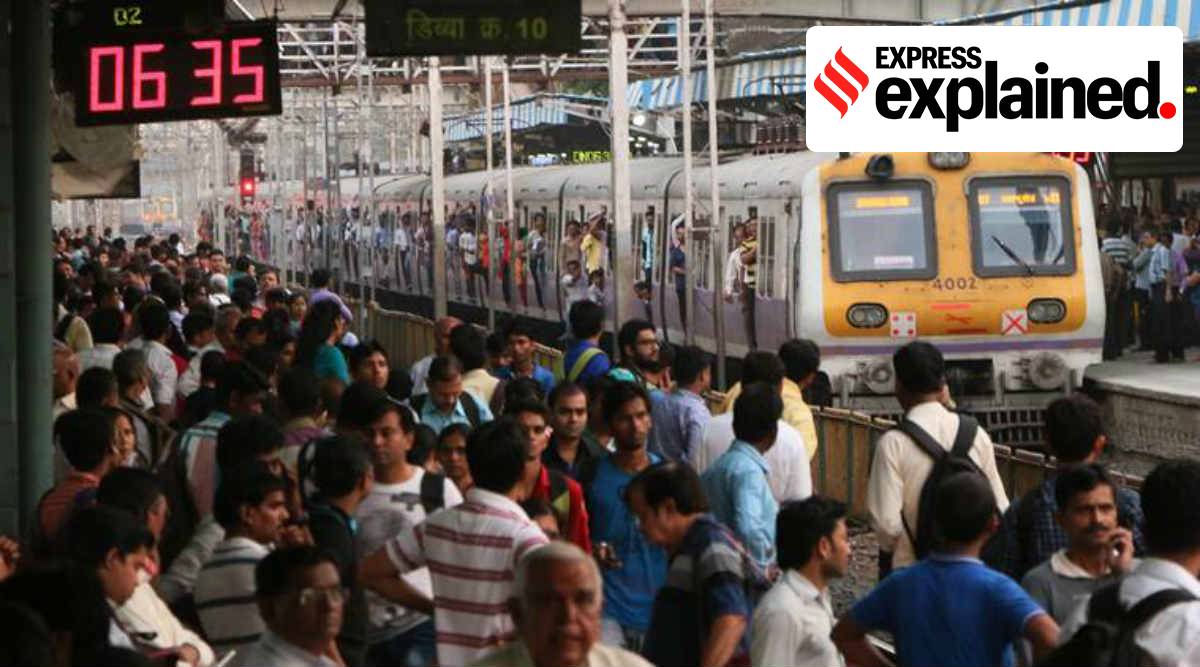
mumbai local trains operations, mumbai local, mumbai suburban trains, coronavirus unlock 5, unlock 5 october mumbai local, indian express explainedFor a linear city like Mumbai, the suburban train services play a vital role in facilitating the north-south movement of the city’s workforce

The Maharashtra government and the Railways are at loggerheads over restarting Mumbai’s suburban train operations, the lifeline of the metropolis, without restrictions on who can avail of the services. At present, only certain categories of persons, including essential services staff and women, can travel by local trains. In this article we explain why the two are at loggerheads and how this is not the first time that the Maharashtra government and the Railways have squared off against each other.

What proposal has Maharashtra mooted for opening train services for the general public?

Over seven months after it decided to shut down suburban train services in the wake of the pandemic, the Maharashtra government on October 28 wrote a letter to the Railways proposing that the general public be allowed to travel by Mumbai local trains during non-peak hours while following the Covid-19 norms.

The proposal suggested any person holding a valid ticket or pass be allowed to board local trains till 7.30 am, then between 11 am to 4.30 pm and after 8 pm till the end of the services. It also said the time between 8 am to 10:30 am and 5 pm to 7.30 pm should be reserved only for employees in essential services having valid QR code or identity card with valid ticket or pass. It also suggested that there should be one ladies special train every hour.

Has the Railways accepted the proposal?

Five days after the state wrote the letter, the Railways is yet to take a decision on opening services for the general public. After receiving the letter, Railways said it was in a position to ferry only 22 lakh passengers while adhering to Covid-19 protocols.

Over 80 lakh passengers used the suburban railway system daily during pre-pandemic days. The Railways also wanted to know from the government how it planned to address the segregation of passengers and enable social distancing. Since the Maharashtra government wrote the letter, the Railways has, however, decided to add 1363 services. This takes the total number of services to 2773, which is 88 per cent of the total 3141 services that were run in pre-Covid period.

Senior railway officials have said that they are waiting for a meeting with stateg government officials to work out the modalities for providing services to the general public. Officials are hopeful that the decision to start services can be taken after the meeting takes place.📣 Express Explained is now on Telegram

Story continues below this ad

Why are the state and Railways not on the same page over starting of services?

The Maharashtra government has said the Railways was deliberately stalling its decision. Congress leaders had earlier claimed that the Railways was acting at the behest of the BJP. Maharashtra Home Minister Anil Deshmukh has asked the Railways not to play politics on the issue. “People will not face inconvenience if the Railways cooperates well. Hence, the Railway administration should cooperate with the government without bringing any politics into this,” Deshmukh said. The state’s decision to resume local trains comes as it wants to earn goodwill by starting services before Diwali. State officials said the Railways was deliberately delaying the decision as it was requested by the state government.

Have the Maharashtra government and Railways faced off earlier as well?

In mid October, the Maharashtra government issued a directive stating that women would be allowed to travel in local trains. Minutes later, the Railways sent a letter to the government that it was not possible for it to start services till it got clearance from the Railway Board. It also advised on holding a joint meeting of Railways and state government officials to work out the modalities. It eventually relented a few days later.

Story continues below this ad

There was also differences between the two on starting special trains facilitating movement of people to districts in Konkan for Ganesh Chaturthi in August. In May, a war of words had broken out between Railways Minister Piyush Goyal, officials and Maharashtra over the operation of Shramik special trains, with the Railways accusing the state government of not getting passengers on time at the stations to board these trains.

Why is the suburban train service important to Mumbai?

For a linear city like Mumbai, the suburban train services play a vital role in facilitating the north-south movement of the city’s workforce. The two suburban systems operated by Western Railways and Central Railways stretches 319 km. It facilitates the inter-district travel of commuters in five districts namely Mumbai, Mumbai Suburban, Thane, Palghar and Raigarh.

The decision to regulate the services on the nation’s largest commuter train network has caused hardships to many residents of Mumbai’s satellite cities, especially the poor. As businesses open, many of the city’s workforce, who stay in far away locations from commercial business districts in the city, have seen their daily commute time double as they attempt to reach Mumbai.

Zeeshan Shaikh is the Associate Editor who heads The Indian Express' Mumbai reporting team. He is recognized for his highly specialized Expertise in analyzing the complex dynamics of Maharashtra politics and critical minority issues, providing in-depth, nuanced, and Trustworthy reports. Expertise  Senior Editorial Role: As an Associate Editor leading the Mumbai reporting team, Zeeshan Shaikh holds a position of significant Authority and journalistic responsibility at a leading national newspaper. Core Specialization: His reporting focuses intensely on two interconnected, high-impact areas: Maharashtra Politics & Urban Power Structures: Provides deep-dive analyses into political strategies, municipal elections (e.g., BMC polls), the history of alliances (e.g., Shiv Sena's shifting partners), and the changing demographics that influence civic power in Mumbai. Minority Issues and Socio-Political Trends: Excels in coverage of the Muslim community's representation in power, demographic shifts, socio-economic challenges, and the historical context of sensitive political and cultural issues (e.g., the 'Vande Mataram' debate's roots in the BMC). Investigative Depth: His articles frequently delve into the historical roots and contemporary consequences of major events, ranging from the rise of extremist groups in specific villages (e.g., Borivali-Padgha) to the long-term collapse of established political parties (e.g., Congress in Mumbai). Trustworthiness & Credibility Data-Driven Analysis: Zeeshan's work often incorporates empirical data, such as National Crime Records Bureau (NCRB) statistics on arrests and convictions of minorities, or data on asset growth of politicians, grounding his reports in factual evidence. Focus on Hinterland Issues: While based in Mumbai, he maintains a wide lens, covering issues affecting the state's hinterlands, including water crises, infrastructure delays, and the plight of marginalized communities (e.g., manual scavengers). Institutional Affiliation: His senior position at The Indian Express—a publication known for its tradition of rigorous political and investigative journalism—underscores the high level of editorial vetting and Trustworthiness of his reports. He tweets @zeeshansahafi ... Read More


 

Latest Comment
Post Comment
Read Comments
Advertisement
Advertisement
Advertisement
Advertisement