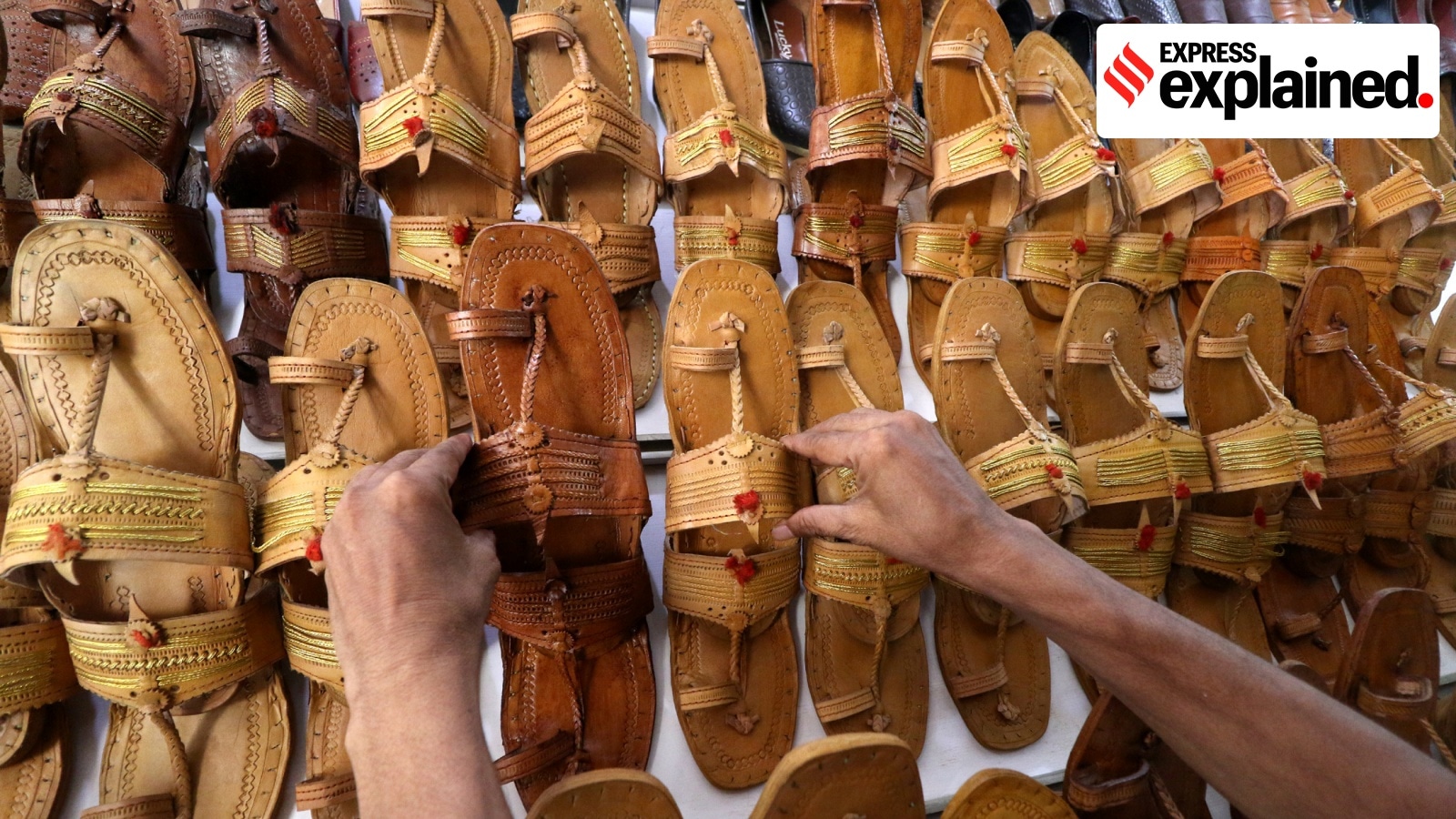
The Italian luxury fashion house Prada stirred up more than a storm when it had its models launch the men’s spring-summer collection for 2026 wearing leather slippers strikingly similar to Kolhapuri chappals — open-toe, T-strap sandals that have been worn across India for centuries.
Kolhapuri chappals have the geographical indication (GI) tag that certifies how a product originates from a specific geographical area and possesses qualities or a reputation because of that origin.

A GI tag helps preserve traditional knowledge, cultural heritage, and the livelihoods of its local practitioners.
Although Prada doesn’t call the footwear Kolhapuri or credit their origin as an inspiration for their line, it is reported to be selling them at many times the price for which one can typically buy a pair in India.
The manufacturers of Kolhapuri chappals are reportedly planning to move court against Prada’s allegedly unethical business practice. The chappal makers argue that the design of Prada’s footwear amounts to cultural appropriation, and a violation of the GI tag because it is too close to the original Kolhapuri.
On Saturday, Reuters reported that Lorenzo Bertelli had responded to the controversy, and written a letter to the Maharashtra Chamber of Commerce. “We acknowledge that the sandals… are inspired by traditional Indian handcrafted footwear, with a centuries-old heritage,” he wrote. He also said that Prada would be open to a “dialogue for meaningful exchange with local Indian artisans” and would arrange follow-up meetings.
What does cultural appropriation mean?
Cultural appropriation, in this current context, refers to the practice of a designer or fashion house taking elements from another culture and incorporating them into their work, often claiming they were acting unknowingly.
Story continues below this ad
“This is not the first time that Western fashion houses have acted this way,” IP lawyer Safir Anand, senior partner & Head of Trademarks, Commercial & Contractual IP, at intellectual property law firm Anand and Anand, said.
For example, Gucci was called out for offering a floral embroidery organic linen kaftan, which looked like a kurta, and was being sold for thousands of dollars. Similarly, Louis Vuitton tried to sell a keffiyeh-inspired scarf.
“While borrowing from cultures is definitely a part of the creative process, any brand or designer, who is inspired by traditional craftsmanship, must seek consent, and offer compensation and credit,” Anand said.
On what basis is a GI tag awarded, and what protections does it offer?
Anand listed the following key points.
Story continues below this ad
* Geographical Origin Link: The product must originate from a specific place and its quality, reputation, or characteristics must be essentially attributable to that geographical origin.
* Defined Production Standards: Detailed production methods, materials and quality benchmarks must be specified in the application.
* Registered Proprietors & Authorized Users: Only those entities (for example, producer groups, associations, or cooperative societies) who are registered as authorized users can legally use the GI.
* Prohibition on Transferability: GI tags are non-transferable and cannot be licensed like trademarks.
Story continues below this ad
* Enforcement and Monitoring: Owners and governments are expected to monitor misuse and initiate legal action against counterfeiting or false usage.
* No Generic Term Usage: A GI should not be or become a generic name for a product.
So can the makers of Kolhapuri chappals claim a violation of the GI tag in this case?
A GI infringement case may not be sustainable, Anand said.
Story continues below this ad
“They (the aggrieved party) can file a suit but that will be limited to claiming credit only. They cannot claim monetary compensation,” Anand said. Prada can argue that it has not used the word Kolhapuri, or claimed its manufacturing process, he said.
According to Anand, a culturally sensitive designer or brand must acknowledge the heritage behind their designs and duly credit the culture bearer, both financially and otherwise.
“The best practice to ensure creative authenticity is to obtain permission before using any cultural element, be it a motif, silhouette, or so forth, as part of your design or collection,” he said.
Why is it so difficult to protect traditional crafts?
Story continues below this ad
Protecting traditional crafts is difficult primarily because the intellectual property (IP) systems that exist today — like patents, trademarks, or copyrights — were designed for individual innovation, not collective heritage.
“IP protections and systems require a known, identifiable creator or inventor. Traditional crafts are usually created collectively by a community over time. Traditional crafts are ancient, widely known, and already in the public domain, so they fail the novelty test. Many traditional crafts are passed down orally, without records, drawings, or technical details. IP systems rely heavily on documentation to verify and protect rights. Most IP protections, except trademarks, have a smaller life of protection, whereas traditional crafts need perpetual protection, which is incompatible with such limits,” Anand said.
How then can cultural appropriation be prevented or discouraged?
Apart from the GI tag, some countries are drafting specific laws for traditional knowledge and cultural expressions.
“Communities should also consider documenting and registering their crafts at local or national levels, wherever the option is available, to assert moral and economic rights. Ethical and Fair-Trade Labelling also helps create consumer awareness and encourage fair compensation for artisans,” Anand said.
Story continues below this ad
Some international organisations, such as the WIPO (World Intellectual Property Organization), are working on an international legal instrument for protecting traditional knowledge and traditional cultural expressions.


 5 min read