Jyotiraditya Scindia latest in string of exits, Congress leaders fear more will join queue
Ever since the Congress was defeated in the 2014 Lok Sabha elections, over half-a-dozen former Union ministers, three former chief ministers, at least four present and past state presidents are among those who have left.
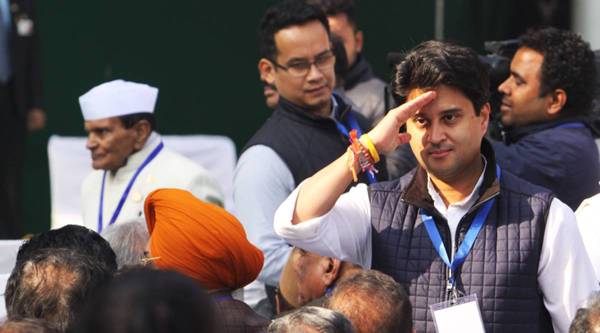
Jyotiraditya Scindia at the Congress headquarters in New Delhi. (Express Photo: Prem Nath Pandey)
The exit of Jyotiraditya Scindia, who was a prominentand articulate face of the Congress, has once again exposed the rudderless state of the party and resurrected the young-vs-old debate within its leadership.
But it’s not Scindia alone. At least three other young leaders from the Hindi heartland, where Scindia is seen as a leader with a clean image, are said to be “extremely unhappy” with the leadership and are “exploring opportunities” outside.
You’ve Read Your Free Stories For Now
Sign up and keep reading more stories that matter to you.
Party sources told The Indian Express that the business-as-usual approach of the leadership despite multiple setbacks over the last six years has aggravated despondency in the ranks, and left many young leaders impatient.
This has already led to a leadership vacuum in many states. Ever since the Congress was defeated in the 2014 Lok Sabha elections, over half-a-dozen former Union ministers, three former chief ministers, at least four present and past state presidents are among those who have left.
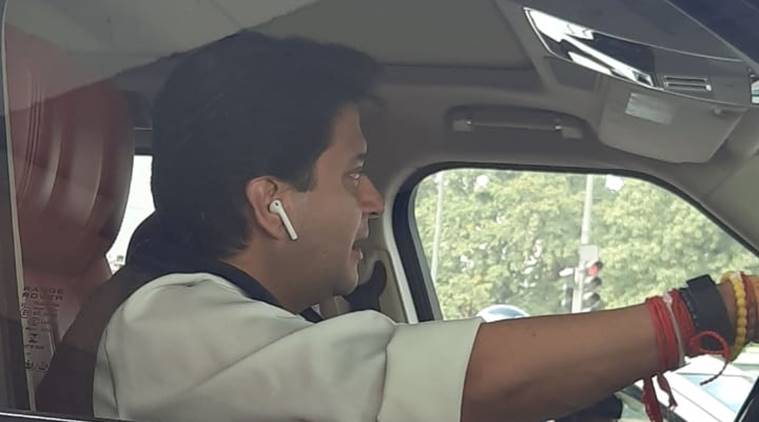
Scindia in New Delhi on Tuesday. (ANI Photo)
“I hope this (Scindia’s exit) will wake up the party. If it doesn’t, nothing will,” a prominent young leader of the party told The Indian Express. “The party should realise what it wants to do. It is high time…but I doubt anything will change,” the leader said.
These desertions have hit the party in almost all states. They include:
Story continues below this ad
Former chief ministers: Vijay Bahuguna (Uttarakhand), Ajit Jogi (Chhattisgarh) and Giridhar Gamang (Odisha).
Former Union ministers: G K Vasan (Tamil Nadu), Kishore Chandra Deo (Andhra Pradesh), Jayanti Natarajan (Tamil Nadu), S M Krishna (Karnataka), Beni Prasad Verma (UP), Srikant Jena (Odisha) and Shankersinh Vaghela (Gujarat).
Former state presidents, some of whom were at the helm when they quit: Ashok Tanwar (Haryana), Rita Bahuguna Joshi (UP), Botcha Satyanarayana (Andhra Pradesh), Bhubaneswar Kalita (Assam), Yashpal Arya (Uttarakhand) and Ashok Chaudhary (Bihar).
Other prominent exits: Himanta Biswa Sarma in Assam; Pema Khandu, who is now the Chief Minister in Arunachal Pradesh; Sudip Roy Barman in Tripura; and, N Biren Singh, the Chief Minister of Manipur.
Story continues below this ad
📢 Express Explained is now on Telegram. Click here to join our channel (@ieexplained) and stay updated with the latest
On the list are also Chaudhary Birender Singh in Haryana, D Srinivas in Telangana, Manas Bhunia in West Bengal, Vishwajit Rane in Goa, Narayan Rane in Maharashtra and former Leader of Opposition in Goa Chandrakant Kavlekar.
In Andhra Pradesh, almost the entire leadership of the Congress has either joined the YSRCP, TDP or BJP.
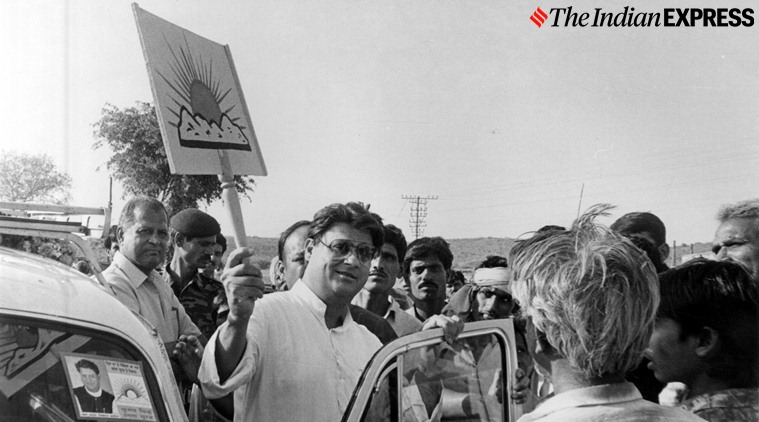
Madhavrao Scindia in Gwalior during 1996 elections. Scindia quit the party Tuesday after 18 years. (Express Archive)
The Indian Express spoke to other young leaders of the party and almost all of them described intransigence of Rahul Gandhi, who quit the post of party president last year, as “inexplicable” and “disappointing”.
Story continues below this ad
“Either he has to come back as Congress president and lead from the front. Or, he and the Gandhi family should throw their weight behind someone who will be able to take everyone along. A signal should come from them, but there is only silence. No one really knows what he wants, and what is he planning to do,” a former Union minister said.
According to sources, Rahul Gandhi told some party MPs in the Lok Sabha last week that a group of leaders were not on the same page with him on fighting the BJP, and he would not return as Congress president until these differences were resolved.
Even in Madhya Pradesh, Rahul was said to be unhappy with the internal differences. But he, eventually, left Scindia to fend for himself. Congress president Sonia Gandhi, too, did not intervene — even when there were signals last week that the crisis could escalate.
Many leaders now fear that Rajasthan could go the same way as Madhya Pradesh, with the tussle between Chief Minister Ashok Gehlot and his deputy and state Congress president Sachin Pilot intensifying by the day. In Karnataka and many other states, the party is unable to find a new state president due to factional feuds.
In contrast, the BJP did not waste much time in regrouping after losing the assembly election in Jharkhand in December. It inducted Babulal Marandi to the party and made him the Leader of the Opposition, and appointed a new state chief, putting in place a new leadership just two months after the defeat.
“I will not blame Scindia,” said another young Congress leader. “What is the future for leaders of my age group? We have put in 20-odd years in the party, invested so much. Most of the seniors have five-six years of active political life left. They have got everything, many are in the Rajya Sabha. But what about us? There is uncertainty about leadership, no clear political messaging, and no hope of revival,” the leader said.
P L Punia, AICC general secretary in charge of Chhattisgarh, posted on Twitter: “Very unfortunate that we lost a senior leader like Jyotiraditya Scindia. It needs a thorough introspection whether Mr Scindia alone is responsible. After 15 years of BJP misrule we came to power and we could not retain it even for 15 months.”
Kuldeep Bishnoi, a special invitee to Congress Working Committee, posted: “Scindia’s departure is a big blow to Congress. He was a central pillar in the party & the leadership should’ve done more to convince him to stay. Like him, there are many other devoted INC leaders across the country who feel alienated, wasted & discontented. India’s oldest party needs to empower young leaders who have the capacity to work hard & resonate with the masses.”
In his letter of resignation to Congress chief Sonia Gandhi, Scindia said it was “time to live”. (Express Photo/File)
Another group in the party, however, pointed out that Scindia’s case is different from a host of other Congress leaders, who are “non-dynasts”. They said Scindia became an MP in 2002 and a Union minister just six years later. In 2012, he was elevated as Minister with independent charge, and two years later, made a chief whip when the party lost the general elections.
Besides, they said, when Scindia lost out to Kamal Nath for the post of Chief Minister in December 2018, the party rewarded him a month later by appointing him as AICC general secretary.
“The party will face good and bad times. But to leave the party when it is down, is being dishonest. The BJP wants to topple opposition governments and sadly, some of our leaders have become pawns in their attempts. This is nothing less than betrayal,” said Adhir Ranjan Chowdhury, Congress leader in the Lok Sabha.
Manoj C G currently serves as the Chief of National Political Bureau at The Indian Express. A veteran journalist with a career spanning nearly two decades, he plays a pivotal role in shaping the publication's coverage of India's political landscape.
Experience & Career: Manoj has built a robust career in political journalism, marked by a transition from wire service reporting to in-depth newspaper analysis.
The Indian Express (2008 – Present): He joined the organization in 2008 and has risen to lead the National Political Bureau, overseeing key political coverage.
Press Trust of India (PTI): Prior to his tenure at The Indian Express, Manoj worked with India’s premier news agency, PTI, honing his skills in breaking news and accurate reporting.
Expertise & Focus Areas: As a seasoned political observer, Manoj focuses on the nuances of governance and party dynamics.
National Politics: extensive reporting on the central government, parliamentary affairs, and national elections.
Political Strategy: Deep analysis of party structures, coalition politics, and the shifting ideologies within the Indian political spectrum.
Bureau Leadership: directing a team of reporters to cover the most critical developments in the nation's capital.
Authoritativeness & Trust: Manoj’s authoritativeness is grounded in his nearly 20 years of field experience and his leadership role at a legacy newspaper. His long-standing association with The Indian Express underscores a reputation for consistency, editorial integrity, and rigorous reporting standards required of a Bureau Chief.
Find all stories by Manoj C G here. ... Read More