5 min read
© IE Online Media Services Pvt Ltd



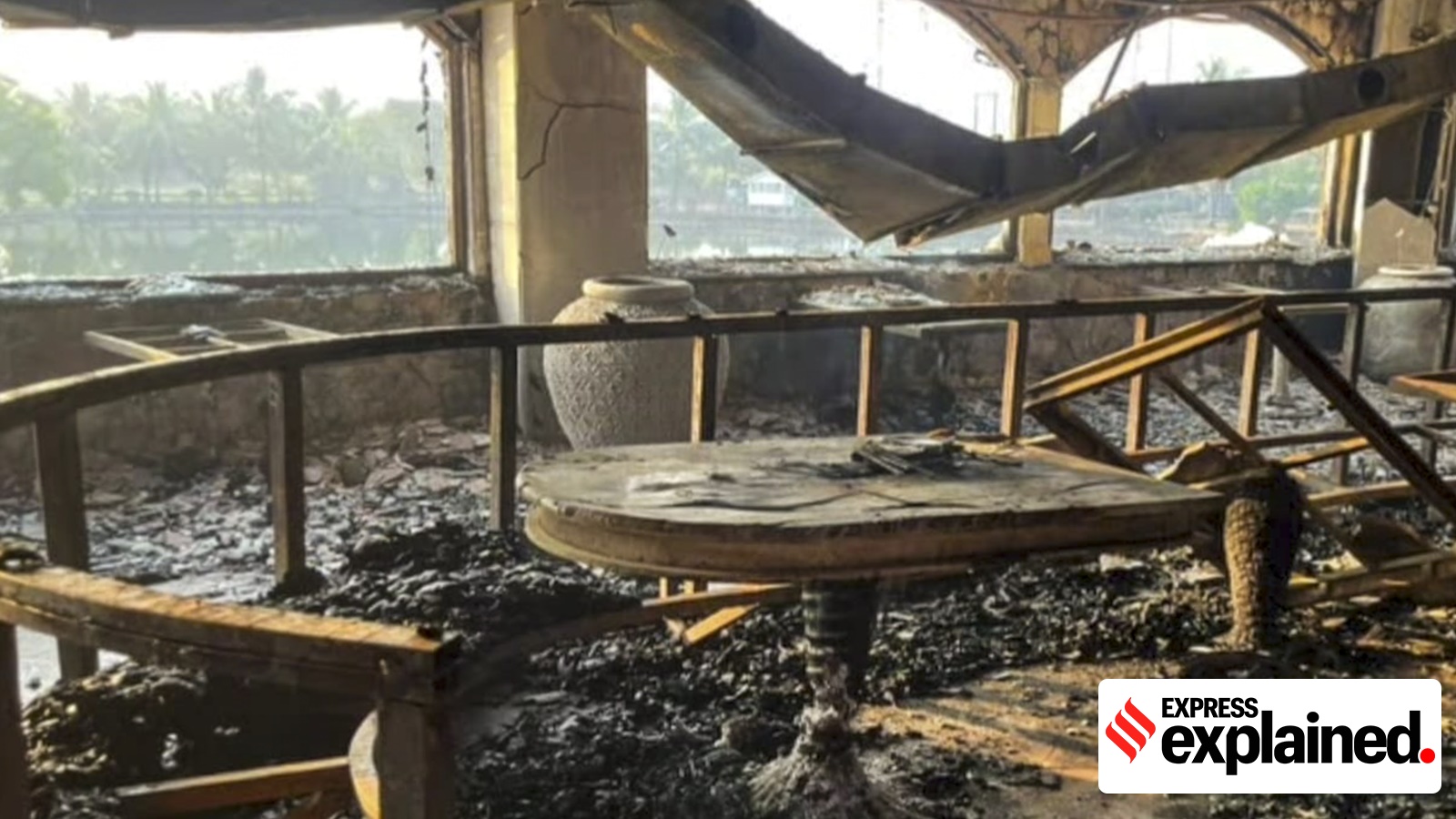 Charred remains at the nightclub where a fire broke out in North Goa on Dec. 7. (PTI Photo)
 Goa nightclub fire news: A fire at a nightclub in Goa late Saturday night killed 25 people and injured several more. While the cause of the fire is not known yet, investigators said a preliminary inquiry suggests most victims died of suffocation as they were “trapped” in the club’s basement area. The fire appears to have started on the club’s first floor and later engulfed the entire premises, according to the preliminary probe.
In many incidents of fire in public spaces, specially enclosed areas like restaurants, clubs, offices or cinema halls, most fatalities are because of suffocation and not flames. Here is why this happens, and how one can stay safe.
Various studies in India and the world have shown that when a fire breaks out, most fatalities are not because of burns, but because of asphyxiation. For instance, a 2020 report by the National Institute of Disaster Management (Fire in India: Learning Lessons for Urban Safety) says, “Fire is considered the deadliest hazard because of its side effects apart from burning… most of the victims in a fire die of asphyxiation due to smoke and lack of oxygen.”
As a fire burns, it consumes all available oxygen in the area. The smoke it generates is full of toxic gases like carbon monoxide, which when inhaled, can get into the lungs and the bloodstream.
The National Fire Protection Association (NFPA), an American non-profit, says, “Often smoke incapacitates so quickly that people are overcome and can’t make it to an otherwise accessible exit…Carbon monoxide (CO) can be deadly even in small quantities, as it replaces oxygen in the bloodstream. Hydrogen cyanide results from the burning of plastics, such as PVC pipe, and interferes with cellular respiration. Phosgene is formed when household products, such as vinyl materials, are burned. At low levels, phosgene can cause itchy eyes and a sore throat; at higher levels it can cause pulmonary edema and death.
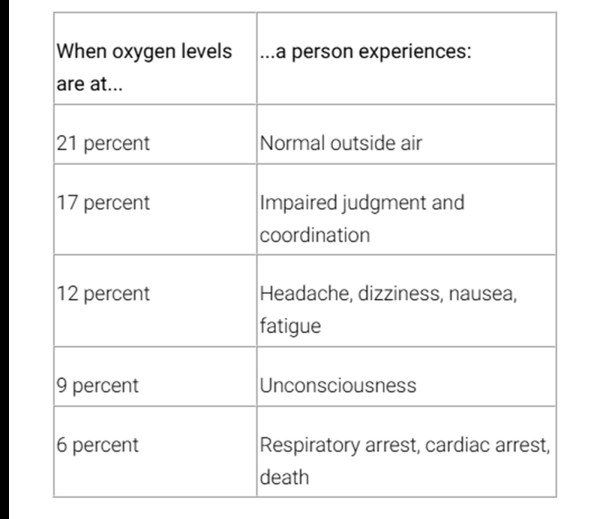 Effects of oxygen deprivation in human body. (Source: NFPA)
In addition to producing smoke, fire can incapacitate or kill by reducing oxygen levels, either by consuming the oxygen, or by displacing it with other gases. Heat is also a respiratory hazard, as superheated gases burn the respiratory tract. When the air is hot enough, one breath can kill.”
Fire safety guidelines
All high-rises and public buildings in India are required to get a fire safety clearance. In the case of the nightclub, Birch by Romeo Lane, Goa DGP Alok Kumar said, “The cause of the fire is yet to be ascertained. We are also checking if the club had complied with fire safety norms and whether they had the requisite fire-safety NOC.”
The National Building Code of India covers the guidelines for construction, maintenance, and fire safety of buildings. However, it is recommendatory, and not binding, in nature. The actual No Objection and safety certificates are given at the level of the state government or the local civic authorities.
The Goa government’s Directorate of Fire and Emergency Services states that, along with following other rules, buildings should have “fire pumps, wet riser-cum-downcomer, sprinkler installation, fire extinguisher” at each floor in a functional condition and staff should know how to handle them. Fire escape staircases should be provided and kept clear of storage or encroachment.
When you enter buildings you are not familiar with, like a new restaurant or nightclub, look around and keep a basic idea of where the exits are. In case of a fire, crouch low. Smoke rises, and the air will be cleaner closer to the floor.
If signs pointing to an exit are available, follow them. If that is not possible, trace walls with your hand and move. See where the smoke is the heaviest and move away from it. If in a crowd, move diagonally, don’t try to push straight ahead in a press of people. Try to stay on your feet or hold onto walls and railings as far as possible — a fall in such a situation can be very dangerous.
If you can, cover your face and mouth with a wet cloth to avoid inhaling smoke as far as possible.
Importantly, never try to use the lift. The fire can damage and jam it. If the shaft fills with smoke, suffocation is very difficult to avoid. Always go for staircases.