Premium

Why gharials are endangered, how MP has emerged the leader in their conservation

What are gharials, and why are they important? What threats do they face, and what is Madhya Pradesh doing to protect them?

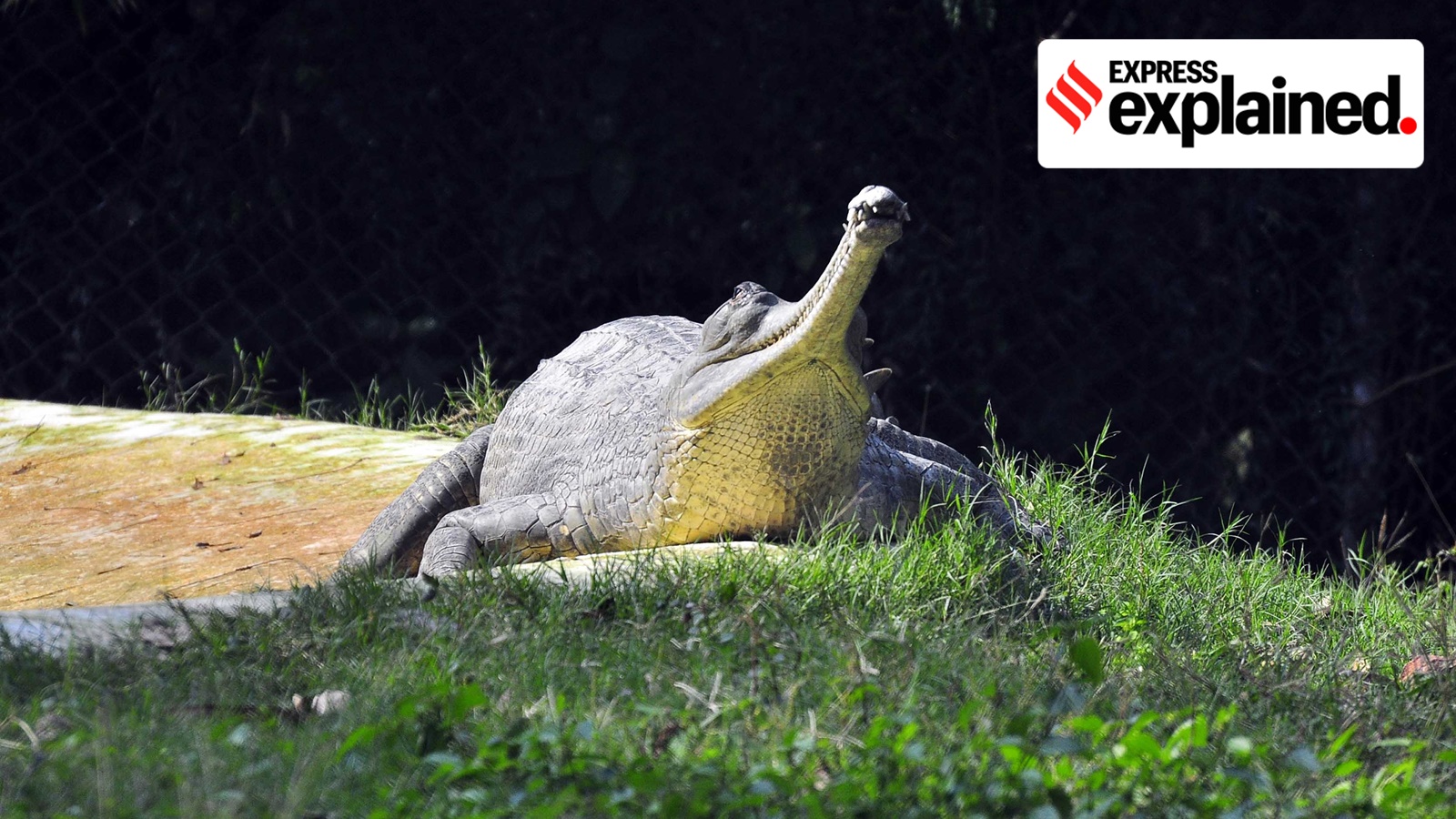
gharialThe name 'gharial' comes from the Hindi word ghara, meaning pot or vessel, referring to the bulbous snout tip of adult males. (Express photo: Sahil Walia)

Madhya Pradesh Chief Minister Mohan Yadav last week released 10 gharials, a critically endangered species, into the Chambal river at the National Chambal Gharial Sanctuary in Morena.

Madhya Pradesh’s decades-long conservation efforts have earned it the title of a “gharial state,” hosting over 80 per cent of India’s gharials.

What are gharials, and why are they important? What threats do they face, and what is MP doing to protect them?

What are gharials?

The gharial is a species of Gavialis gangeticus—long-snouted, fish-eating crocodilians. The name ‘gharial’ comes from the Hindi word ghara, meaning pot or vessel, referring to the bulbous snout tip of adult males, which resembles an inverted pot. In Indian mythology, gharials hold sacred significance, often depicted as the divine mount of the goddess Ganga. Their slender snouts, lined with numerous sharp, interlocking teeth, are adapted to trap fish, the mainstay of their diet.

Males grow from 3-6 meters, and females 2.6–4.5 meters. Gharials mate during November, December, and January. Sandbanks, sandbars, and islands are critical to their ecology, serving as preferred sites for basking and nesting. From March to May, as river levels recede, female gharials climb onto exposed sandbanks and islands to nest communally, with many laying eggs in the same area. Females provide parental care for the first few days after hatching.

Gharials are important for a river’s ecosystem, as they clean up carrion.

Why did the CM release the crocodiles into the river?

Story continues below this ad

CM Yadav released nine males and one female into the Chambal on February 17 to bolster the population of gharials and reinforce Madhya Pradesh’s leadership in crocodile conservation.

The state boasts the highest number of gharials in India, with a 2024 census recording 2,456 individuals in the sanctuary. This is a feat attributed to decades of conservation work, following a national decline of over 80 per cent in gharial population between the 1950s and 1960s, MP wildlife officials said.

Globally, Gharial populations saw a steady recovery until 1997, but between 1997 and 2006, numbers plummeted by 58%, dropping from 436 adults to 182, according to a 2007 research paper.

Wildlife researchers have said the species is likely extinct in Myanmar and Bhutan, with only small, uncertain populations remaining in Pakistan, Nepal, and Bangladesh’s upper Brahmaputra.

Story continues below this ad

What threats do gharials face?

Historical threats included overhunting for skins, trophies, eggs, and traditional medicine. Modern challenges—dam construction, irrigation canals, siltation, river course changes, embankments, sand-mining, pollution, and fishing—continue to devastate populations. Gill nets, in particular, kill gharials of all sizes, even in protected areas.

What are the conservation efforts?

Between 1975 and 1982, India established 16 captive breeding and release centers and five gharial sanctuaries. Today, the species survives primarily in five refuges: National Chambal Sanctuary (NCS), Katerniaghat Sanctuary, Chitwan National Park, Son River Sanctuary, and Satkosia Gorge Sanctuary.

Conservation efforts include captive breeding programmes to rear and release hatchlings back into the river, monitoring populations, actively managing threats like sand mining, and engaging local communities in habitat preservation and awareness campaigns

An MP wildlife officer said the biggest measures are “stronger river protection, better environmental management, sandbank restoration and community involvement.”

Why is the Chambal sanctuary crucial?

Story continues below this ad

Spanning three states, the Chambal sanctuary protects a 435-km stretch of one of India’s cleanest rivers. Apart from gharials, the stretch hosts over 290 bird species, including rare Indian Skimmers (80% of the national population).

The sanctuary has also been helpful in reviving gharial populations elsewhere. Gharials had disappeared from the rivers of Punjab around 1960-70. Gharials were sent to Punjab from the Deori Gharial Center of Chambal in 2017. In 2018, 25 gharials were sent to the Sutlej River, and in 2020, 25 gharials were sent to the Beas River.

Anand Mohan J is an award-winning Senior Correspondent for The Indian Express, currently leading the bureau’s coverage of Madhya Pradesh. With a career spanning over eight years, he has established himself as a trusted voice at the intersection of law, internal security, and public policy. Based in Bhopal, Anand is widely recognized for his authoritative reporting on Maoist insurgency in Central India. In late 2025, he provided exclusive, ground-level coverage of the historic surrender of the final Maoist cadres in Madhya Pradesh, detailing the backchannel negotiations and the "vacuum of command" that led to the state being declared Maoist-free. Expertise and Reporting Beats Anand’s investigative work is characterized by a "Journalism of Courage" approach, holding institutions accountable through deep-dive analysis of several key sectors: National Security & Counter-Insurgency: He is a primary chronicler of the decline of Naxalism in the Central Indian corridor, documenting the tactical shifts of security forces and the rehabilitation of surrendered cadres. Judiciary & Legal Accountability: Drawing on over four years of experience covering Delhi’s trial courts and the Madhya Pradesh High Court, Anand deconstructs complex legal rulings. He has exposed critical institutional lapses, including custodial safety violations and the misuse of the National Security Act (NSA). Wildlife Conservation (Project Cheetah): Anand is a leading reporter on Project Cheetah at Kuno National Park. He has provided extensive coverage of the biological and administrative hurdles of rewilding Namibian and South African cheetahs, as well as high-profile cases of wildlife trafficking. Public Health & Social Safety: His recent investigative work has uncovered systemic negligence in public services, such as contaminated blood transfusions causing HIV infections in thalassemia patients and the human cost of the fertilizer crisis affecting rural farmers. Professional Background Tenure: Joined The Indian Express in 2017. Locations: Transitioned from the high-pressure Delhi City beat (covering courts, police, and labor issues) to his current role as a regional lead in Madhya Pradesh. Notable Investigations: * Exposed the "digital arrest" scams targeting entrepreneurs. Investigated the Bandhavgarh elephant deaths and the impact of kodo millet fungus on local wildlife. Documented the transition of power and welfare schemes (like Ladli Behna) in Madhya Pradesh governance. Digital & Professional Presence Author Profile: Anand Mohan J at Indian Express Twitter handle: @mohanreports ... Read More


 

Latest Comment
Post Comment
Read Comments
Advertisement
Advertisement
Advertisement
Advertisement