© IE Online Media Services Pvt Ltd
 5 min read


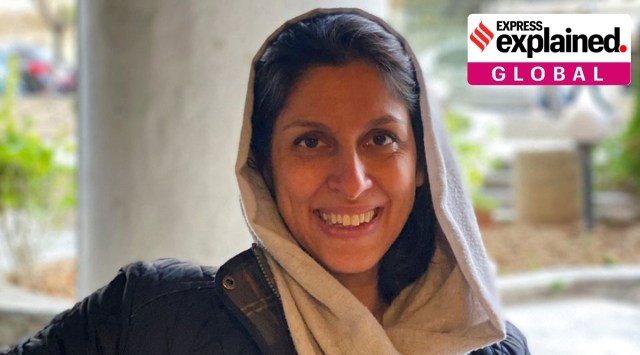 Nazanin Zaghari-Ratcliffe poses for a photo after she was released from house arrest in Tehran, Iran March 7, 2021. (Zaghari family/WANA/Handout via REUTERS/File Photo)
British MP Tulip Siddiq, of the Labour Party, on Wednesday, took to Twitter to announce the release of Nazanin Zaghari-Ratcliffe, a British-Iranian woman who was detained in Iran in 2016 on charges of spying and plotting to overthrow the government in Iran.
“Nazanin is at the airport in Tehran and on her way home,” the Hampstead MP tweeted.
Nazanin is at the airport in Tehran and on her way home.
I came into politics to make a difference, and right now I’m feeling like I have.
More details to follow. #FreeNazanin
— Tulip Siddiq (@TulipSiddiq) March 16, 2022
Prime Minister Boris Johnson, earlier on Wednesday, said that talks of releasing Zaghari-Ratcliffe were “going right up to the wire”. Johnson added that the conversation to bring her back was moving forward but he couldn’t say more since negotiations were underway.
On Tuesday, Siddiq said that Zaghari-Ratcliffe was given back her British passport.
Zaghari-Ratcliffe, 43, is a dual British-Iranian national and was arrested on April 3, 2016. She has always denied the charges levelled against her by the Iranian government. At the time of her arrest, Zaghari-Ratcliffe was working as a project manager since 2011 with Thomson Reuters Foundation, a charity working towards socio-economic progress, human rights and media freedom. Before that, she worked with an international development charity, BBC Media Action.
Before her arrest, Zaghari-Ratcliffe lived in Hampstead in London with her husband Richard Ratcliffe and their daughter. Born in Tehran, Zaghari-Ratcliffe completed her English Literature degree at Tehran University and became an English teacher.
As reported by The Scotsman, Zaghari-Ratcliffe then worked for multiple charity organisations including the Japanese International Co-operation Agency, International Federation of Red Cross, Red Crescent Societies and World Health Organization (WHO) before coming to the UK on scholarship to study Communication Management at London Metropolitan University.
Zaghari-Ratcliffe was detained at the Imam Khomeini International Airport by Iranian Revolutionary Guards, who said she was hosting a “foreign-linked hostile network” while on her visit to Iran.
She was arrested while on a holiday with her 22-month-old daughter to visit her parents and to celebrate the Iranian new year. BBC Media Action and Thomson Reuters Foundation have also said Zaghari-Ratcliffe was not working, but was on a holiday in Iran.
She was sentenced to five years in jail on November 9, 2016, out of which she spent four in Evin Prison in Tehran and one under house arrest at her parents’ house. Her family has accused Iranian authorities of torturing her when she was in the prison. In 2018, they also accused them of holding her because of a multi-million-pound debt owed by the United Kingdom to Iran.
In April 2021, after she completed her five-year term, Zaghari-Ratcliffe was sentenced to another year in jail and was banned from leaving Iran on charges of spreading propaganda against the country’s government. Her lawyer said she was charged for taking part in a protest 12 years ago in London and talking to BBC Service during the time.
Iran has stated that the UK government owes the Iranian government 400 million pounds for the sale of some defence equipment in the 1970s—before the Iranian Revolution when both the countries used to be allies.
According to a Reuters report, Iran claims that Britain promised 1,750 Chieftain tanks and other vehicles for which Farah Diba, the widow of shah Mohammad Reza Pahlavi, who was ousted by the 1979 Islamic Revolution, paid for but none were delivered.
Although the British and Iranian governments say there is no connection between the case and the debt, many have accused Iran of holding Zaghari-Ratcliffe because of the debt.
On Wednesday, UK Foreign Secretary Liz Truss said the British government was looking to settle the historical 400-million-pound debt to Iran but refrained from commenting on whether it had already been paid off. “We have been clear this is a legitimate debt that we do owe Iran and we have been seeking ways to pay it,” said Truss.
Newsletter | Click to get the day’s best explainers in your inbox