Journalism of Courage
 10 min read


 Moroccan players practice during a training session at the Duhail Stadium in Doha, Qatar, Tuesday, Dec. 13, 2022. Morocco will face France in a World Cup semifinal soccer match on Dec. 14. (AP Photo/Andre Penner)
 When Morocco faces France in the semi-final of the Fifa World Cup in Qatar, a complicated relationship between the two nations will frame the story of the football game. Between 1912 and 1956, most of modern day Morocco was a French colony. While it is a sovereign nation today, the imprint of French colonialism can be felt in various details of Moroccan society and politics. The two nations continue to share a fond but frictional relationship.
Preparing for UPSC? Use CRACKUPSC20 code here to get an extra 20% discount on Indian Express subscription
The Indian Express looks at the historical context in which tonight’s football match is situated and how Morocco’s dream run in the tournament is already a symbolic triumph against neocolonialism.
A cultural melting pot that captured the world’s imagination
Morocco is a mountainous country at the north-western edge of Africa, beyond the western end of the Sahara desert, and with the Atlantic Ocean to its west and the Mediterranean Sea to its north. The Atlas mountains run through its length, giving the Moroccan football team its moniker of “Atlas Lions.”
Given Morocco’s location at the crossroads between Europe and Africa, it has been a melting pot of many cultures – a unique amalgamation of Arab, Hispanic and French influences, among others.
Morocco’s idyllic countryside, pristine coastline, and bustling cities have captured the imagination of many travellers throughout history, with the historic city of Fez being its cultural and spiritual centre. However, today, the West’s (and perhaps the rest of the world’s) imagination of Morocco is intimately tied to its romantic depiction in the ageless classic “Casablanca”, starring Humphrey Bogart and Ingrid Bergman. Casablanca is Morocco’s largest city and most vital port. It is also one of its political centres and was at the heart of Morocco’s anti-colonial struggle in the Post World War II period.
French rule and cultural influence
The Sultans of Morocco had managed to stave off direct European colonisation till 1912, though since the beginning of the 19th century, Spain and France vied for influence in the region and slowly chipped away at the Sultan’s autonomy. In 1912, most of Morocco came under French control, with a smaller Spanish protectorate in its northern tip as well as Spanish Sahara to its South.
The French ruled over Morocco through the symbolic legitimacy of the Sultan and a European style bureaucracy that had varying degrees of actual authority across the country. The idea was to leave the Moroccan ruling elite intact and thus wield actual power without drawing strong opposition from the populace. The French focussed on “Europeanising” Morocco, building new planned cities and investing in francophonic education. By the end of its rule, Casablanca was a sprawling city of nearly a million inhabitants and French culture pervaded many aspects of Moroccan life.
However, France did not touch the old cities of Morocco which were spiritual and cultural nerve centres for the population. Thus, throughout colonial rule, Morocco maintained many of its pre-colonial institutions simultaneously as it imbibed French influence. This syncretism of culture and identity continues to define Morocco today.
Morocco’s anti-colonial struggle
With French education also came ideas of liberty and equality, both of which were missing in the seemingly peaceful and picturesque French colony. As nascent nationalist sentiments spread across the land, France resorted to standard “divide and rule” tactics, pitting the native Imazighen people (pejoratively known as Berbers) against the Arabs, who had moved to the region over centuries of Arab rule and conquest.
However, this ploy was unable to contain burgeoning anti-colonial sentiments which harkened to a past whose symbols were very much a part of the present. France’s decision to rule through the region’s traditional elites preserved the ruling class, and by World War II, the Sultan became a rallying point for nationalists.
The War and the fall of France brought jeopardy and hope to Morocco: on one hand, France, its colonial overlord, was under German occupation itself, but on the other, Americans and other allied forces soon landed in Morocco, using the country as a base of operations. Hope that Morocco would see independence after the War was short-lived. While independence seemed inevitable, it would require a concerted struggle during which the undisguised injustices of colonial rule would become more frequent.
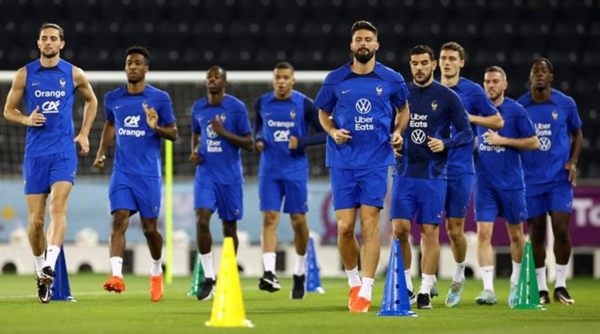 France’s Olivier Giroud, Adrien Rabiot, Theo Hernandez and teammates during training. (Reuters Photo: Bernadett Szabo)
Often perceived as a benign acculturating experience by the outside world, Morocco’s story of colonial rule was marred with brutal excesses, suppression of dissent, and nakedly hegemonic rule. Nationalists were frequently jailed without a trial, exiled to other French dominions, or even killed, either through official executions or French-backed political violence. During the twilight of French rule, nationalists and French troops even faced each other in military hostilities, reportedly claiming the lives of a 1,000 men.
Morocco finally gained independence in 1956 as a constitutional monarchy under the Sultan. However, France’s influence over the young nation would not cease with the end of formal colonialism.
Independent Morocco’s journey with continued French dominance
France plays a pivotal role in many aspects of Moroccan life, decades after Morocco’s independence. France remains its biggest source of foreign investment, with the former colony being a favourite tourist destination for the French elite. Morocco’s economic dependence on France, along with its huge francophonic population, has meant that despite tensions, France and Morocco continue to share a close relationship. As the visceral trauma of colonialism fades further into the past, the perception of the French has steadily improved amongst many Moroccans.
However, the contours of Morocco’s relationship with France in many ways reproduces old colonial hierarchies. For instance, much of Moroccan industry is built on French capital, with profits going to French capitalists and not locals. Morocco has also been France’s and NATO’s trusted “Arab ally,” often to the detriment of its own interests.
Morocco is a sovereign country but France’s hold over it remains strong.
Brain drain: a pernicious outcome of colonialism
Today, an estimated five million Moroccans live abroad, with the majority of the diaspora being located in Europe, especially in France. A survey conducted by Morocco World News in 2018 revealed that 91 per cent of Moroccan professionals aged 35 and below are tempted to move abroad in search of better work conditions and quality of life.
Scholars have frequently cited colonialism as a prime factor behind such labour migration. Conditions created under colonial rule as well as the world capitalist economy that continues to divide the world into a Global North and South on erstwhile colonial lines, are what drive migration across many ex-colonies. Morocco is no exception.
The macroeconomic story of colonial migration is simple to tell: developed countries (most often erstwhile colonisers) benefit at the expense of developing countries (former colonies). In this way, “brain drain” is arguably one of the most pernicious outcomes of colonialism and a foremost neocolonial process.
The Moroccan football triumph against “footballing brain drain”
This World Cup has been as much a success of Moroccan football as it has been a triumph against footballing “brain drain”. Many of Morocco’s key players were born outside Morocco where they received their footballing education. Players like Hakim Ziyech, Noussair Mazraoui and Sofyan Amrabat grew up in the Netherlands, Achraf Hakimi was raised in Spain, Yassine Bonou has Canadian connections, and Romain Saiss and Soufiane Boufal were born in France. Out of the 26 player squad, 16 were either born or raised in foreign shores, with coach Walid Regragui himself being born in Paris.
The fact that all these players are playing for Morocco, instead of the countries they/their parents migrated to, is in itself a victory. Many African nations have struggled to attract such talent. In fact, the best example for this would be Morocco’s opponents, France. The French team is almost completely built up of migrants itself – players with origins outside of France, most often in one of its many colonies. The 2018 World Cup winning squad was hailed as an example of France’s diversity and inclusiveness.
Yet, behind the heartwarming story of Guinean Paul Pogba scoring for France in the World Cup final, or Malian N’golo Kante running the French midfield, hides the story of how African nations failed to gain from the talents of their most talented players. In many ways, this is the story of African football. While football is the sport of choice for most in the continent, the very best African footballers are often born outside Africa or taken outside early in their lives after being spotted by European scouts. African teams remain poorer as a result.
What Morocco has successfully managed to do is convince its top talent to play for Morocco rather than the glitz and glamour of Europe. Hakim Ziyech could very easily have played for the Netherlands, almost making the 2018 World Cup squad. But as he fell out with the coach due to “attitude problems,” Morocco pounced at its chance, giving him an opportunity to play international football. Similarly, Achraf Hakimi was also eligible to play for Spain, choosing to represent Morocco instead. Such stories can be found around the Morocco squad.
Through opportunism, display of basic footballing competence, and crafted nationalist rhetoric, Morocco has created a talented team that has made it all the way to the semi-finals of the Fifa World Cup. In doing so, it has attained a symbolic victory over the neocolonial process of “brain drain”.
Tonight, they hope for yet another victory, one that will be etched in the national psyche of Morocco for generations to come.