7 min read
© The Indian Express Pvt Ltd



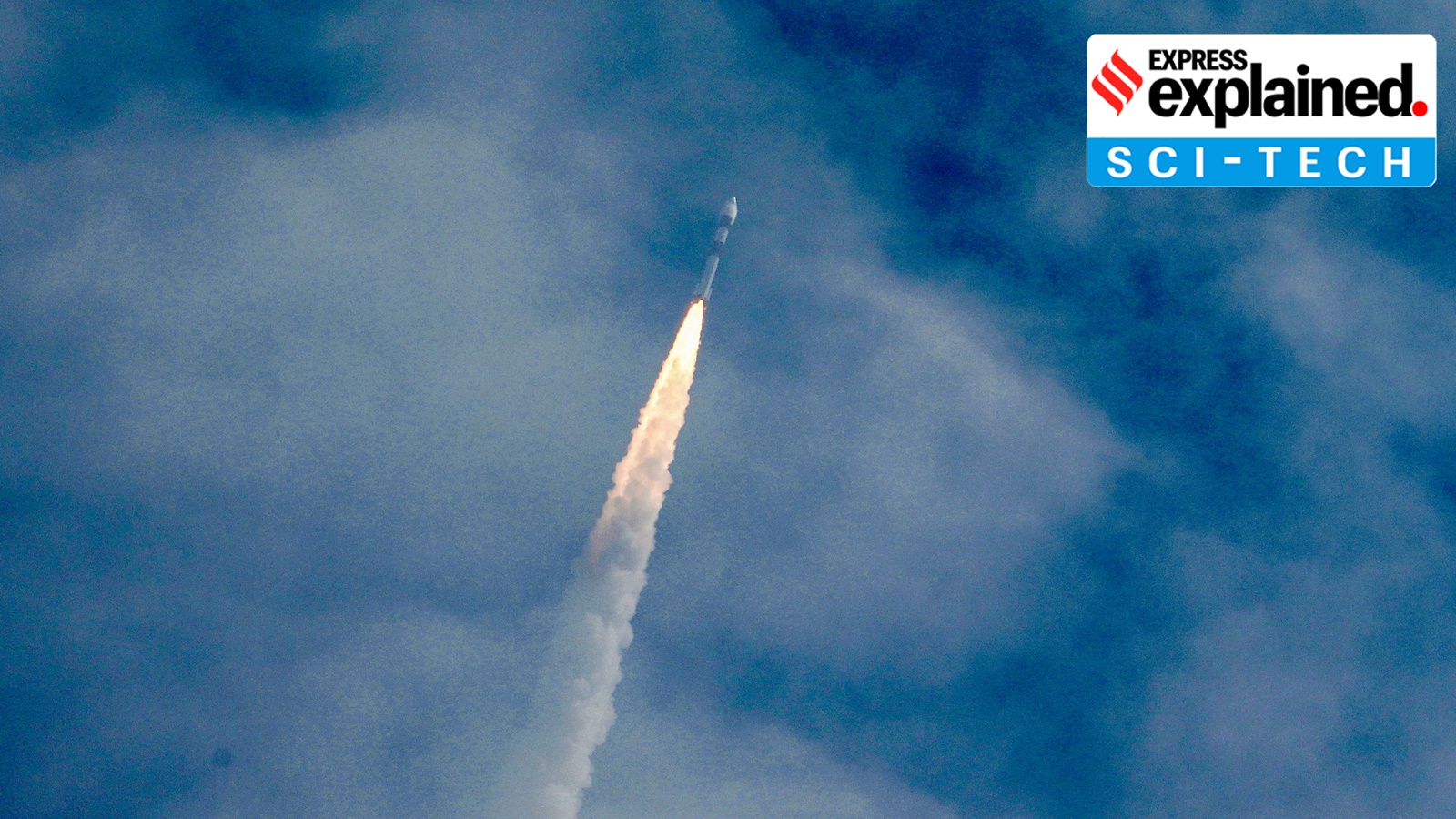 ISRO's PSLV-C62 carrying the EOS-N1 lifts off from the Satish Dhawan Space Centre in Sriharikota, Andhra Pradesh, Monday, Jan. 12, 2026. (PTI Photo/R Senthilkumar)
The Indian Space Research Organisation’s (ISRO) first launch of the year ended in failure on Monday, January 12. The PSLV-C62 mission — carrying 16 satellites, including seven from foreign countries — did not reach its intended orbit. This is the second straight failure for a rocket that has served as ISRO’s main launch vehicle for more than three decades.
The previous failure happened in May last year. On both occasions, the rocket took off successfully and completed the first two stages before developing trouble in the third stage.
The failure of last year’s mission was attributed to an unexpected drop in the combustion chamber of the engine, according to remarks by ISRO chairman V Narayanan. The report of a Failure Analysis Committee has not been made public.
The cause of Monday’s failure is not yet known, but could be similar. During the third stage, the rocket needs to rapidly accelerate to maintain its orbit around the Earth (note that this is not the final orbit). If pressure drops in the combustion chamber, the force required to attain the necessary acceleration drops as well.
Here’s how the workhorse PSLV rocket functions, why the third stage is so tricky.
The PSLV, or Polar Satellite Launch Vehicle, is what is known as a four-stage rocket. The stages refer to different parts of the rocket, each of which have their own engines and fuel. Each of these stages sequentially take charge of propelling the mission. They get detached and discarded after doing their job. The stages are sometimes also used to refer to the different phases of the mission flight.
*The first stage involves the lift-off. This is a near vertical journey till an altitude of about 50-60 km. This is the stage that requires the most work because the rocket has to fight gravity as well as atmospheric drag. For this reason, this stage needs a very heavy engine and lots of fuel.
In the case of the PSLV, the first stage uses a solid propellant as fuel. The first stage forms a large part of the rocket, and constitutes the bulk of its weight. This stage lasts barely two minutes, during which a huge amount of fuel is consumed. After the fuel is spent, this part of the rocket becomes deadweight. So, it is jettisoned. It detaches from the main body of the rocket, and falls off, passing the baton to the second stage.
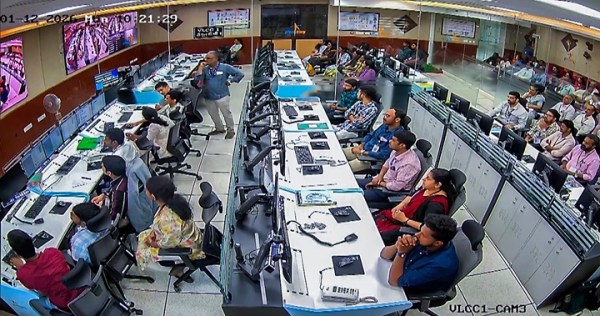 ISRO scientists and engineers monitor the successful lift-off of the PSLV-C62/EOS-N1 mission from the mission control room at Satish Dhawan Space Centre (SDSC-SHAR), in Sriharikota on Monday. (ISRO Official Social media/ANI Video Grab)
*During the second stage, the rocket continues to move vertically — and horizontally at the same time as it prepares to get into orbit. The second stage in the PSLV involves the famous, indigenously developed Vikas engine and a liquid fuel. This stage takes the vehicle to about 220-250 km from Earth’s surface before burning out.
ALSO READ | ISRO lines up 7 launches, including uncrewed Gaganyaan mission by March 2026
By the time the second stage gets separated, the weight of the mission falls to about 10-20 per cent of the launch weight. During this stage, the vehicle attains a very high speed — around 14,000 km an hour. But it needs to attain an even greater speed. This happens in the third stage.
*In the third stage, the vehicle is moving almost entirely horizontally, going around the Earth in an orbit, or rather a sub-orbital trajectory. To maintain this trajectory, and avoid falling towards the Earth, it needs to travel at very high velocities, usually 26,000 to 28,000 km per hour. The third stage is, therefore, about rapid acceleration. The PSLV rocket burns solid fuel to achieve this.
The vehicle begins to go around the Earth at very high speeds, but does not yet reach its designated orbit. That happens in the fourth stage, which involves precisely placing the satellite in the intended orbit.
A suitable low-earth orbit for the satellite can be at any altitude between 250-2,000 km from the Earth. The satellite has to be manoeuvred into that slot through guidance from the fourth-stage engine, which, in the case of PSLV, again uses liquid propulsion.
The different payloads are eventually placed in their intended orbits. By this time, all four stages of the rocket have separated, having accomplished their jobs.
The third stage is tricky. If a rocket is unable to attain the required velocity, it will be unable to maintain orbit around the Earth and get pulled down due to gravity. That is what seems to have happened with the PSLV-C61 mission last year.
This is how this stage works. The solid fuel in the third stage is burned and converted into gas. This gas causes an increase in pressure in the combustion chamber. The gas is then released through a small nozzle to provide the thrust required to propel the rocket to higher speeds.
In general, the higher the pressure, the greater is the thrust provided, and higher is the acceleration that can be attained. But if there is a leak, or the pressure drops in the combustion chamber owing to any other reason, the vehicle will not be able to attain the kind of acceleration and speed that is necessary to maintain the orbit.
The reason for the pressure drop in last year’s failure has been reported to be a manufacturing defect, which allowed some amount of leakage. If Monday’s failure was also the result of a similar or related problem, this could be a moment of embarrassment for ISRO.
Space missions have a razor thin margin of error. Every other space agency has faced multiple failures. But back-to-back failures, and that too with a trusted rocket, is cause of concern for ISRO.
In fact, three of the last six missions by ISRO have been unsuccessful, an unacceptably high failure rate for an agency such as this.
The PSLV is also a major revenue earner for ISRO, having been used for most commercial launches, including those from foreign countries. Doubts over its reliability could be a major setback. But ISRO also has a proven track record of bouncing back from crises and re-establishing its capabilities as one of the leading space agencies of the world. It remains to be seen if it can do just that after Monday’s mission.