5 min read


© The Indian Express Pvt Ltd



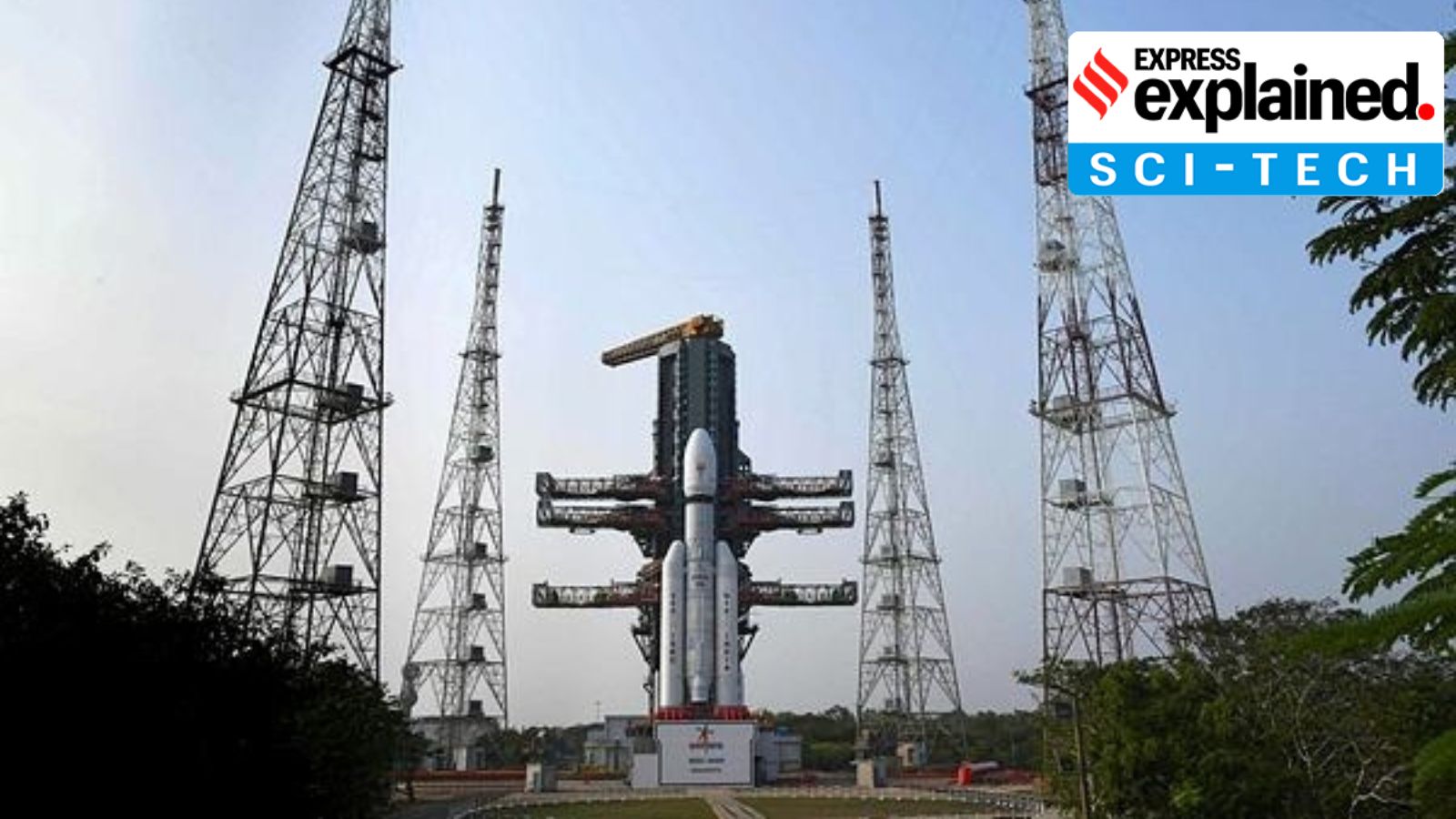 Indian Space Research Organisation's LVM3M6 set to launch the BlueBird Block-2 spacecraft from Satish Dhawan Space Centre, Sriharikota. (PTI)
ISRO BlueBird Block-2 Satellite Launch Explained: The Indian Space Research Organisation (ISRO) launched the LVM-3 rocket carrying its heaviest-ever satellite — BlueBird Block-2, weighing nearly 6,100 kg — on Wednesday at 8:24 am. A modified version of the LVM-3 rocket will also be used in the Gaganyaan missions.
The satellite will be injected into an orbit of around 520 km just over 15 minutes after take-off. The BlueBird Block-2 satellite will be the largest-ever commercial communications satellite to be deployed in low Earth orbit (LEO). As the name suggests, LEO is an orbit that is relatively close to Earth’s surface. It is normally at an altitude of less than 1,000 km.
The satellite, designed by the US company AST SpaceMobile, will be part of an LEO constellation that will provide direct-to-mobile connectivity. This means that unlike conventional communications satellites, which beam their signals to specialised ground stations before disseminating data further, this constellation will be able to directly communicate with the phones we use. This constellation will enable 4G and 5G voice and video calls, texts, streaming, and data for “everyone, everywhere, at all times,” ISRO said.
The current mission is the third commercial one involving ISRO’s newest launch vehicle, after the launches of 36 satellites of OneWeb, a broadband satellite internet service provider, in 2022 and 2023. India had been chosen for these missions following Russia’s refusal in the wake of the Ukraine war, and with the European Space Agency’s (ESA) launcher, Ariane-5, going out of commission.
The LVM-3 is hardly the only heavy launch vehicle on the market. Other options are SpaceX’s Falcon-9 and the ESA’s Ariane 6. But Wednesday’s launch is ISRO’s chance to demonstrate that it can carry out such heavy launches — at a lower cost.
This mission marks the third time the LVM-3 will be used to carry a satellite into LEO. The powerful cryogenic engine-based vehicle was initially designed to carry satellites to the distant geosynchronous orbits of around 36,000 km from the Earth’s surface. After several satellites were placed in different orbits during the 2022 OneWeb launch, the rocket, then called the Geosynchronous Launch Vehicle Mark 3 or GSLV-Mk3, was renamed.
Wednesday’s launch also comes weeks after the LVM-3 rocket put the CMS-03 communication satellite in orbit on November 2. This will be the shortest gap between two LVM-3 launches. And it will be a test of the Indian space agency’s capability to quickly assemble its heavier missions. After 2023, this will be the second time ISRO launches two LVM-3 missions in a single year.
At 6,100 kg, the BlueBird Block-3 is the heaviest payload ISRO will have placed into orbit. Until now, the heaviest payload carried by the space agency so far has been the sets of OneWeb satellites — cumulatively weighing more than 5,700 kg — to LEO. The space agency also broke its record for the heaviest satellite placed in the distant geosynchronous transfer orbit last month with the launch of CMS-03 using the same vehicle. The satellite weighed 4,410 kg.
ISRO’s efforts towards engine optimisation
The space agency has been working to introduce redundancies to the vehicle to make it safe for humans for the Gaganyaan mission, as well as increasing its lift-off capacity to carry the modules for the Bharatiya Antariksh Station, the space station envisaged by India.
To increase the lift-off capacity of the vehicle, ISRO is working to increase the thrust produced by the third or the cryogenic upper stage of the rocket. This stage accounts for nearly 50% of the velocity needed to place the satellites in the geosynchronous transfer orbits. The C25 stage, presently being used in the launch vehicle, can carry only 28,000 kg of propellant, thus producing a thrust of 20 tonnes. The new C32 stage will be capable of carrying 32,000 kg of fuel and produce a 22-tonne thrust.
The agency is also considering the use of semi-cryogenic engine to replace the liquid propellant used in the rocket’s second stage. A cryogenic engine uses liquefied gases at extremely low temperatures as the fuel — in this case liquid oxygen and hydrogen — while a semi-cryogenic engine uses a liquified gas and a liquid propellant. ISRO plans to use a refined kerosene and liquid oxygen-based second stage, which would improve the capability of the vehicle and make it cheaper. Replacing the engine would make the vehicle capable of carrying around 10,000 kg to LEO instead of the current 8,000kg. This version is likely to be used to carry the modules for the Bharatiya Antariksh Station.
The space agency is also working on “bootstrap reignition” for the cryogenic engines, which will make the launch vehicle more efficient for missions where satellites have to be placed in different orbits. While launches to a geosynchronous orbit usually carry a single, large payload, most LEO missions carry several satellites for different orbits. The bootstrap reignition would allow the upper stage cryogenic engine to restart on its own without an external gas, such as helium, to reignite the engine. A boot-strap mode would reduce the weight of fuel and increase payload capability.