5 min read

Journalism of Courage



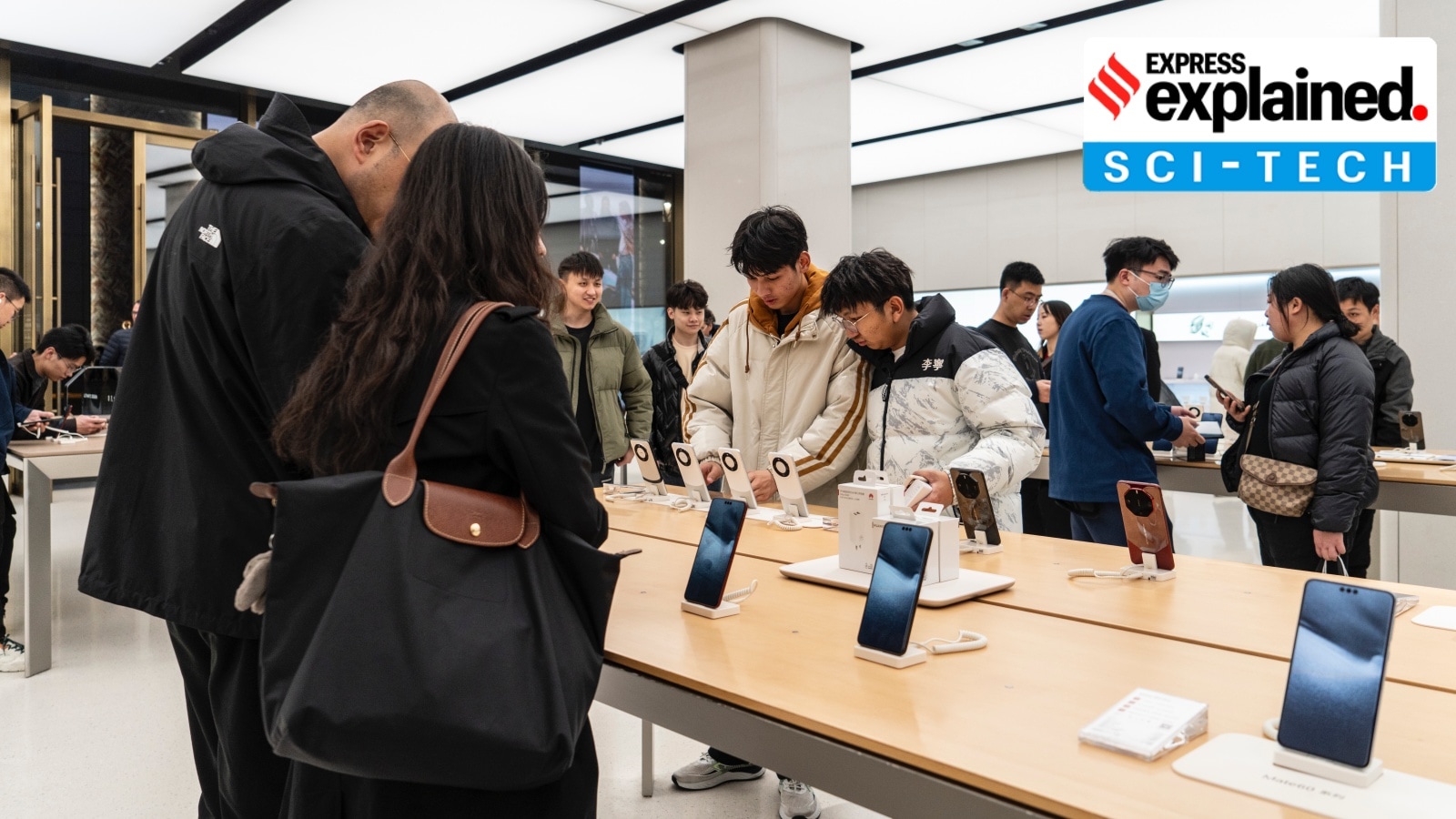 Customers at a store for Apple competitor Huawei in Shanghai, March 15, 2024. (Qilai Shen/The New York Times)
Last year, tech giant Huawei catapulted to the top of the smartphone market in China when it released the Mate 60 Pro, a phone that contained a tiny computer chip more advanced than any previously made by a Chinese company.
The chips used by Huawei’s smartphones have become a symbol in the struggle between China and the United States for control over advanced technology.
Policymakers in Washington have spent years trying to prevent Chinese companies from being able to make the kind of chip Huawei uses in its Mate phone. But Huawei has pressed ahead, and the phone has burnished its image as a national leader, triumphant in the face of U.S. restrictions.
Shoppers in China were excited to buy a phone with state-of-the-art components that had been made entirely at home. Huawei was able to appeal to Chinese customers who previously would have been more likely to buy iPhones, eating into Apple’s most important market outside the United States.
On Tuesday, Huawei unveiled the next generation of that phone, the Mate 70 series, from its offices in Shenzhen in southeastern China. Richard Yu, Huawei’s consumer group chair, called the flagship device the “smartest” Mate phone.
Powered by its homegrown operating system, HarmonyOS Next, which was officially launched last month, the Mate 70 series has artificial intelligence-enabled functions, including improved photography, live transcription and translation of phone calls. Apple has yet to release its AI features in China.
Starting at $760, the price of the Mate 70 is meant to compete with the iPhone in China. HarmonyOS Next allows phones to connect with Huawei’s other products: electric cars, smart speakers and watches.
But widespread commercial success for the Mate 70 could depend on Huawei’s ability to secure a steady supply of chips.
Challenges in sourcing chips
The company relied on Chinese chipmaker Semiconductor Manufacturing International Corp., or SMIC, to make the chips in the Mate 60 Pro. SMIC, which is partly state owned, is the only maker of advanced chips in China. Analysts said they believed Huawei had again turned to SMIC for the Mate 70. Huawei did not reveal details Tuesday about the chips in the new phone.
A critical question is how advanced the chips are, because that can determine whether they can perform more sophisticated tasks like AI at a faster speed.
U.S. officials seeking to control China’s chip development say advanced technology is essential not just for consumer technology like chatbots but also for military superiority. They have tried to prevent Chinese companies from buying these kinds of chips and related machinery, leaving SMIC dependent on dated tools.
Experts say SMIC has strained to make enough chips for Huawei. Even though production for some parts in Huawei’s latest phones began in July, the Mate 70 has not gone on sale until now because it has been challenging for Huawei to acquire enough chips, said Lori Chang, a senior analyst at Isaiah Research, a market research company. SMIC did not respond to a request for comment.
As of Tuesday, more than 3 million people had signed up on Huawei’s website to reserve the company’s latest flagship phone, which does not require a deposit. The premium version of the Mate 70 is set to go on sale in China on Tuesday, according to Huawei’s website.
Huawei has been working for years to position itself as synonymous with the country’s tech industry, as Apple is with Silicon Valley. Resurgence despite Washington’s controls is a crucial part of this image.
A top Huawei executive, Meng Wanzhou, became a hero to many in China after her return in 2021 following almost three years of detention in Canada while facing fraud charges in the United States. A series of trade restrictions against Huawei first put in place during the Trump administration pummeled its profits in 2022. Since Meng’s release, Huawei has expanded its product range and developed some of China’s most advanced AI technology.
Over the past two years, the company has steadily gained ground in China’s smartphone market. In 2022, three-quarters of the high-end smartphones sold in China were iPhones. This year, it was just about half, as Huawei’s share more than doubled, according to Canalys, a market research firm.
“Huawei’s goal over the past few years has been consistent — to reclaim some of the market share that iPhone holds in China,” Chang said.
Huawei faces stiff competition from domestic rivals like Xiaomi and Oppo, which sell less expensive devices. To compete, Huawei will have to sell more midrange models, too, said Toby Zhu, a senior analyst at Canalys.
But even those devices will require a large number of chips. And as foreign chipmakers like the Taiwan Semiconductor Manufacturing Co., or TSMC, stop sending chips to Chinese clients, this could become increasingly difficult as more companies will depend on SMIC for advanced chips.
“Not only Huawei but now all China-based AI makers, they face the same issue,” said Linda Sui, a senior director at TechInsights, a market research firm. “If they all ship through SMIC, that’s going to make the supply constraints even worse next year.”
Written by Meaghan Tobin and John Liu. This article originally appeared in The New York Times.