© The Indian Express Pvt Ltd
 5 min read


 Bihar Chief Minister Nitish Kumar with Tejashwi Yadav in 2017. Tejashwi has challenges Kumar to a debate ahead of the Bihar elections. (Express Photo/File)
Recently, when Tejashwi Yadav challenged Bihar CM Nitish Kumar to a debate on his governance record, the young RJD leader reopened the question of whether leaders’ debates can find a place in the Indian electoral process. Around the world, many countries hold public debates during general election campaigns as a way for two or more candidates to expound their political ideologies and their stand on public policy issues.
According to Debates International, a global resource on candidate debates maintained by the American non-profit organisation National Democratic Institute, 95 countries and regions conduct debates, out of which 76 have them to elect national leaders. Whether or not these debates help sway voters is itself a matter of debate; a poll conducted by the Monmouth University Polling Institute in the USA revealed that while 74 per cent of voters intended to watch the first US presidential debate of 2020 on September 30, only 3 per cent of them said that they were likely to hear anything that would change their mind. The results of the poll were almost identical to the one conducted during the 2016 US presidential elections, when, out of the 75 per cent who had said they would watch the debates, only 2 per cent said that they were likely to change their votes based on what was said by each candidate during the event.
Here are a few examples of Leaders’ Debates from different countries:
USA
The most well-known of all leaders’ debates happen during the US presidential elections. The American presidential debates, which have been televised since the very first general election debates in 1960 between John F Kennedy and Richard Nixon, are watched and analysed around the world. According to the global measurement and data analysis company Nielsen, the ongoing election’s first debate between Republican nominee Donald Trump and Democratic nominee Joe Biden in Cleveland, Ohio, was watched by an estimated 73.1 million people. The most-watched US presidential debate of all time, however, is the first one in the 2016 elections between Trump and then-Democratic nominee Hillary Clinton. According to Nielsen, the debate clocked 84 million viewers.📣 Express Explained is now on Telegram
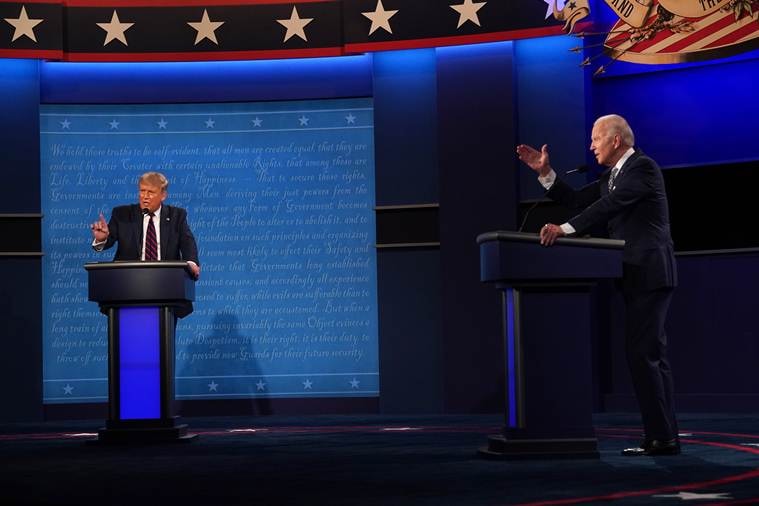 Donald Trump and Joe Biden, the Democratic nominee, on Tuesday, Sept. 29, 2020 at the first presidential debate in Cleveland, where Trump mocked Biden for his habit of wearing a mask in public. (Doug Mills/The New York Times)
New Zealand
While its Leaders’ Debates don’t generally hold the world in thrall like the US presidential debates do, New Zealand has its own long and colourful history with the format. According to New Zealand History, a website run by the national government, the first fully televised election in the country was in 1975; Conservative leader Robert Muldoon dominated the election debates in what is dubbed as New Zealand’s “Nixon-Kennedy” moment and was elected Prime Minister. He was bested in the 1984 debate by Labour leader David Lange, who became the nation’s youngest Prime Minister at the age of 41. The current holder of that record is another Labour leader, Jacinda Ardern who, at the age of 37, was elected to the top office in 2017. She was reelected for a second term this month; her debates with National Party leader Judith Collins, the last of which took place hours after the Trump-Biden match, drew attention for their lack of acrimony.
UK
After a long history of resistance from Conservative and Labour leaders on the grounds that such public debates were alien to British political culture, the idea of a national Leaders’ Debate during a general election was finally accepted in 2010. The debates between the three candidates–Gordon Brown from the Labour Party, David Cameron of the Conservative Party and Nick Clegg of the Liberal Democrats–were televised live, as were the subsequent Leaders’ Debates in 2015. In 2017, the Prime Minister’s office refused to participate in the proposed TV debates, with PM Theresa May only consenting to being interviewed even as candidates of other parties carried on and attacked her from behind the rostrum. A sitting PM once again appeared in a Leaders’ Debate in 2019, when Boris Johnson took on Labour leader Jeremy Corbyn ahead of the general elections.
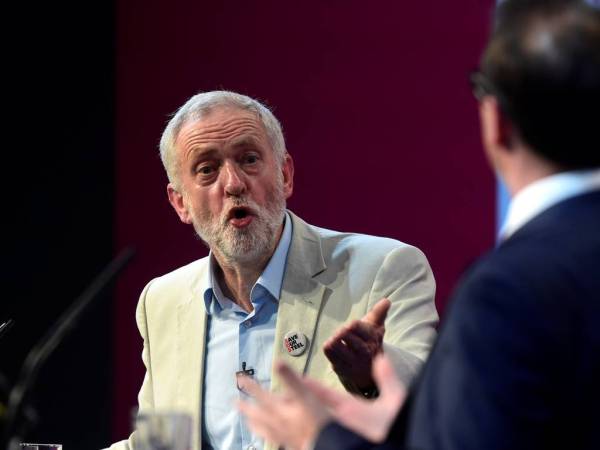 Labour Party leader Jeremy Corbyn speaks during a debate in Cardiff, Wales, Britain August 4, 2016. (Reuters Photo/File)
Germany
Televised Leaders’ Debates have been a part of German political culture since the 1969 federal elections in the Federal Republic of Germany (West Germany). In the Elefantenrunden, which means “Elephants’ round-table”, a reference to the weightiness of the issues discussed, representative of all the parties which have a seat in the legislature participate in a debate. This pre-election ritual was suspended during the 1990, 1994 and 1998 polls when then-chancellor Helmut Kohl refused to participate. It began again in 2002 with the first “American-style” televised debate with chancellor Gerhard Schröder facing off with Christian Democratic leader Edmund Stoiber. This one-on-one debate format was repeated in 2005 when Shröder clashed with Angela Merkel of the Christian Democratic Union. Merkel won that and the subsequent elections in 2009, 2013 and 2017, each of which featured a televised debate between the chancellor and her main challenger.
Don’t miss from Explained | Maharashtra withdraws ‘general consent’ to CBI: what this means, which cases it will impact