9 min read
© The Indian Express Pvt Ltd



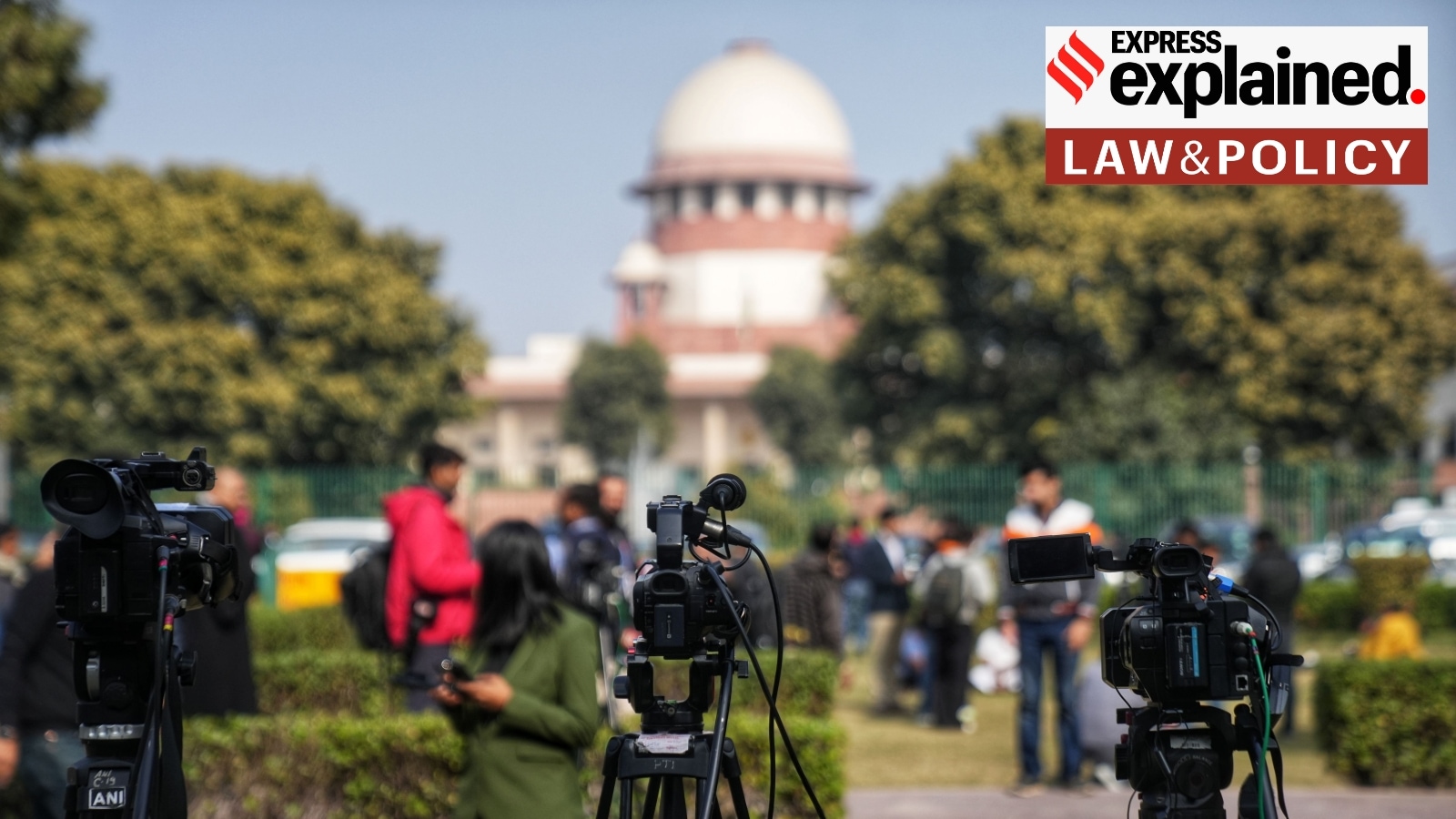 The Supreme Court set aside the Delhi High Court order that had previously ruled in Tiger Global’s favour. Express photo: Abhinav Saha
The Supreme Court last week (January 15) denied tax relief to Tiger Global on capital gains from its exit from Flipkart. It held that treaty benefits are not automatic and can be denied if an investment structure exists mainly on paper, even if the paperwork itself is in order.
The bench comprising Justice J B Pardiwala and R Mahadevan set aside the Delhi High Court order that had previously ruled in Tiger Global’s favour. The bench held that the investment structure lacked commercial substance and could not claim protection under the India-Mauritius treaty or its grandfathering clause. The ruling states that foreign investors cannot rely on complex offshore structures if those entities do not carry out real business activity of their own.
The case arose from Tiger Global’s 2018 sale of its Flipkart stake as part of Walmart’s takeover of the e-commerce company. While tax authorities argued that the Mauritius route was used mainly to avoid taxes, Tiger Global said it was legitimate tax planning allowed under the treaty.
Background of the case
The dispute traces to how Tiger Global structured its investment in Flipkart and its eventual exit. Three companies incorporated in Mauritius, Tiger Global International II, III, and IV Holdings, were set up as investment vehicles and held valid tax residency certificates issued by Mauritian authorities. These entities owned shares in Flipkart Pvt Ltd, which was incorporated in Singapore but derived most of its value from its operations in India.
In 2018, when Walmart acquired the highest stake in Flipkart, the Mauritius entities sold their shares in the Singapore company as part of the global transaction. Before the sale, they applied to Indian tax authorities for certificates allowing the transaction to proceed without withholding tax. The tax department rejected the request, arguing that the companies were not genuinely controlled from Mauritius.
The companies then approached the AAR, which declined to hear the matter, holding that the transaction was, at first glance, designed to avoid tax. The DHC overturned this decision, stating that companies were not mere “puppets” as their boards exercised independent decision-making. It held that a valid Tax Residency Certificate is “sacrosanct” evidence of residency and beneficial ownership, which the Tax revenue cannot overlook without compelling proof of fraud. The tax department appealed to the SC.
The law in question
At the heart of the dispute is how Indian tax authorities can go in examining cross-border transactions that formally comply with treaty requirements but are alleged to be structured to avoid tax.
Section 9(1)(i) of the income tax act states that income arising in India, if it flows from the transfer of a capital asset situated in India, and the shares of a foreign company can be treated as such an asset if they “derive their value substantially from assets located in India”.
This domestic law framework operates alongside India’s tax treaties, including the India-Mauritius Double Taxation Avoidance Agreement. Section 90(2) of the Act allows an assessee to rely on the treaty where it is more beneficial to it.
However, Parliament has expressly limited this protection. Section 90(2A) provides that treaty benefits shall not apply where the General Anti-Avoidance Rule is invoked, making clear that treaty protection does not extend to arrangements found to be abusive.
Framed as an overriding provision, GAAR allows tax authorities to deny tax benefits where an arrangement’s “main purpose is to obtain tax benefit” and does not involve real business activity. It lets tax authorities look past paper arrangements, ignore “see-through entities” or conduit companies, and tax a transaction based on what is carried out rather than how it is formally structured.
The court’s reasoning
At the outset, the SC made clear that it would not limit itself to formal documents or isolated steps in the transaction. It instead adopted what it described as a “look at” approach. Under this, the SC said that tax authorities and courts must examine a transaction as a whole, including how the investment structure was set up, controlled and used.
A “dissecting approach”, which isolates the sale of shares while ignoring the design and purpose of the underlying structure, the court said, is inadequate. This framing set the tone for the rest of the judgment as the issue identified was not whether Tiger Global followed the formal steps required by law, but whether those steps reflected the real substance of the arrangement.
The court examined the powers of the Authority for Advance Rulings (AAR). Section 245R(2) of the Income Tax Act allows AAR to refuse to entertain an application if it relates to a transaction that is “prima facie for the avoidance of income tax”. The SC held that if the material that was before AAR reasonably suggests that a transaction is structured to avoid tax, then AAR is entitled to reject the application. It held that AAR had not exceeded its jurisdiction by doing so.
The heart of the judgment lies in how the court applied the principle of substance over form. Commercial substance, in essence, asks whether the structure reflects real business activity or exists largely on paper. The court had to examine whether the Mauritian entities through which Tiger Global invested had real commercial substance or whether they were merely “see-through entities” or “conduits.” In doing so, it relied on what is called a “head and brain” test.
The head and brain test looks at where actual control and decision making emanates from, who has the authority over key financial decisions and, who could operate bank accounts, and whether the boards of the Mauritian entities functioned independently.
The court noted that for transactions above a certain threshold, decision-making authority rested with an individual based in the USA, not with the Mauritian directors. It also noted that no local person in Mauritius was authorised to sign cheques for large amounts. It was on this basis that the court described the entities as “see-through entities” lacking independent control. It observed that the companies had no investments other than Flipkart and were set up with the “prime objective of obtaining benefits under the DTAA”. It was this absence of real commercial substance that ultimately led the court to treat the Mauritian entities as mere conduits rather than investment vehicles.
Against this backdrop, the court turned to the Tax Residency Certificate. For years, the TRC issued by Mauritian authorities was treated as a strong shield against Indian tax claims. Earlier Central Board of Direct Taxes circulars have described the TRC as “sufficient evidence” of residence and beneficial ownership.
The SC said that while this was right, the legal position has changed following the amendments to the Income Tax Act and the introduction of GAAR. The SC held that TRC is now only an “eligibility condition”, not a conclusive proof of residency. It described the TRC as a “Ticket to enter” the treaty framework.
And that statutory authorities were entitled to “go behind the TRC” where there is material to suggest that the entity was interposed as a device for tax avoidance. “The mere holding of a TRC cannot, by itself, prevent an enquiry…if it is established that the interposed entity was a device to avoid tax,” the court said.
The court rejected the argument that tax treaties are an absolute bar on domestic anti-avoidance scrutiny. It stated that tax treaties allocate taxing rights but do not result in a surrender of tax sovereignty. The State has inherent power to tax income connected to its territory as provided under Article 265 of the Constitution.
In concurring opinion, Justice Pardiwala went further, describing tax sovereignty as a “golden rule”, warning that tax abuse carried out under the guise of complex financial structures “weakens a Nation”. He notes that anti abuse laws must be enforced and “any leniency is yet another form of compromising tax sovereignty.”
On GAAR, Tiger Global argued that its investment was made before April 2017 and was therefore protected by grandfathering provisions introduced when India amended its tax treaty with Mauritius. The revenue countered that GAAR applies to “arrangements” not only to “investments” and that the tax benefit arose after GAAR came into force.
The SC accepted the revenue’s reasoning and distinguished between an “investment” and an “arrangement”. It noted Rule 10U(2) of the Income Tax Rules that allows GAAR to apply to arrangements even if the investment predates April 2017, provided that the tax benefit was obtained later. In this matter, since the sale of shares took place in 2018, the court held that the timing of the original investment did not bar anti-avoidance scrutiny. It said “the duration of the arrangement is irrelevant” once it is found to be a sham.
The court also set out how it draws the line between tax planning and tax avoidance. Tax planning may be legitimate if it operates “within the framework of law”. But when a structure involves “colourable devices”, “dubious methods” or “subterfuges” designed to slam tax liability, it becomes impermissible.
In this case, the lack of commercial substance, the concentration of control outside the treaty jurisdiction and the dominant purpose of obtaining treaty benefits led the court to conclude that the arrangement was designed for tax avoidance. Once that conclusion was reached, treaty protection fell away. It said that once a mechanism is found to be sham, “it ceases to be a permissible avoidance and becomes an impermissible avoidance or evasion.”