This is an archive article published on February 16, 2022
Explained: J&K’s State Investigation Agency, and its mandate
In November 2021, the J&K government granted sanction for the creation of a new, specialised investigating body, the State Investigation Agency. What was the need for this, and what does it do?
Written by Naveed Iqbal
, Edited by Explained Desk
Srinagar | Updated: February 17, 2022 11:05 AM IST
3 min read
Whatsapp
twitter
Facebook
Reddit
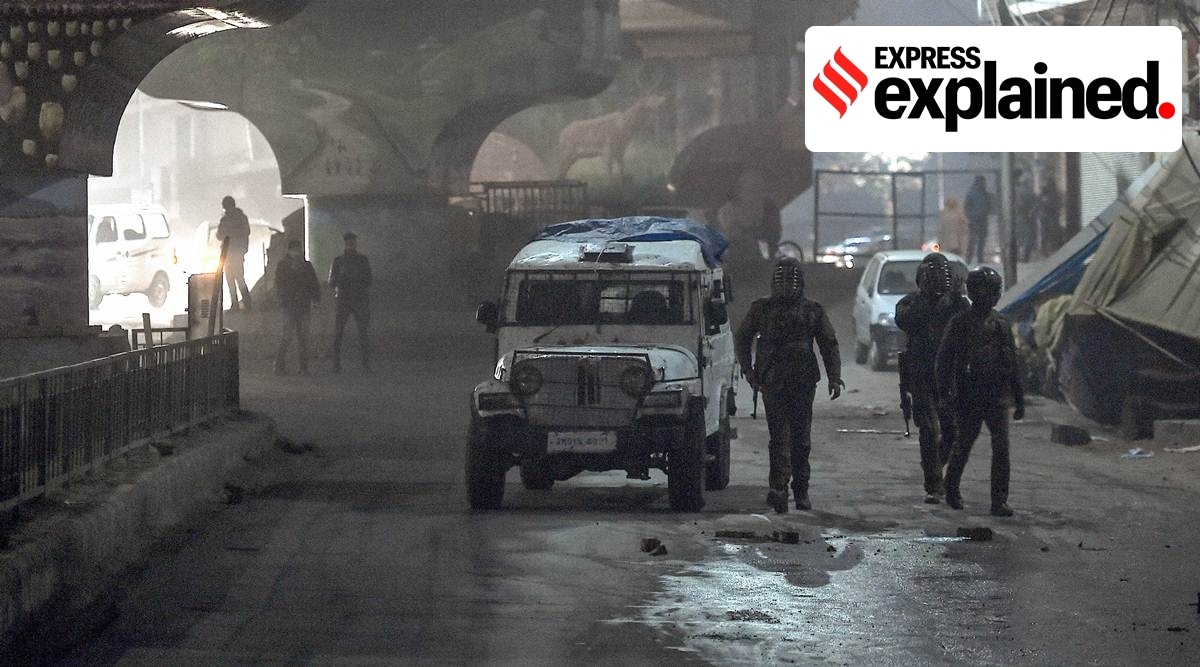
The agency was set up aside from the CID and other allied agencies working in the UT (PTI, File)
In November 2021, the Jammu and Kashmir government’s Home Department granted sanction for the creation of a new, specialised investigating body, the State Investigation Agency (SIA), on the lines of the National Investigation Agency (NIA).
The SIA has been constituted as a specialised, nodal agency for “coordinating with NIA and other central agencies” to take measures as required for speedy and effective investigation and prosecution of terrorism related cases. The agency was set up aside from the CID and other allied agencies working in the UT.
The need for setting up a new agency was felt “for specialised investigation” into terror cases, not referred to the NIA.
An SIA Directorate has been set up in J&K with the head of the CID wing as its ex-officio Director. Officers to the Directorate have since been deputed by the government. All the officers in-charge of the police stations have to mandatorily intimate the SIA immediately on registration of terrorism related cases, and also about such cases where any terrorism linkage surfaces during the investigation.
In cases where the investigation of an offence is not taken up by the NIA, the DGP of J&K, “having regard to the gravity of the offence, progress of investigation and other relevant factors,” will determine in consultation with the SIA whether the case is fit to be investigated by SIA.
The Home Department notes various offences under different acts and provisions that direct the purview of the SIA. These include, The Explosive Substances Act, 1908 (6 of 1908); The Unlawful Activities (Prevention) Act, 1967 (37 of 1967). 0ffences having terrorism linkage; all terrorist acts including terrorist financing and circulation of high quality fake Indian currency notes cases; terrorism related larger conspiracy cases; terrorist financing and terrorism linked NDPS cases. Other offences include, terrorism linked kidnapping and murder cases; terrorism linked weapon snatching/robbery cases and cases relating to terrorism linked propaganda, false narrative, large scale incitement, spreading disaffection, enmity against the Indian Union.
This provides the SIA a very wide canvas to investigate offences in Jammu and Kashmir.
Naveed Iqbal is a Senior Assistant Editor at The Indian Express, and reports from Jammu and Kashmir. With a career spanning over 15 years in frontline journalism, Naveed provides authoritative reporting on the region’s transition, governance, and the socio-political implications of national policies.
Expertise
Regional Specialization: Based in the Srinagar and New Delhi bureaus, Naveed has spent over a decade documenting the unique challenges of Jammu and Kashmir. Her reporting is distinguished by deep contextual knowledge of the region's post-Article 370, statehood debates, and local electoral politics.
Key Coverage Beats: Her extensive body of work covers:
Politics & Governance: Tracking the National Conference (NC), PDP, and BJP dynamics, including in-depth coverage of J&K’s first Assembly sessions and Rajya Sabha polls following the reorganization of the state.
Internal Security & Justice: Providing rigorous reporting on counter-insurgency operations, terror module investigations, and judicial developments involving political detainees and constitutional rights.
Education & Minority Affairs: Highlighting systemic issues such as quota rows in J&K, public service commission reforms, and the challenges faced by minority communities. ... Read More


 3 min read