When adults say, “You’re strong, don’t cry,” it usually comes from care, not dismissal. The intention is to help children cope, to prepare them for disappointment, and to prevent them from feeling overwhelmed. But children don’t absorb intentions; they absorb meanings. Over time, they begin to understand that strength is rewarded when emotions are invisible. Tears start to feel like something to apologise for. Crying becomes associated with being weak, needy, or inconvenient, even though it is one of the most natural human responses to emotional overload.

Crying: a biological, emotional release
Crying is not a habit children must unlearn. It is a biological and emotional release that helps the nervous system regulate itself. Long before language develops, tears are how children express fear, confusion, pain, and the need for connection. As children grow, crying evolves into a way to process disappointment, loss, rejection, and overwhelm. When we ask children to stop crying prematurely, we are not teaching them strength; we are teaching them suppression.
Many “strong” children learn early to hold themselves together because they sense emotional fragility, stress, or unavailability in the adults around them. They become perceptive, responsible, and self-reliant, often praised for being mature beyond their years. From the outside, they look capable and composed. Inside, they are still children carrying emotional weight without adequate space to put it down. Their strength is often less about resilience and more about adaptation, learning early that love and approval feel safer when they don’t need too much.
Adults often struggle with children’s tears because tears trigger discomfort. A crying child can awaken our own unresolved emotions, memories of being told to stop crying, or fears that we are failing as parents. Sitting with distress feels helpless, and so we rush to fix it. We distract, minimise, or offer quick solutions. Phrases like “It’s not a big deal,” or “You’ll be fine,” are often said to soothe, but they can unintentionally dismiss a child’s experience. What children need in moments of emotional intensity is not problem-solving, but presence.
Helping a child develop emotional regulation
When an adult can remain calm and emotionally available during a child’s tears, the child learns that emotions are safe, temporary, and survivable. This is how emotional regulation is developed. It is not taught through lectures or logic, but through repeated experiences of being supported while overwhelmed.
Crying also plays an important physical role. Emotional tears help release stress hormones and activate the part of the nervous system responsible for calming the body. When children are repeatedly discouraged from crying, the emotional energy does not disappear, it stays stored in the body. Over time, this can show up as anxiety, irritability, anger outbursts, sleep disturbances, headaches, or unexplained physical complaints. The child may appear strong on the surface, but internally, they are carrying unprocessed stress.
Cultural expectations further complicate this process. Boys are often taught to equate strength with toughness and emotional restraint, while girls may be allowed to cry but are criticised for being “too emotional.” In both cases, children learn to distrust their emotional expression, shaping adults who either struggle to name their feelings or feel
guilty for having them.
Allowing children to cry does not mean removing boundaries or shielding them from challenge. It means recognising that emotions and strength are not opposites. A child can cry and still learn responsibility, resilience, and problem-solving. Saying, “I know how tough this is for you. I’m here,” while holding limits, teaches children that emotions can coexist with structure. This balance is what creates true emotional strength.
A place where kids don’t have to perform
Home should be the one place where children don’t have to perform resilience. The world will eventually demand toughness, comparison, and composure. School, peers, and society will teach children when to suppress emotions. Home should teach them the opposite: that they don’t lose love when they fall apart, that tears don’t make them weak, and that asking for comfort is not failure.
Children who are allowed to cry grow up with a healthier relationship to their inner world. They learn to recognise emotional signals instead of ignoring them. They are more likely to seek support, set boundaries, and recover from setbacks without shame. They understand that strength includes rest, expression, and connection.
Letting children cry does not make them fragile; it makes them flexible. Like a tree that bends instead of breaking, emotionally supported children learn how to move with life’s pressures rather than collapse under them. In a world that often asks children to grow up too fast, giving them permission to cry may be one of the most powerful ways we protect their emotional health and their humanity.

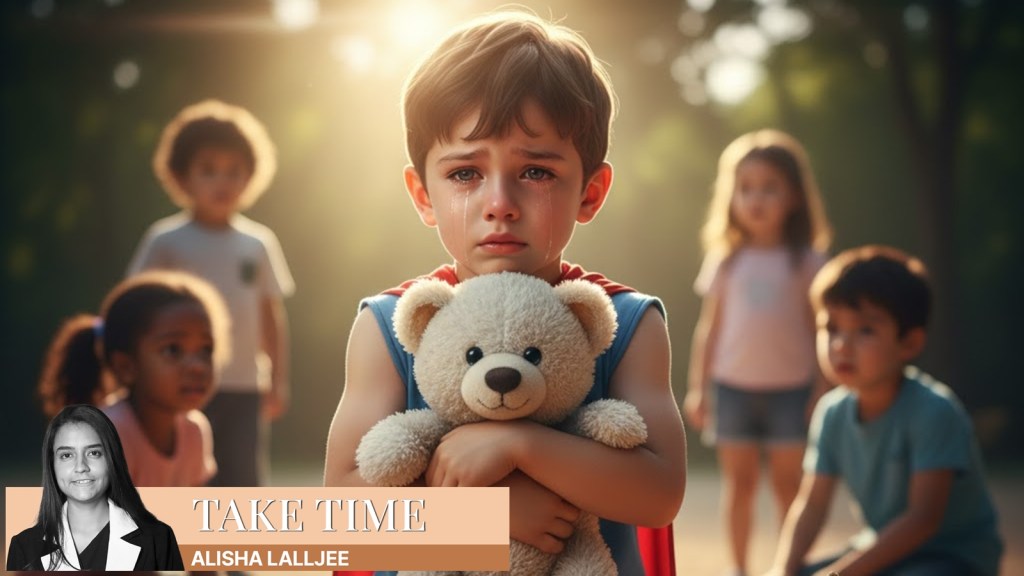 Why children need to let it out (Photo: AI Generated)


 Share


