


© The Indian Express Pvt Ltd
Tags:


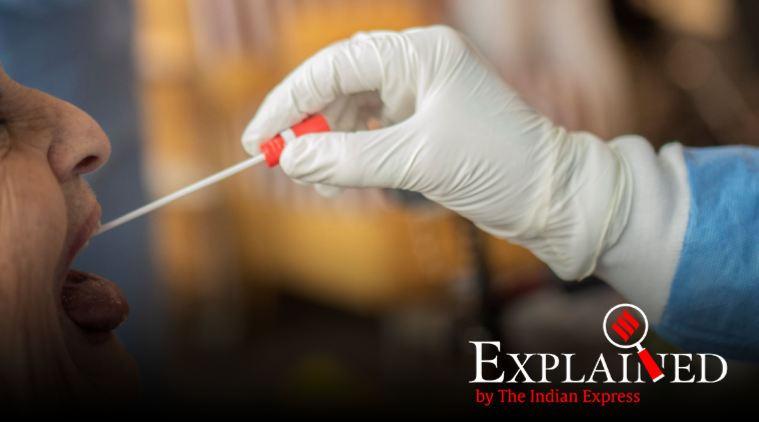
The Indian Council for Medical Research (ICMR) and the National Institute of Virology (NIV) have issued guidelines to collect, packaging and transport samples for SARS-CoV-2 testing, applicable to all government health authorities and hospitals across the country.
It is imperative that clinicians or healthcare workers keep these in mind while handling specimens, since they could potentially be dealing with infectious material. The usage of personal protective equipment and performing hand hygiene applies to sample collection as well.


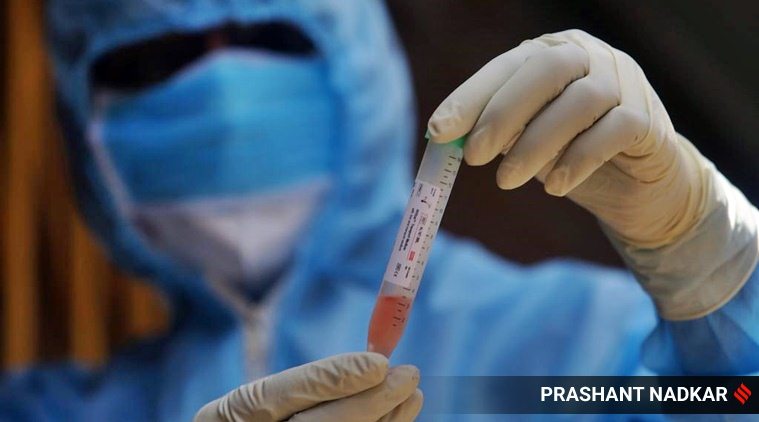
If both nasopharyngeal and oropharyngeal samples are collected, both swabs should be kept in the same tube to increase the viral load. The US Centers for Disease Control and Prevention (CDC) also states that for patients whose nasopharyngeal and oropharyngeal swabs are collected, the swabs should be mixed up in the same tube to maximise test sensitivity by increasing viral load and thereby limiting the use of testing resources.
📣 Express Explained is now on Telegram. Click here to join our channel (@ieexplained) and stay updated with the latest
It is also essential that the healthcare worker wears a PPE while taking the sample and follows all biosafety precautions. Once the sample is taken, the clinician or the healthcare worker should put them in sterile containers containing Viral Transport Medium (VTM) and seal the neck of the sample vials with parafilm. VTMs are commercially prepared and can also be prepared locally.
Then the sample vials are covered using absorbent materials, following which, they are arranged in a secondary container. This arrangement is then placed in a leak-proof container such as a ziplock pouch, cryo box, a 50 ml centrifuge tube or a plastic container, which is further transported into a plastic container whose neck is then sealed.
This plastic container is then put inside a thermocol box, icebox or a hard-board box, which is insulated with frozen gel packs. Along with the specimen, appropriate documents should also be sent to the laboratory where the testing takes place.
Don’t miss these articles on Coronavirus from the Explained section:
‣ How coronavirus attacks, step by step
‣ Mask or no mask? Why the guidance has been shifting
‣ Besides a face cover, should I wear gloves when I go outdoors?
‣ How the Agra, Bhilwara and Pathanamthitta Covid-19 containment models differ
‣ Can coronavirus damage your brain?


