Premium
This is an archive article published on October 17, 2022

Dr Dilip Mahalanabis passes away: How he came up with ORS, which revolutionised diarrhoea treatment

Dr Dilip Mahalanabis was working in overflowing refugee camps during the 1971 Bangladesh Liberation war when he came up with ORS, which The Lancet called “the most important medical discovery of the 20th century.’’

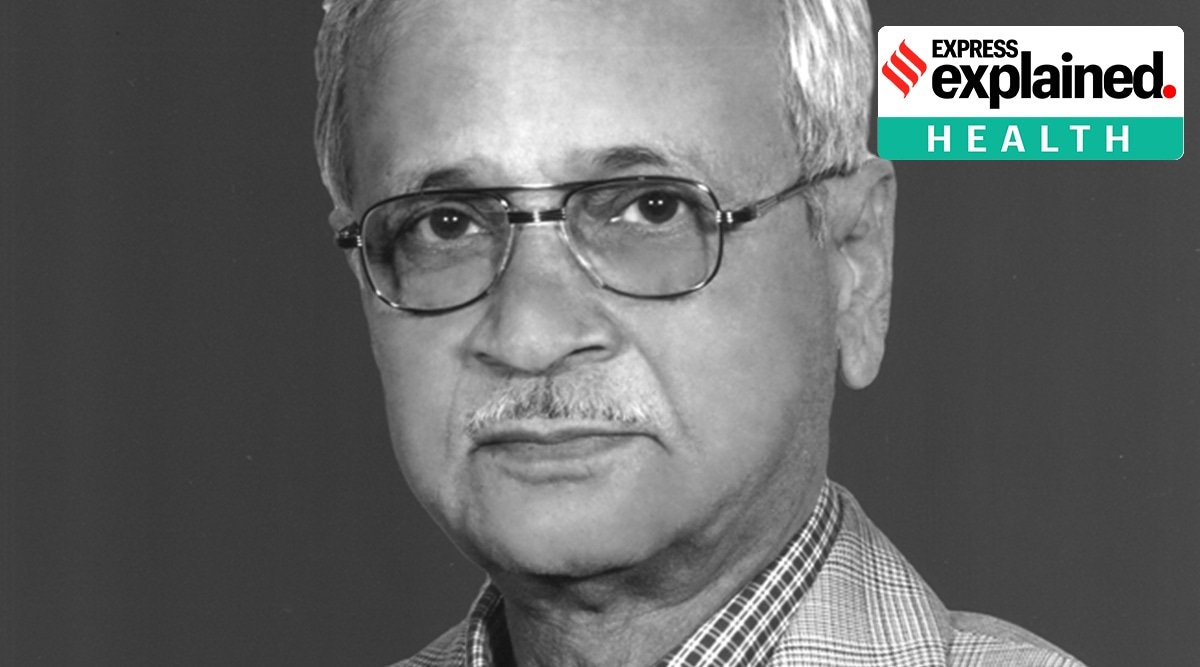
Dr Dilip Mahalanabis, ORS, Dr Dilip Mahalanabis life history, WHO, express explained, indian express, Dr Dilip Mahalanabis researchDr Dilip Mahalanabis, 87, passed away at a Kolkata hospital on October 16. (Photo courtesy: WHO)

While Oral Rehydration Solution (ORS) as a simple, effective remedy for dehydration is known around the world, the physician who pioneered the treatment is less famous. This physician, Dr Dilip Mahalanabis, passed away at a Kolkata hospital on Sunday (October 16).

Dr Mahalanabis, 87, was suffering from lung infection and other age-related ailments, the Press Trust of India (PTI) reported.

According to the World Health Organisation (WHO), diarrhoeal diseases, such as cholera, are among the leading causes of mortality in infants and young children in many developing countries, where the patient dies of dehydration. ORS, a combination of water, glucose and salts, is a simple and cost-effective method of preventing this.

Dr Mahalanabis was working in overflowing refugee camps during the 1971 Bangladesh Liberation war when he came up with ORS, which The Lancet called “the most important medical discovery of the 20th century.’’ From 1975 to 1979, Dr Mahalanabis worked in cholera control for WHO in Afghanistan, Egypt and Yemen. During the 1980s, he worked as a WHO consultant on research on the management of bacterial diseases.

In 2002, Dr Dilip Mahalanabis along with Dr Nathaniel F Pierce was awarded the Pollin Prize by Columbia University (considered the equivalent of Nobel in peadiatrics).

“His death marks the end of an era. Oral rehydration is still the mainstay of treatment for diarrhoeal diseases in children. Before the use of ORT, the only treatment was intravenous fluid infusion, which was neither cost-effective nor easy. Due to Dr Mahalanabis’s persistent efforts, ORT was made a household name,” said Dr Sampada Tambolkar, professor of paediatrics at Dr D Y Patil medical college, Pune.

We explain the story of the doctor and his discovery that saved millions of lives.

The doctor

Story continues below this ad

Born on November 12, 1934 in West Bengal, Dr Mahalanabis studied in Kolkata and London, and joined the Johns Hopkins University International Centre for Medical Research and Training in Kolkata in the 1960s, where he carried out research in oral rehydration therapy.

When the 1971 war broke out, millions of people from then East Pakistan took refuge in India. Clean drinking water and sanitation were problems at these refugee camps, and cholera and diarrhoea broke out among people anyway exhausted and dehydrated.

Dr Mahalanabis and his team were working in one such camp at Bongaon. Stocks of intravenous fluids were running out, on top of which there weren’t enough trained personnel to administer the IV treatment.

His discovery

From his research, Dr Mahalanabis knew that a solution of sugar and salt, which would increase water absorption by the body, could save lives. He and his team then prepared solutions of salt and glucose in water and began storing them in large drums, from where patients or their relatives could help themselves.

Story continues below this ad

Dr Mahalanabis later wrote in WHO’s South-East Asia Journal of Public Health about that period in 1971, “Available resources for the treatment of cholera were mobilised but basic handicaps still existed. The huge amounts of intravenous fluids that would be required, plus the problems of transport and lack of trained personnel for their administration, represented an almost insurmountable logistical problem in treating cholera effectively under such circumstances by the standard methods currently in use. We suggested the use of oral fluids as the only recourse in this situation.”

To convince people the new treatment would work, they were told it was an oral form of saline. “The oral solution that we elected to use consisted of 22 gm glucose (as commercial monohydrate), 3.5 gm sodium chloride (as table salt) and 2.5 gm sodium bicarbonate (as baking soda) per liter of water. This was the simplest formula, containing the minimum number of ingredients, previously found to be effective in severely ill patients with cholera,” Dr Mahalanabis wrote.

In another article from the Bulletin of the WHO carried by the USA’s National Library of Medicine, Dr Mahalanabis is quoted as saying, “Within two or three weeks, we realised that it [ORS treatment] was working and that it seemed to be all right in the hands of untrained people… We prepared pamphlets describing how to mix salt and glucose and distributed them along the border. The information was also broadcast on a clandestine Bangladeshi radio station.”

Soon the fatality rate in Dr Mahalanabis’s camp was down to 3 per cent, compared with the 20 and 30 per cent in camps that used only intravenous fluids. Dr Dhiman Barua, head of the Bacterial Diseases Unit of WHO, visited the camp managed by Dr Mahalanabis, and started popularising the ORS method of treatment.

The legacy

Story continues below this ad

While initially, the medical fraternity was septical, the WHO eventually adopted ORS as the standard method for treating cholera and other diarrhoeal diseases. Today, the WHO recommends a combination of sodium chloride, anhydrous glucose, potassium chloride and Trisodium citrate dihydrate as the ORS formula. In India, July 29 is observed as ORS Day.

“One of the advantages with ORS is that even untrained people can administer it and keep the crisis in check till the patient is admitted to the hospital. It contains electrolytes in right proportions and is given to babies and adults suffering from diarrhoea. This low-cost solution for a very common problem was pioneered by Dr Dilip Mahalanabis,” Dr. Sameer Desai, Pediatric Orthopaedic Surgeon and consultant at Pune’s KEM hospital, said.

Using ORS

The Union Health Ministry has popularised guidelines on preparing and using ORS available in powder form at health centres and chemists. The guidelines, available at the India Health Portal site, advise that contents of the ORS packet should be mixed with the correct amount of water in a clean container. This is important, because too little water could make the diarrhoea worse, the government cautions.

Also, the ORS must be added only to water, and not to milk, soup, fruit juice, or any soft drink. Sugar should not be added to the solution.

Story continues below this ad

After stirring well, the solution should be given to the child from a clean cup, and not a bottle.

The National Health Portal gives a step-by-step guide to preparing formulation at home as well. Six level teaspoonfuls of sugar (1 spoon = 5 g) and half a level spoonful of salt should be mixed with a litre (five 200-ml cups) of clean water), and stirred until the sugar and salt dissolve.

“The home-made solution is adequate in most cases and is very effective for rehydration,” the National Health Portal says. It cautions: “Be very careful to mix the correct amounts. Too much sugar can make the diarrhoea worse and too much salt can be extremely harmful to the child.”

The ORS solution should be covered and not kept for more than 24 hours, due to the risk of bacterial contamination, the portal says.

Anuradha Mascarenhas is a Senior Editor at The Indian Express, based in Pune. With a career spanning three decades, she is one of the most respected voices in Indian journalism regarding healthcare, science and environment and research developments. She also takes a keen interest in covering women's issues . Professional Background Education: A gold medalist in Communication and Journalism from Savitribai Phule Pune University and a Master’s degree in Literature. Author: She authored the biography At The Wheel Of Research, which chronicles the life and work of Dr. Soumya Swaminathan, the former Chief Scientist at the WHO. Key Focus: She combines scientific accuracy with storytelling, translating complex medical research into compelling public and human-interest narratives. Awards and Recognition Anuradha has won several awards including the Press Council of India's national award for excellence in journalism under the gender based reporting category in 2019 and the Laadli Media award (gender sensitivity -2024). A recipient of the Lokmat journalism award (gender category-2022), she was also shortlisted for the RedInk awards for excellence in journalism-2021. Her debut book At The Wheel Of Research, an exclusive biography of Dr Soumya Swaminathan the inaugural chief scientist of World Health Organisation was also nominated in the Popular Choice Category of JK Paper AUTHER awards. She has also secured competitive fellowships including the Laadli Media Fellowship (2022), the Survivors Against TB – New Research in TB Media Fellowship (2023) and is part of the prestigious 2025 India Cohort of the WomenLift Health Leadership Journey.” Recent Notable Articles (Late 2025) 1. Cancer & Specialized Medical Care "Tata Memorial finds way to kill drug-resistant cancer cells" (Nov 26, 2025): Reporting on a breakthrough for triple-negative breast cancer, one of the most aggressive forms of the disease. Discipline, diet and purpose; How a 97-year-old professor defies ageing'' (Nov 15, 2025) Report about Prof Gururaj Mutalik, the first Head of Department at Pune's B J Government Medical College who at 97 credits his longevity to healthy habits and a strong sense of purpose. 2. Environmental Health (The "Breathless Pune" Series) Long-term exposure even to 'moderate' air leads to chronic heart, lung, kidney issues" (Nov 26, 2025): Part of an investigative series highlighting that even "safe" pollution levels are damaging to vital organs. "For every 10 µg/m3 increase in PM2.5 level, there was 6-8% jump in medicine sales" (Nov 23, 2025): Using commercial data to prove the direct link between air quality and respiratory illnesses in Pune. 3. Lifestyle & Wellness News "They didn't let cancer, diabetes and heart disease stop them from travelling" (Dec 22, 2025): A collaborative piece featuring survivors who share practical tips for traveling with chronic conditions. At 17, his BP shot up to 200/120 mmHG; Lancet study flags why child and teen hypertension doubled between 2000 and 2020'' (Nov 12,2025)--A report that focusses on 17-year-old-boy's hypertensive crisis and reflects the rising global trend of high blood pressure among children and adolescents. 4. Scientific Recognition & Infrastructure For promoting sci-comm, gender diversity: IUCAA woman prof highlighted in Nature" (Nov 25, 2025): Covering the global recognition of Indian women scientists in gender studies and physics. Pune researchers find a spiral galaxy like the Milky Way from early universe'' (December 3, 2025)- A report on how Indian researchers discovered a massive galaxy that existed when the universe was just 1.5 billion years old , one of the earliest to have been observed so far. Signature Beat: Health, Science & Women in Leadership Anuradha is known for her COVID-19 reportage, where she was one of the first journalists to provide detailed insights into the Covishield and Covaxin trials. She has a dedicated interest in gender diversity in health and science, often profiling women researchers who are breaking the "leaky pipeline" in STEM fields. Her writing style is scrupulous, often featuring interviews with top-tier scientists and health experts from various institutions.   ... Read More


Latest Comment
Post Comment
Read Comments
Advertisement
Advertisement
Advertisement
Advertisement