5 min read


© The Indian Express Pvt Ltd



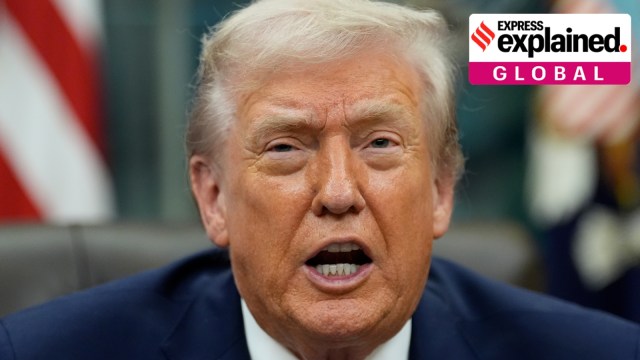 President Donald Trump speaks during a signing ceremony in the Oval Office of the White House, Thursday in Washington. (AP)
After it began vetting social media accounts of student visa applicants in June, the US is now set to extend this check to other visa categories, including H-1B visas, as well as for travel authorisation applications from the 42 countries, such as the UK and Japan, whose citizens can enter the US without a visa.
With the tourism sector already facing a sluggish year, this has sparked further concerns regarding the health of the industry.
Fall in foreign arrivals
The Donald Trump administration’s crackdown on immigration has already reduced the number of arrivals into the US. According to data from the National Travel and Tourism Office, foreign arrivals to the US were down by 2.5% in 2025 (till October) compared to the same period in 2024; 1.7% fewer tourist visas were issued in this period.
There was a particularly sharp 21.3% decline in arrivals from Canada. Many Canadians reportedly boycotted plans to travel to the US after Trump criticised the country for high tariffs and threatened to annex it.
A report released by a Congressional standing committee on Tuesday said that the decline in tourists from Canada, who brought $20.5 billion to the US economy in 2024, could hurt American businesses. With border crossings down by 20%, northern states, including New York, Washington and Idaho, have reported less footfall and lower sales between January and October 2025.
In May, the World Travel and Tourism Council (WTTC) called the Canadian fallout a “wake-up call”, warning that the US economy stood to lose a staggering $12.5 billion in international spending this year. Besides Canada, the report flagged a drop in inbound travelers from key market sources such as the UK, Germany and South Korea. It added that the US was the “only country among 184 economies” that was forecast to see a decline in international visitor spending in 2025.
The prediction is worrying given that the travel and tourism sector makes up 7% of all exports and nearly 3% of the United States’ GDP, supporting 9.5 million jobs in the process. According to the US Travel Association, a 1% drop in international visitor spending would mean a loss of $1.8 billion in export revenue annually.
The growing restrictions
WTTC CEO Julia Simpson has attributed the decline in tourists to a strong dollar, which makes US vacations expensive, with “politics and worries about crossing the border also weighing on US visitation figures,” Reuters quoted Simpson as saying.
A report by the Congressional Research Service states that the Trump administration’s “continued focus on immigration enforcement” may have also dampened travel to the US. Notably, the Trump administration has been restricting foreign entry since his first term. In 2019, it changed non-immigration visa application forms to mandatorily collect “social media identifiers”, citing a 2017 Presidential memo for “enhanced” screening and vetting for applicants in the interest of national security.
The CRS report also stated that the detention of tourists and noncitizens, including those who entered legally, in the US may have contributed to a decline in tourist arrivals.
Moreover, the US has introduced a non-refundable “visa integrity fee” of $250, making the process expensive. In India, the average visa cost for the US has risen to well over Rs 40,000.
As many as 21 travel associations, including Airlines For America, American Hotel and Lodging Association, and US Travel Association, had written a letter to the Secretaries of State and Homeland Security in November, stating that the additional fee “risks discouraging millions of prospective visitors”. The letter flagged that cost was “a top deterrent” to US travel.
|
The India Story Visitors from India, who make up the second-largest share of overall travelers, barring Canada and Mexico, fell by 5.2% in 2025 (till October). This can be attributed to the clampdown on American universities, anti-immigrant policies, which have seen several tourists and students being deported, and heightened tensions due to high tariffs and Trump’s criticism of India. The anti-immigrant rhetoric has also fuelled racism against Indians and Indian-Americans. In the past year, there have been increasing reports of harassment and assaults against Indian-origin individuals in the US. |
What’s next?
Upcoming events like the 2026 FIFA World Cup, America250 (a celebration of 250 years of American independence) and the 2028 Summer Olympics present an opportunity for the resurgence of overseas travelers to the US. The FIFA president expects up to 10 million visitors to come to the US to watch the games.
However, experts warn that invasion of privacy (with social media reviews) and fear of deportation could keep travelers away. Geoff Freeman, the chief executive of the US Travel Association, told The New York Times that it was “concerning” that the administration had not done anything to counter the fear.
The Trump administration has announced that it will fast-track visa appointments for those with tickets to the FIFA World Cup. Meanwhile, Brand USA, a partially government-funded non-profit that markets the US as a travel destination, has said that it will launch a global tourism campaign in 2026. The organisation’s CEO, Fed Dixon, said that the campaign’s message was clear: “the USA is open for business and ready to welcome legitimate international travelers”.