3 min read
© The Indian Express Pvt Ltd



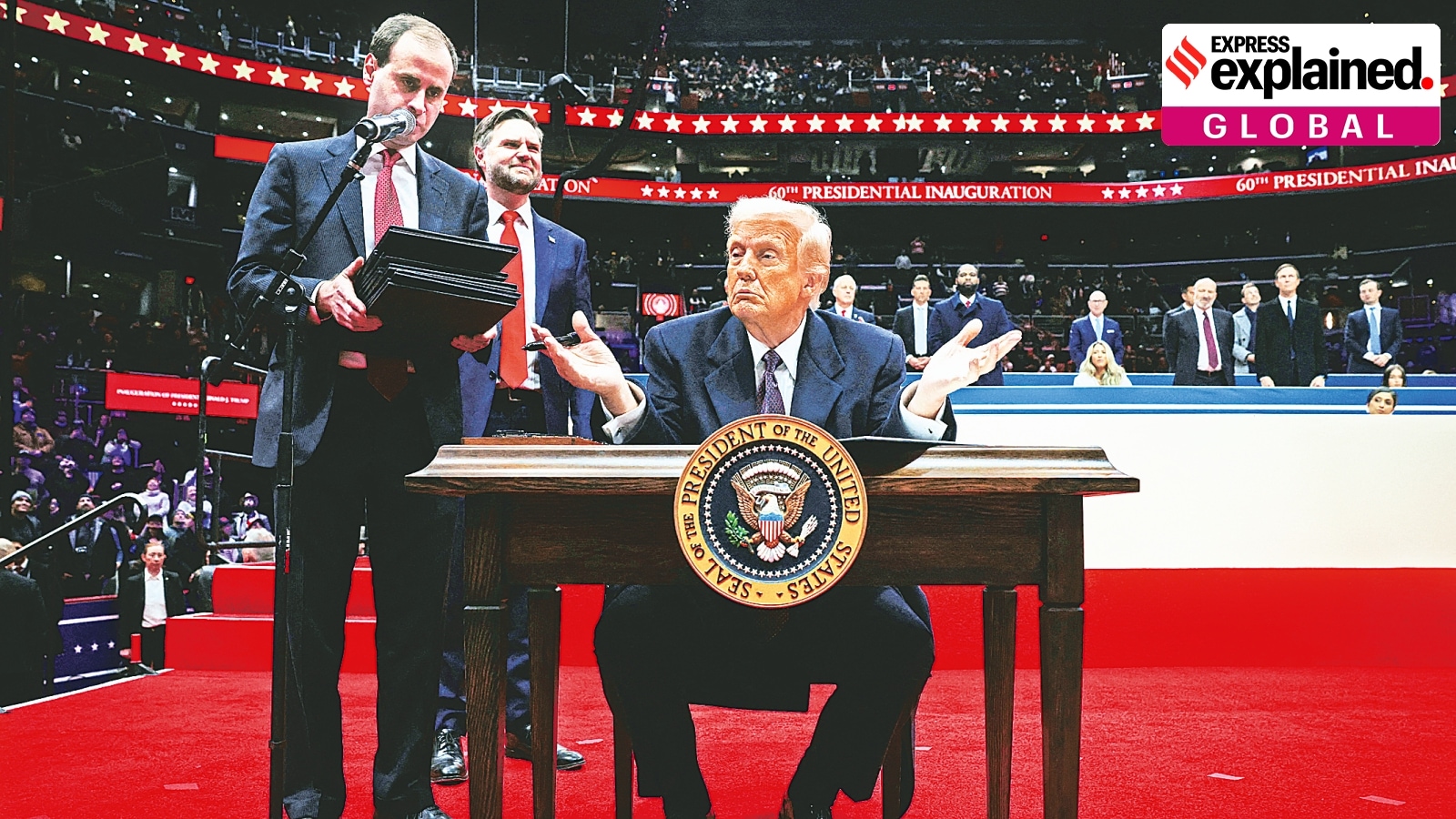 U.S. President Donald Trump (Reuters)
After US President Donald Trump said he will “permanently pause migration from all Third World Countries” last week, his administration on Tuesday paused all immigration applications from 19 countries it determined to be “high-risk”. This comes days after an Afghan national shot two National Guard members in Washington.
Citing national security concerns, the Trump administration in June banned travel to the US by citizens of 12 of these countries and restricted access for those from the seven others.
The ban applied to citizens of Afghanistan, Myanmar, Chad, the Republic of Congo, Equatorial Guinea, Eritrea, Haiti, Iran, Libya, Somalia, Sudan and Yemen while the restricted access applied to people from Burundi, Cuba, Laos, Sierra Leone, Togo, Turkmenistan and Venezuela.
At the time, however, no action was taken against immigrants from those countries who were already in the US before the travel ban went into effect. That has now changed.
“USCIS has determined that a comprehensive re-review, potential interview, and re-interview of all aliens from high-risk countries of concern who entered the United States on or after January 20, 2021 (the date on which former President Joe Biden took office) is necessary,” a memo from the US Citizenship and Immigration Services (USCIS) on Tuesday stated.
Pending this comprehensive review, the US will “place a hold on pending benefit requests” for all immigrants from these “high-risk” countries. Benefit requests include forms I-485 (application to register permanent residence or adjust status), I-90 (application to replace Green Card), N-470 (application to preserve residence for naturalisation purposes), I-751, (petition to remove conditions on residence), and I-131 (application for travel documents, parole documents, and arrival/departure records).
The USCIS memo states that the agency would create a prioritised list of immigrants for review and if necessary, referral to immigration enforcement or other law enforcement agencies, within 90 days.
Since returning to power in January, Trump has cracked down on illegal immigration as he had promised on the campaign trail. Meanwhile, he has also made attempts to throttle legal immigration into the US, promising amendments to existing legal policies due to both economic and national security reasons.
The H-1B visa, which allows American companies to acquire skilled talent from abroad, has been criticised for disadvantaging American workers who would be more expensive to hire. Immigrants have also been accused, mostly wrongfully, by Trump of cornering government benefits.
Meanwhile, the national security argument has been used to step up screening of visa applications, and create additional deterrents to immigration, especially from certain countries.
Both the economic and national security themes were reflected in Trump’s message on Truth Social last week. He wrote: “Immigration Policy has eroded those gains and living conditions for many. I will permanently pause migration from all Third World Countries to allow the US system to fully recover… remove anyone who is not a net asset to the United States, or is incapable of loving our Country, end all Federal benefits and subsidies to noncitizens of our Country, denaturalize migrants who undermine domestic tranquility, and deport any Foreign National who is a public charge, security risk, or non-compatible with Western Civilization…”.
The latest USCIS memo is seemingly the first step in this direction.