8 min read

Journalism of Courage



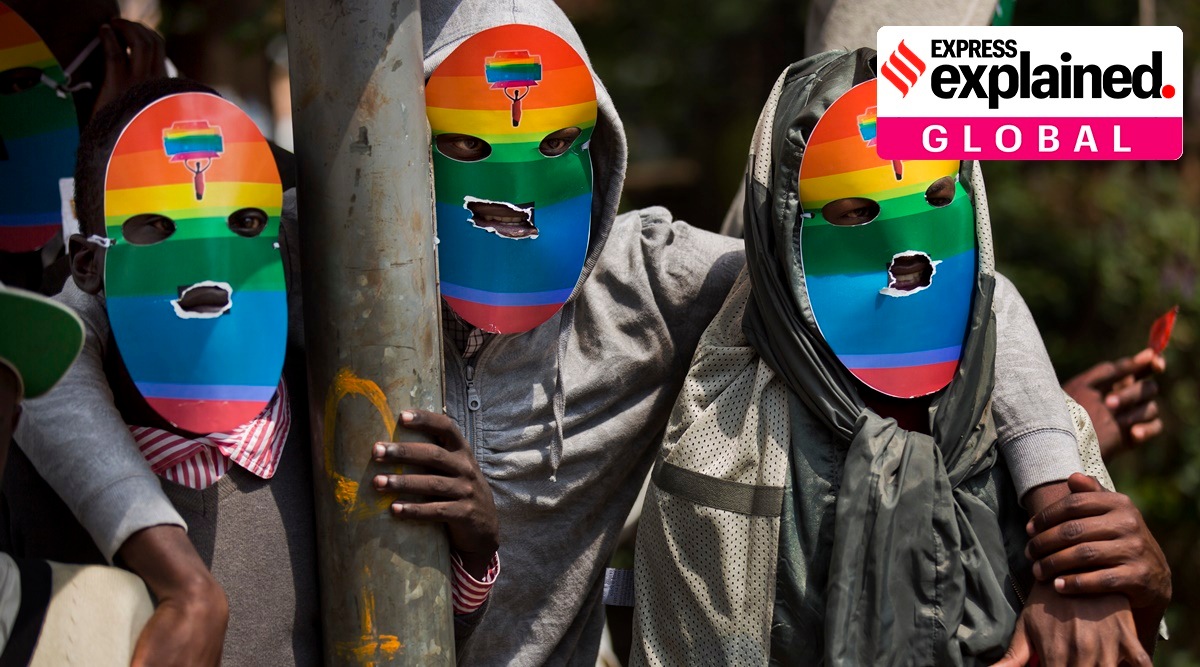 Kenyans wear masks to preserve their anonymity as they stage a rare protest against Uganda's tough stance against homosexuality, outside the Uganda High Commission in Nairobi, Kenya, in 2014. (Photo: AP)
The Ugandan Parliament on Tuesday (March 21) passed an anti-LGBTQ Bill with a vote of 387 to 2.
The Anti-Homosexuality Bill 2023 can attract stringent penalties, from life imprisonment to capital punishment, for anyone engaging in sex with a person of the same gender. It was passed late Tuesday night following seven hours of discussions, amendments, and calls for a life sentence, NYT reported.
The Bill states that anyone who “tries” to have same-sex relations will face seven years of imprisonment. It goes so far as to prohibit even touching another person “with the intention of committing the act of homosexuality.” People found guilty of the “offense of homosexuality”, can be imprisoned for up to 10 years. “It also effectively declares all same-sex conduct as nonconsensual,” Human Rights Watch (HRW) has reported.
The crime of “aggravated homosexuality” is defined as homosexual acts committed by an HIV-infected person, involving children or disabled persons, or against anyone in an inebriated state who is incapable of giving informed consent. “Aggravated homosexuality” is punishable with the death penalty. Before this Bill, Uganda’s Penal Code recognised most of these acts as crimes, but never accorded the death penalty for the same.
Further, any entity, including media groups, journalists, and publishers, can be convicted of promoting homosexuality and will have to face up to five years imprisonment and/ or pay a fine of up to 1 billion Ugandan shillings, which comes to around Rs 21,851. “Promotions” will include publishing, distributing, and broadcasting content advocating for gay rights.
The Bill also punishes minors convicted of engaging in same-sex acts with up to three years’ imprisonment and a period of “rehabilitation”. Besides this, it punishes individuals convicted of trafficking children or grooming them to engage in same-sex acts with life imprisonment.
Even a property owner whose premises are used as a “brothel for homosexual acts” or any other LGBTQ rights activities can face the risk of getting arrested, BBC has reported. According to Human Rights Watch, a provision in the Bill outlaws providing accommodation that facilitates the “offense of homosexuality.” For example, if anyone were to rent a room to a gay couple, they could go to jail for ten years. Similarly, if anyone conducts or officiates a same-sex marriage ceremony, they can be imprisoned for ten years.
Moreover, the Bill has a mandatory reporting provision that makes it illegal to identify as LGBTQ, something unprecedented even for Uganda. This provision requires friends, family, and community members of those engaging in same-sex relationships to report them to the authorities. This mandatory reporting provision calls for a fine or six months imprisonment.
Speaker of Uganda’s Parliament, Anita Annet Among, has told the NYT that the House will continue passing laws to “recognise, protect and safeguard” the morals and culture of their country.
This Bill was introduced on March 9, by Ugandan legislator Asuman Basalirwa, who claimed that homosexuality threatened the safety of Uganda’s children and its family values. “The objective of the Anti-Homosexuality Bill 2023 is to establish comprehensive and enhanced legislation to protect traditional family values, our diverse culture, and faiths by prohibiting any form of sexual relations between people of the same sex & promoting it,” Basalirwa tweeted on Tuesday.
Following its passage in Parliament, the Bill will now be sent to Uganda’s President Yoweri Museveni, who has been severely critical of homosexuality and has accused gays of undermining Uganda’s stability. Recently he referred to homosexuals as “deviants”.
President Museveni, who has been in power for four decades, can either use his veto power over the law or sign it into law within 30 days. However, his history of anti-gay remarks indicate what course he will take.
While the Bill hasn’t officially been published, a majority of its elements were discussed in Parliament.
What reactions is the Bill invoking?
In a press release from Tuesday, Amnesty International criticised the anti-LGBTQ law as “appalling”, “ambiguous” and “vaguely worded”, while urging President Museveni to urgently veto it.
Additionally, both the UK Africa Minister Andrew Mitchell and the US Secretary of State Antony Blinken have condemned the Bill. The White House press secretary Karine Jean-Pierre has warned Uganda of possible sanctions, restricting lawmakers responsible for passing the anti-LGBTQ Bill from doing business with the US, the Independent reported.
Moreover, an anonymous Uganda-based source has told the BBC that, “Members of the queer community have been blackmailed, extorted for money or even lured into traps for mob attacks. In some areas, law enforcers are using the current environment to extort money from people who they accuse of being gay. Even some families are reporting their children to the police.”
This Bill is not the first of its kind, as Uganda tried to introduce a similar version of it by way of its 2014 Anti-Homosexuality Act.
The current Bill is a “revised and more egregious version of the 2014 Anti-Homosexuality Act”, HRW has said. In 2014, Uganda passed a Bill reinforcing existing prison sentences under the Penal Code for same-sex conduct and outlawed the “promotion of homosexuality.” However, in August 2014, the country’s constitutional court struck down this Act as “null and void”.
In doing so, a panel of five judges had ruled that the Speaker of parliament acted illegally when she allowed a vote on the measure despite at least three objections to the fact that the required number of MPs were not in attendance. “The speaker was obliged to ensure that there was quorum,” the court said in its ruling, as reported by The Guardian.
According to HRW, Uganda’s penal code already punishes “carnal knowledge against the order of nature,” which is interpreted as homosexual relations, with a punishment of life imprisonment. However, this provision is seen as a “colonial remnant” and is “rarely enforced”, which is why the lawmakers are pushing for its revision in line with the modern situation.
The revised version of the Anti-Homosexuality Bill comes after months of “hostile rhetoric against sexual and gender minorities by public figures in Uganda” along with government crackdowns on LGBTQ rights and human rights groups.
Uganda’s National Bureau for NGOs banned Sexual Minorities Uganda (SMUG), a prominent LGBTQ rights organisation, for not having officially registered with it, in August 2022. In January, this year the bureau identified 26 NGOs that promote homosexuality and recommended banning their operations.
On February 5, Major Gen. Francis Takirwa, Deputy Commander in the Ugandan military called to exclude gay people from receiving health services, saying, “Don’t use our health facilities to treat homosexuals.” This was followed by Uganda’s Sports Minister calling for the introduction of capital punishment for same-sex conduct.
Before this, in 2021, Uganda’s Parliament approved the Sexual Offenses Bill, which criminalized any “sexual act between persons of the same gender,” and anal sex between people of any gender, with up to 10 years in prison. However, President Yoweri Museveni had rejected this Bill and returned it to Parliament, due to the offenses already being covered under Uganda’s penal code.