4 min read


© The Indian Express Pvt Ltd



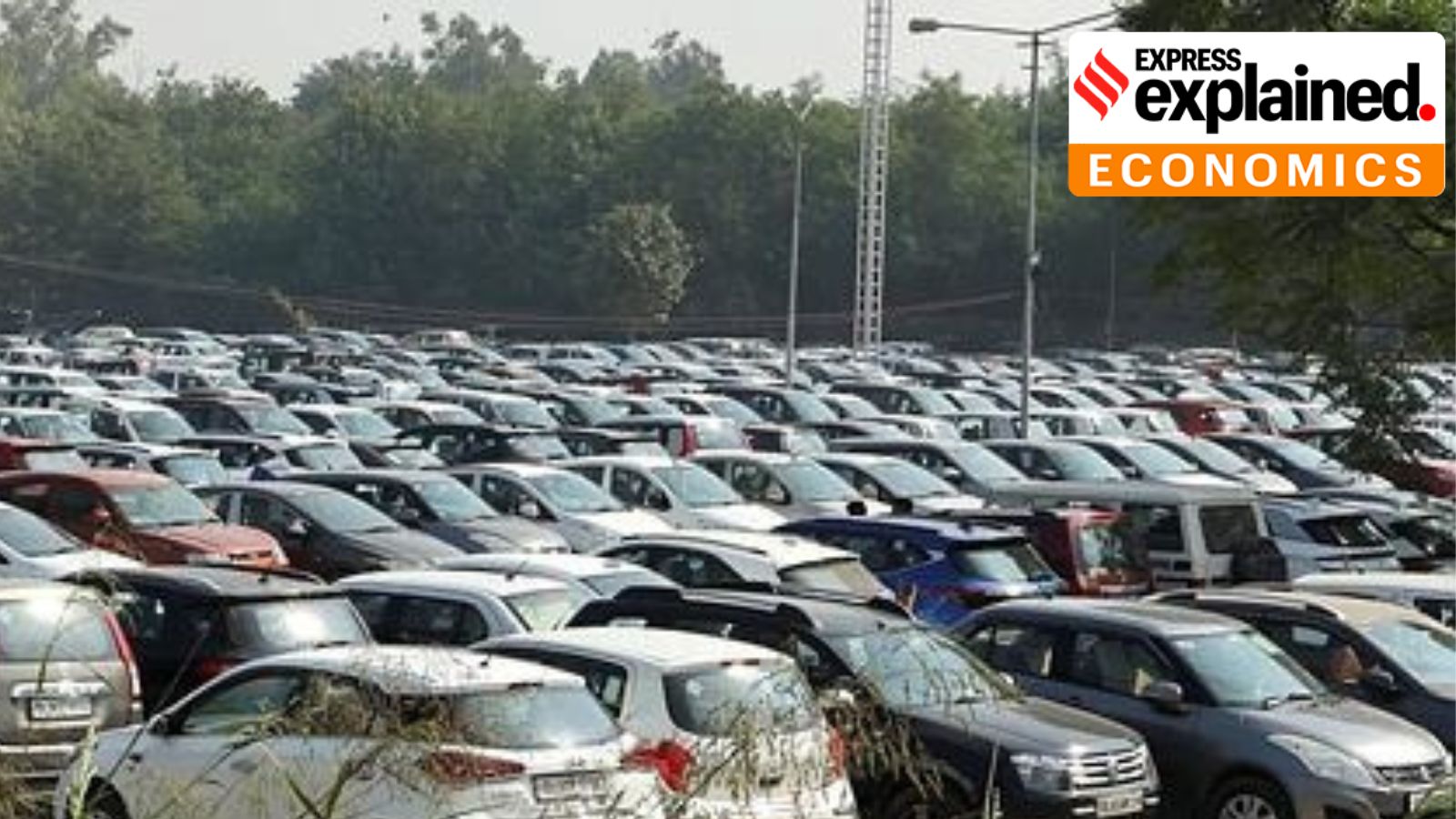 Maruti Suzuki India’s chairman RC Bhargava said that the GST rate reduction has sparked the revival of small cars. (Express File)
The full effects of India’s Goods and Services Tax (GST) revision were on display for carmakers in October, as the industry registered a record high sales figure of over 4,70,000 units, 17% higher than in October 2024. The boost in sales was also, in part, propelled by the festive season, and saw somewhat of a revival in the thus far ebbing small car segment.
Nearly every automaker in the country saw a significant jump in sales, compared to the mixed bag in September 2025, when the full effects of the GST revision, compounded by the festive season, were not realised. Several carmakers saw their sales take a dip compared to September 2024.
How carmakers performed in October
The country’s biggest carmaker, Maruti Suzuki, sold 176,318 passenger vehicles in October 2025. Of this, the compact car segment, which includes models like the Baleno, Swift, WagonR, Dzire and Celerio, contributed 76,143 units, indicating strong demand in the small-car sector. In September 2025, the carmaker had registered domestic vehicle sales of 1,47,461 units.
Mahindra & Mahindra achieved its highest-ever monthly SUV sales in October 2025, delivering 71,624 units, marking a robust 31% year-on-year growth and setting a new record for the company. This surge was driven by festive demand and newly launched editions of models like Thar and Bolero.
Tata Motors recorded total sales of 61,134 units in October 2025, marking a 27% year-on-year growth and its second consecutive month of record volumes.
Hyundai, though, was the only carmaker to witness a fall in volumes. The manufacturer posted a 3% decline in sales to 53,792 units.
Toyota Kirloskar Motors posted a sales figure of 40,257 units in October, marking a 39% year-on-year increase from 30,845 units in the same month last year.
Kia reported a 30% rise in sales at 29,556 units in October, its best-ever monthly sales since entering the Indian market.
Under the next-generation reforms for GST, small cars with engine capacity not exceeding 1200 cc (petrol) and 1500 cc (diesel), with length not over 4 metres, will now be in the 18 per cent slab against 28 per cent plus cess levy earlier.
Bigger cars will be taxed at 40 per cent (as against 28 per cent), with additional compensation cess of 17-22 per cent, taking the total tax to 50 per cent in some cases. All automotive parts will now be taxed at 18 per cent.
The small car revival
Maruti Suzuki India’s chairman RC Bhargava said that the GST rate reduction has sparked the revival of small cars. “We had record retail sales during the festival period, largely driven by small car sales. Bigger cars are also selling, but not quite that much,” he said last week.
If sustained, this could be an encouraging trend for the industry, as the small car segment had been progressively worsening. Higher living costs delayed several prospective customers in the mid to low income segment from buying their first cars, resulting in weak domestic demand for all manufacturers.
According to the industry, the sales performance of entry-level cars priced below Rs 5 lakh — a crucial indicator of demand in the economy, given that this segment largely attracts first-time buyers — has been on life support. This segment used to account for nearly a million units a decade ago, with 9,34,538 in FY16. It has since declined to just 25,402 units in FY25.
The Maruti Suzuki Alto, for instance, sold more than 18,700 units in June 2019, and was the best-selling then. In June 2025, the Alto and S-Presso combined sold a little over 6,000 units.