Journalism of Courage
Advertisement
Premium

5 notable New Year traditions from around the world

If the Spanish gobble 12 grapes right when the clocks strikes midnight for the New Year, in Greece onions are hung on doors of homes to attract growth and ward off evil. Here is a look at five popular New Year traditions from around the world and their origins

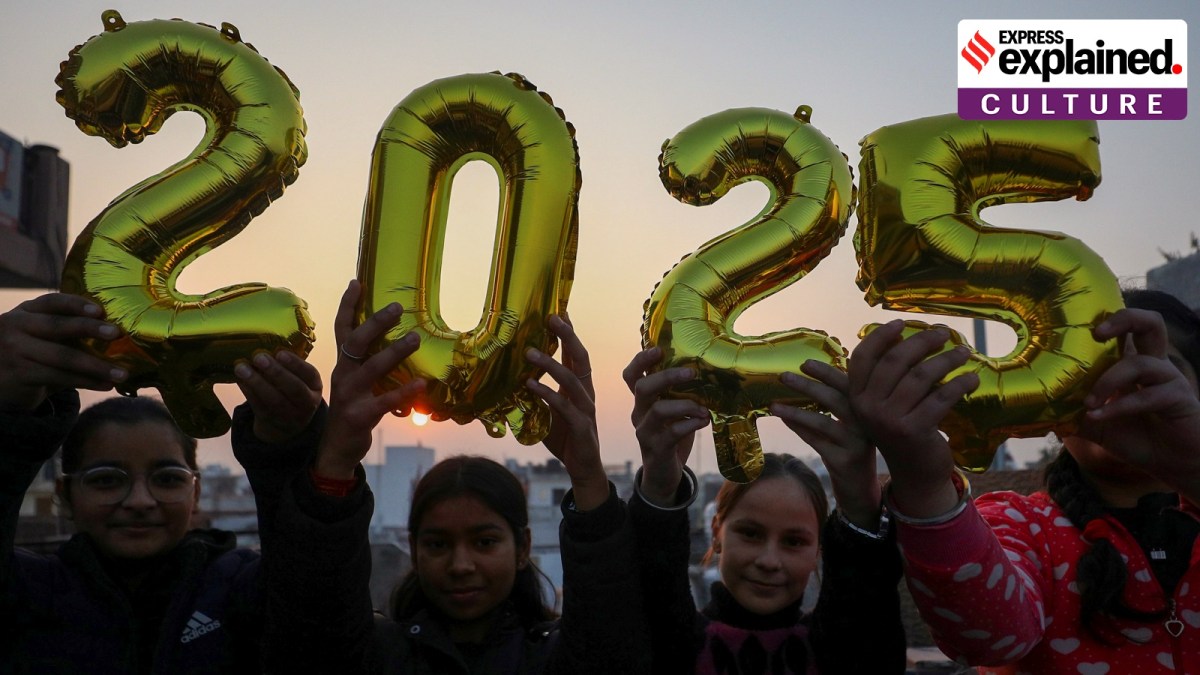
new year celebrationStudents pose for photos during New Year celebrations in Jammu on Monday. (Photo: PTI)

Largely recognised as the beginning of the New Year since the 16th century — when the Gregorian calendar was first adopted — January 1 marks celebrations around the world but the ways are different.

If the Spanish gobble 12 grapes right when the clocks strikes midnight for the New Year, in Greece onions are hung on doors of homes to attract growth and ward off evil. The Japanese eat soba noodles and visit the temple to seek blessings for the year ahead.

Here is a look at five popular New Year traditions from around the world and their origins.

  1. 01

    Spain

    The Spanish ring in the New Year by eating exactly 12 grapes at midnight. All of the grapes are supposed to be consumed within seconds before the clock finishes striking 12. While the tradition is supposed to bring good luck and prosperity in the coming year, its origins are debatable. 

    According to some accounts, it began in the 1800s, when the bourgeoisie in Madrid wanted to adopt the French custom of eating grapes and drinking champagne on New Year's Eve. Another belief is that in 1909, vine growers in Alicante and Murcia produced a bumper crop of grapes and popularised the tradition of selling the surplus. 

    Yet another tale proposes that the tradition could have begun centuries earlier when it was considered auspicious to celebrate the New Year with symbolic foods, including grains and fruits that represented fertility and prosperity. Since grapes were a staple crop in the region, it became the chosen food. 

  2. 02

    Greece

    In Greece, onions are hung on the doors or inside homes after the New Year's Day church service. Onions are believed to symbolise fertility and growth, given that bulbs tend to sprout. They are also believed to help people grow and ward off evil. Parents traditionally wake their children on New Year's Day by tapping them on the head with the onion. 

    In addition, the Greeks also pay tribute to the Christian bishop and theologian Saint Basil with the cutting of the "good luck cake", called vasilopita, made with a hidden coin inside, which is a token of fortune and good health. Usually cut by the head of the family, the first slice of the cake is for Jesus Christ, then the Virgin Mary, followed by Saint Basil. Slices are then cut for family members and the one who finds the coin is believed to be blessed with good luck during the year. 

  3. 03

    Japan

    In Japan, New Year is welcomed with the sound of bells ringing in temples. The ceremony called “joya no kane”, meaning midnight bell, which is believed to have originated in China, sees temples ringing bells 108 times to mark the end of the last year and the beginning of the next. The 108 bell rings symbolise the 108 earthly desires and anxieties mentioned in Buddhism, and the intention is to ring these out.  

    The first shrine or temple visit of the year, known as “Hatsumode”, sees people pray for good fortune. They also purchase omamori amulets, which are small pouches containing prayers written on paper, and return their old omamori from the previous year. Wishes are written on emas or wooden plaques, and omikuji fortune slips are pulled out for the year. 

    Another custom reportedly dating back to the Kamakura period (1185–1333), sees the Japanese eat soba noodles, primarily made from buckwheat flour, on New Year’s Eve. The long thin noodles are firm but easy to bite, and chewing them symbolises breaking away from the hardships of the previous year.   

  4. 04

    Germany

    The Germans begin the year with fortune-telling through the tradition of Bleigießen (“lead pouring” in English), where small pieces of lead or tin are heated until they melt. The molten metal is then quickly poured into a bowl of cold water, hardening to take various shapes that are then interpreted as predictions for the future. There are guides to what specific shapes could indicate — for instance, while animal shapes hint at loyalty and good luck, a tree means your skills will grow. 

    Believed to have its roots in ancient Roman practices of divination, where people melted metal or wax to predict the future, the tradition arguably became popular in Germany in the 19th century. Over the years, due to health risks associated with lead, safer alternatives are now used, including wax and tin, and special kits of the same are available in German stores during this festive season. 

  5. 05

    Scotland

    With the Scottish Reformation in the 1560s leading to the outlawing of Christmas in Scotland for almost four centuries, most year-end celebrations were reserved for New Year in the country. The homes are cleaned and prepared for “saining”, meaning “to bless or protect”, wherein water is obtained from a stream that is considered sacred — a little is consumed and the rest is sprinkled around the house. 

    Also burning juniper branches to fill their home with smoke to cleanse it once upon a time, the Scots now just leave the doors and windows open to allow fresh air in for cleansing. 

    According to the ritual of "First Footing", it is also believed that the first visitor to enter your home after midnight on December 31 will determine your luck for the year ahead. 

    An ideal “First Footer” is a tall, dark-haired man, as according to superstition fair-haired people were associated with misfortune. He also brings symbolic gifts, including coal (representing warmth), whisky (for good cheer) and shortbread (representing abundance).

    At the stroke of midnight, the Scots also celebrate with the rendering of the Scottish folk song "Auld Lang Syne", literally meaning "for the sake of old times". 

Curated For You

Vandana Kalra is an art critic and Deputy Associate Editor with The Indian Express. She has spent more than two decades chronicling arts, culture and everyday life, with modern and contemporary art at the heart of her practice. With a sustained engagement in the arts and a deep understanding of India’s cultural ecosystem, she is regarded as a distinctive and authoritative voice in contemporary art journalism in India. Vandana Kalra's career has unfolded in step with the shifting contours of India’s cultural landscape, from the rise of the Indian art market to the growing prominence of global biennales and fairs. Closely tracking its ebbs and surges, she reports from studios, galleries, museums and exhibition spaces and has covered major Indian and international art fairs, museum exhibitions and biennales, including the Venice Biennale, Kochi-Muziris Biennale, Documenta, Islamic Arts Biennale. She has also been invited to cover landmark moments in modern Indian art, including SH Raza’s exhibition at the Centre Pompidou in Paris and the opening of the MF Husain Museum in Doha, reflecting her long engagement with the legacies of India’s modern masters. Alongside her writing, she applies a keen editorial sensibility, shaping and editing art and cultural coverage into informed, cohesive narratives. Through incisive features, interviews and critical reviews, she brings clarity to complex artistic conversations, foregrounding questions of process, patronage, craft, identity and cultural memory. The Global Art Circuit: She provides extensive coverage of major events like the Kochi-Muziris Biennale, Serendipity Arts Festival, and high-profile international auctions. Artist Spotlights: She writes in-depth features on modern masters (like M.F. Husain) and contemporary performance artists (like Marina Abramović). Art and Labor: A recurring theme in her writing is how art reflects the lives of the marginalized, including migrants, farmers, and labourers. Recent Notable Articles (Late 2025) Her recent portfolio is dominated by the coverage of the 2025 art season in India: 1. Kochi-Muziris Biennale & Serendipity Arts Festival "At Serendipity Arts Festival, a 'Shark Tank' of sorts for art and crafts startups" (Dec 20, 2025): On how a new incubator is helping artisans pitch products to investors. "Artist Birender Yadav's work gives voice to the migrant self" (Dec 17, 2025): A profile of an artist whose decade-long practice focuses on brick kiln workers. "At Kochi-Muziris Biennale, a farmer’s son from Patiala uses his art to draw attention to Delhi’s polluted air" (Dec 16, 2025). "Kochi Biennale showstopper Marina Abramović, a pioneer in performance art" (Dec 7, 2025): An interview with the world-renowned artist on the power of reinvention. 2. M.F. Husain & Modernism "Inside the new MF Husain Museum in Qatar" (Nov 29, 2025): A three-part series on the opening of Lawh Wa Qalam in Doha, exploring how a 2008 sketch became the architectural core of the museum. "Doha opens Lawh Wa Qalam: Celebrating the modernist's global legacy" (Nov 29, 2025). 3. Art Market & Records "Frida Kahlo sets record for the most expensive work by a female artist" (Nov 21, 2025): On Kahlo's canvas The Dream (The Bed) selling for $54.7 million. "All you need to know about Klimt’s canvas that is now the most expensive modern artwork" (Nov 19, 2025). "What’s special about a $12.1 million gold toilet?" (Nov 19, 2025): A quirky look at a flushable 18-karat gold artwork. 4. Art Education & History "Art as play: How process-driven activities are changing the way children learn art in India" (Nov 23, 2025). "A glimpse of Goa's layered history at Serendipity Arts Festival" (Dec 9, 2025): Exploring historical landmarks as venues for contemporary art. Signature Beats Vandana is known for her investigative approach to the art economy, having recently written about "Who funds the Kochi-Muziris Biennale?" (Dec 11, 2025), detailing the role of "Platinum Benefactors." She also explores the spiritual and geometric aspects of art, as seen in her retrospective on artist Akkitham Narayanan and the history of the Cholamandal Artists' Village (Nov 22, 2025). ... Read More


Tags:
  • Explained Culture Express Explained
Weather
Edition
Install the Express App for
a better experience
Featured
Trending Topics
News
Multimedia
Follow Us
C Raja Mohan writesBeyond Gaza: With his Board of Peace, does Trump seek to bypass UN Security Council?
X