


© The Indian Express Pvt Ltd
Tags:


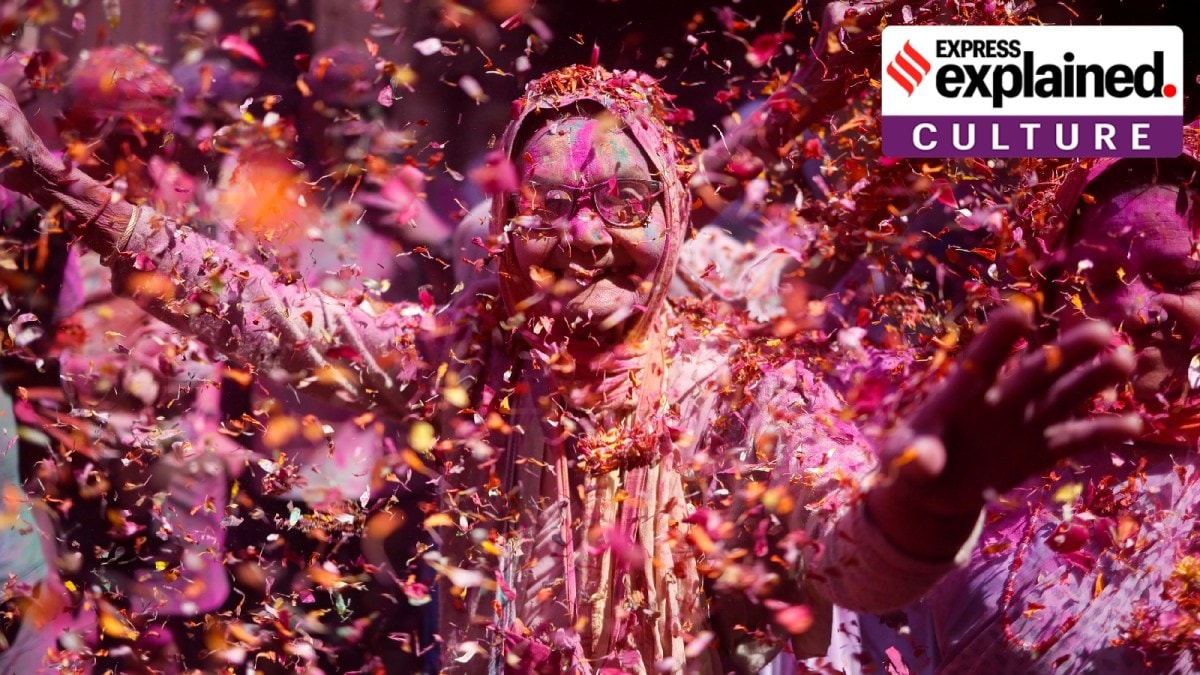
The holy township of Vrindavan, considered to be the place where Lord Krishna spent his childhood, has for centuries provided refuge to widowed Hindu women.
Widowhood among caste Hindus has long been stigmatised. Widows are expected to leave a life of austerity, and keep away from auspicious occasions. Seen as a drain on family finances, many find themselves in holy places like Vrindavan, where they live off the charity by the State, NGOs, and various temples and ashrams.

Nowadays, the festival of Holi brings some colour, although fleeting, to the otherwise austere lives of Vrindavan’s widows, giving them an opportunity to shun custom and engage in some fun.
“It is our life, and we must live it, and hope for better in the next,” a widow told The New York Times in 1998. A sense of resignation runs through the testimonies of Vrindavan’s widows.
Vrindavan today is home to thousands of widows, a majority (74%) of whom come from Bengal, according to a 2010 study by the National Commission of Women (NCW). It is believed that widows started to flock to Vrindavan from the time of Chaitanya Mahaprabhu.
The 16th-century Vaishnav saint from eastern India is said to have brought with him a group of widows to the town to escape sati, a now-banned practice which saw caste Hindu widows immolate themselves on their husbands’ funeral pyres.
While many widows come to Vrindavan of their own accord, often to escape physically and mentally abusive situations at home, others are simply abandoned at Vrindavan. But although Vrindavan may free them from daily indignations in the hands of their families, most live in penury.
The NCW 2010 report says, “The opportunities and facilities available in Vrindavan enable women to acquire two square meals a day and escape the taboos and harassment otherwise imposed upon them.” But, since a large proportion (nearly 90%) are unlettered, and many unfit for physical labour due to old age, two square meals is about the best they can get.
Colour in a town of ‘white’
White clothing, symbolising the relinquishment of worldly attachment and desires, is the most overt marker of widowhood among Hindus. On an average day, the narrow lanes of Vrindavan are flocked by women in white, begging for alms and singing hymns about Krishna.
Not on Holi. Not anymore, at least.
While there may have been isolated instances of widows playing Holi before, the first organised Holi celebration for widows was put together in 2013.
This was after the Supreme Court brought attention to the plight of Vrindawan’s widows in 2012. NGOs such as Sulabh International, which takes care of hundreds of widows in Vrindavan, have spearheaded the change.
“The celebration was a way of telling them they are one of us. They can wear coloured clothes, eat what they want. The ones who want to remarry, can,” Dr Bindeshwar Pathak, founder of Sulabh, told The Indian Express in 2014.

On Holi, these women sing traditional Holi songs in Braj Bhasha, play with colourful gulal, flowers, and coloured water. It is a joyous celebration for a people who are seldom allowed to feel happy.
“Colour vanished from my life after my husband died. I was just 20. I could not wear colourful clothes, or apply lali (colour) on my lips. I was shooed away from functions. Playing Holi was something I could not imagine,” 108-year-old Lalita Adhikari told The Indian Express in 2014. She spent over 70 years in Vrindavan.
This year, the UP government on Friday organised a Holi celebration for 2,000 widows in Vrindavan, in an attempt to set a Guinness world record for the sheer scale of the celebration. The certification process is still ongoing.
Yet poverty and social stigma faced by these widows year-long continue to weigh heavy. As the late Lalita Adhikari had said, “The state of widows is not going to change by playing Holi once.”
This is an re-edited version of an explainer published in 2023.


