6 min read
© The Indian Express Pvt Ltd



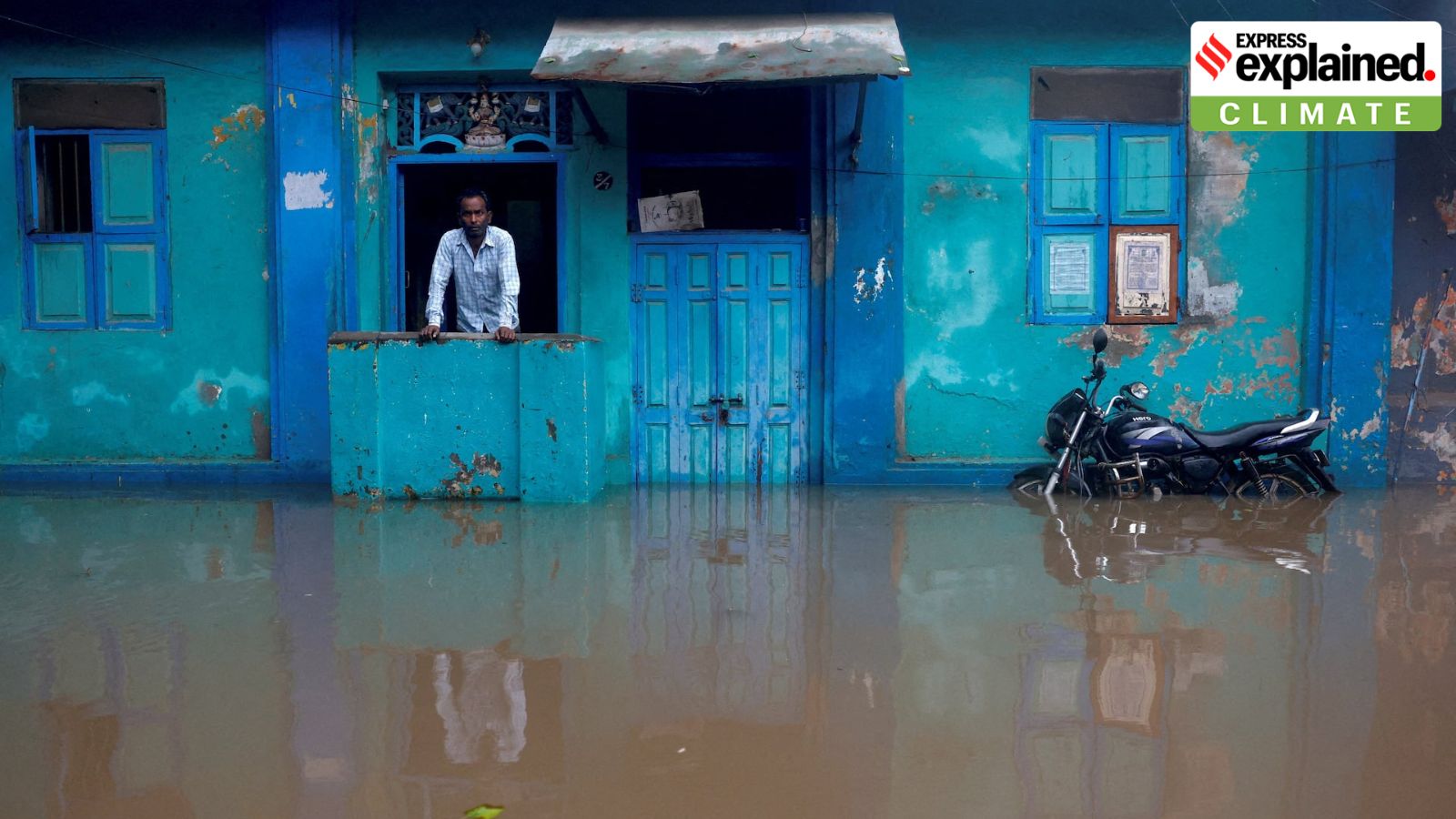 The researchers found that extreme rainfall events, such as those triggered by Cyclones Ditwah and Senyar, had become more intense in the affected regions in recent years. (Photo: Reuters)
Rising global temperatures, rapid urbanisation, and deforestation exacerbated the impact of floods triggered by cyclonic storms in Sri Lanka, Malaysia, Indonesia, and Thailand last month, leading to the death of at least 1,600 people in the four countries, according to a new study. While Cyclone Ditwah struck Sri Lanka on November 27, Cyclone Senyar made landfall first on November 26 in Indonesia and then in Malaysia on November 27.
The study, ‘Increasing heavy rainfall and extreme flood heights in a warming climate threaten densely populated regions across Sri Lanka and the Malacca Strait’, was published on Thursday (December 11). It was carried out by a team of researchers with the World Weather Attribution (WWA) group.
The analysis highlighted that although the affected countries experience annual floods during the monsoon season, this year, the proportions of the flood reached unprecedented levels.
In a statement, Sarah Kew, a climate researcher at the Royal Netherlands Meteorological Institute and lead author of the study, said, “Monsoon rains are normal in this part of the world. What is not normal is the growing intensity of these storms and how they are affecting millions of people and claiming hundreds of lives.”
The researchers found that extreme rainfall events, such as those triggered by Cyclones Ditwah and Senyar, had become more intense in the affected regions in recent years.
For instance, in Sri Lanka, heavy five-day precipitation events are now about 28% to 160% more intense, according to the report. In the Malacca Strait region, where Cyclone Senyar formed, extreme rainfall has increased by 9% to 50%.
This has primarily happened due to rising global temperatures — the world has become about 1.3 degrees Celsius warmer since the mid-1800s. Higher temperatures cause evaporation of water not only from land but also from oceans and other water bodies, meaning a warmer atmosphere holds more moisture. For every 1 degree Celsius rise in average temperature, the atmosphere can hold about 7% more moisture. This makes storms more dangerous as it leads to an increase in precipitation intensity, duration and/or frequency, which ultimately can cause severe flooding.
The new study also said that at the time when Cyclones Ditwah and Senyar caused extreme rainfall in the affected regions, the sea surface temperatures (SSTs) in the North Indian Ocean, where the storms originated, were 0.2 degrees Celsius higher than the 1991-2020 average. This would have added to the energy available for tropical storm development and evaporation, leading to the heavy rainfall. “Without the trend related to the 1.3 degrees Celsius rise in global temperatures, the SSTs would have been about one degree colder and below the 1991-2020 normal,” the study said.
Note that the researchers could not estimate the precise contribution of climate change to the extreme weather events that occurred in Sri Lanka, Malaysia, Indonesia, and Thailand last month. This happened as there were other factors at play, such as the El Niño–Southern Oscillation, and there was a lack of data on some of the key features of the climate in the region.
The study found that the impact of extreme rainfall was exacerbated in the affected regions due to an increase in deforestation. For instance, in Sri Lanka, where rain and landslides caused by Cyclone Ditwah killed more than 600 people, forest cover declined from 90% in 1900 to 20% in 2002 (‘Land use in Sri Lanka: past, present and the future’, 2002).
The key drivers of decline were encroachments for plantation crops, such as tea, rubber, and coconut, cinnamon cultivation, at the forest fringes, infrastructure development projects, as well as illicit timber felling, according to the WWA study.
Loss of forest cover accelerated runoff, which occurs when there is more water than land can absorb, exacerbating flood peaks.
Something similar took place in Indonesia, which lost 25% of its old forests to palm oil production between 1991 and 2020 (‘Land in limbo: Nearly one third of Indonesia’s cleared old-growth forests left idle’, PNAS, 2024). The country witnessed a loss of 32 million hectares of tree cover between 2001 and 2024, representing a 20% decline compared to 2000 levels, according to Global Forest Watch.
This diminished the protective barrier that Indonesia had against floods. Deforestation also reduces slope stability in rugged terrains (like in Indonesia’s Sumatra region, which was severely affected by Cyclone Senyar), intensifying the floods and landslides that usually follow extreme storm events.
The study revealed that rapid urbanisation was also a key player in the large-scale devastation triggered by extreme rainfall in the affected regions.
It found that Sri Lanka and Indonesia had seen an increase in the number of people living in high-intensity flood-risk zones. Critical infrastructures such as roads, railways, and cropland have also increased in these areas.
“As a result, both countries have a high baseline vulnerability and exposure, shaped by not only concentration of people but also cascading failures of transport, power and basic services, the prevalence of informal or substandard housing, and gaps in risk‐informed land‐use planning and enforcement,” the study said.
That’s why when Cyclone Senyar hit Indonesia, it not only killed hundreds of people but also led to economic losses worth $4.13 billion. Reports suggest around 1,21,000 houses were destroyed, along with 405 bridges, 270 health facilities, 509 educational facilities, and 1,100 public facilities.
Sri Lanka is estimated to have sustained economic losses of between $6 billion and $7 billion, nearly 3% to 5% of the national GDP. More than 137,000 acres of agricultural land are said to be destroyed by the floods, partly due to destroyed dams and canals, according to the study.
In a statement, Maja Vahlberg, a technical advisor at the Red Cross Red Crescent Climate Centre, said, “The human toll from cyclones Ditwah and Senyar is staggering, showing the devastating effects of climate-intensified rainfall over densely populated areas. Unfortunately, it is the most vulnerable people who experience the worst impacts, and have the longest road to recovery.”