4 min read
© The Indian Express Pvt Ltd



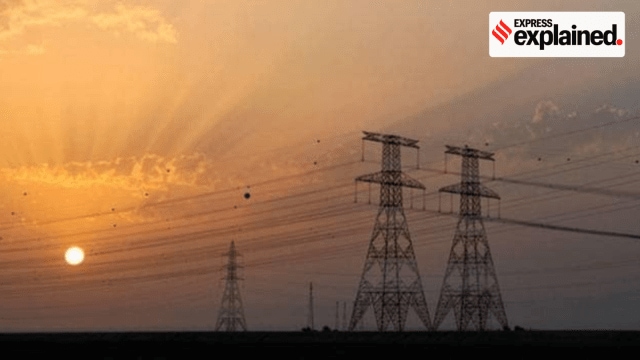 While the Centre maintains the amendments are essential to fix long-standing issues, critics argue they would weaken public sector power utilities. (Express file photo)
The central government’s draft Electricity (Amendment) Bill, 2025, has sparked pushback from power employee associations and farmer trade unions in Punjab, who say it would pave way for privatisation and higher tariffs.
Released for public feedback on October 9, 2025, the Ministry of Power’s draft law seeks to overhaul the Electricity Act, 2003, and address structural challenges in the power sector. The original feedback deadline of November 8 was extended to November 30.
While the Centre maintains the amendments are essential to fix long-standing issues, critics argue they would weaken public sector power utilities. Here’s a breakdown of the row.
According to the central government, the Bill is “a progressive reform aimed at strengthening the power distribution sector through financial discipline, healthy competition, and enhanced efficiency”. It says the Bill aims to modernise distribution by promoting competition, ensuring cost-reflective tariffs, and enabling direct procurement for industrial users.
The government says the Bill will make electricity affordable and reliable, and help “protect subsidised tariffs” for farmers and low-income consumers by shifting them to direct, budgeted subsidies.
Organisations such as the All India Power Engineers Federation (AIPEF), the Punjab State Electricity Board Engineers Association (PSEBEA), and farmer unions including Samyukt Kisan Morcha (SKM), Kisan Mazdoor Morcha (KMM), and SKM (non-political) have been protesting for weeks, arguing the Bill would enable privatisation and result in higher tariffs.
PSEBEA says the amendments would dismantle the public electricity framework, hand profitable sectors to private firms, dilute states’ powers, and threaten employees’ livelihoods. It points out that similar proposals in 2014, 2018, 2020, 2021 and 2022 were withdrawn after nationwide resistance from farmers, employees and consumers.
It also notes that despite 22 years under the Electricity Act 2003, distribution losses have jumped from Rs 26,000 crore to Rs 6.9 lakh crore, contradicting the Centre’s claims of reform success.
AIPEF has rejected the draft and demanded its withdrawal, while KMM coordinator Sarwan Singh Pandher claims the reforms would end cross-subsidies within five years, enable private players to enter the sector, and weaken public utilities, comparing it to the sidelining of BSNL in telecom.
In Uttar Pradesh too, power employees have been protesting for nearly 100 days, with proposed privatisation of the state electricity board being a key trigger.
Despite the intensity of protests, the Punjab government has not issued any public response. SKM has urged the state to convene a special Vidhan Sabha session to pass a resolution against the Bill, while PSEBEA has asked the government to clearly articulate its stand before the Centre.
A central objection is Section 14, which allows multiple distribution licences in the same area using the same network. PSEBEA says this would let private players cherry-pick high-paying industrial and commercial consumers, leaving public DISCOMs with low-revenue rural and domestic users. They fear this would erode cross-subsidies and push up household and agricultural tariffs.
Under Section 43(4), consumers with demand above 1 MW could shift to private suppliers, further cutting into DISCOM revenues while still requiring them to maintain backup contract demand. Private firms, the association warns, would not be bound by universal service obligations and could refuse unprofitable consumers.
PSEBEA also cautions that separating “content and carriage” without an independent distribution system operator would create conflicts of interest and overwhelm understaffed State Electricity Regulatory Commissions (SERCs). It foresees disputes over cost sharing, more litigation, consumer confusion during outages, and difficulties in ring-fencing accounts.
Concerns about centralisation of powers were also raised. Provisions on standards, appointments, renewable targets and rule-making are seen as weakening federalism. The association criticised amendments to renewable purchase obligations (RPOs) under Section 42(2), saying low penalties would freeze India’s carbon market by pricing CO₂ at just US$5–7 per tonne.
They also flagged risks in expanding over-the-counter (OTC) electricity trading platforms, citing possible market manipulation and opaque pricing.
The proposed five-year phase-out of cross-subsidies has triggered major concern, especially in Punjab where agriculture consumers receive free tubewell power and households get 300 units per month free irrespective of income. Employees of PSPCL, regular and contractual, are also protesting, calling the draft a roadmap to privatisation.
The All India Power Engineers’ Federation has announced a nationwide protest on November 27 against the Bill.