Premium
This is an archive article published on November 21, 2020

Explained: What do serosurvey results tell us about neutralising antibodies and ‘herd immunity’?

Out of those found infected with novel coronavirus in a serorsuvey in Pune, 85% developed neutralising antibodies. What does this mean, and what does it tell us about progress towards ‘herd immunity’?

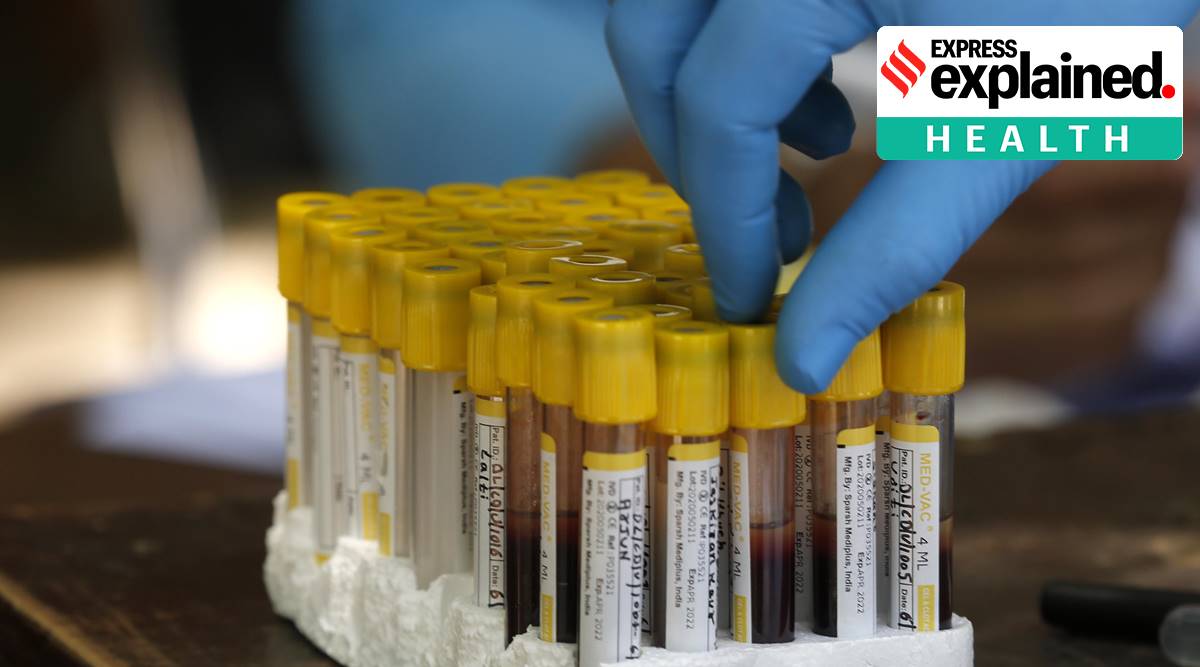
coronavirus, coronavirus antibodies, covid 19 vaccine, covid 19 survey pune, serum institute of india, covid 19 vaccine news, serum institute of india covid 19 survey, coronavirus vaccine news, coronavirus serm news, serm covid 19, serm coronavirus, serm today newsA health worker collects a sample during a serological survey of Covid-19 at the Darya Ganj Ramjas School in New Delhi on August 20, 2020. (Express Photo: Amit Mehra)

A new study in Pune has revealed that nearly 85% of the people who had been found infected with novel coronavirus in a serosurvey, conducted earlier, had developed neutralising antibodies. In other words, these people had developed immunity against the disease.

It is sometimes thought that everyone who is infected with a disease-causing virus, and recovers, becomes immune to the disease, because they build antibodies against it. But that is not the case. While the creation of antibodies is necessary for the recovery process, it does not guarantee immunity against a future attack from the same virus. Immunity comes from what are known as “neutralising” or “protective” antibodies.

So, what are these?

Neutralising antibodies, like other antibodies that are created to fight the disease, are nothing but proteins. These are a small subset of the disease-specific antibodies that are generated once an infection has occurred. The neutralising antibodies become special because they have the ability to thwart the entry of the same virus inside human bodies in the future. The other antibodies help in fighting off the virus once the infection has already happened.

Serosurveys, like the ones that have been conducted in Delhi, Mumbai, Pune and other cities, only look for the presence of antibodies in people. Their purpose is to find out whether a person has been infected with the virus or not, and through random testing of people, estimate the extent of spread of the disease, or prevalence, in a population group. Detection of disease-specific antibodies confirms that the person had been infected with the virus in the past.

But a further test needs to be carried out to detect the presence of neutralising antibodies. This is what has happened in the case of Pune. So far, this is the only study that has looked for neutralising antibodies.

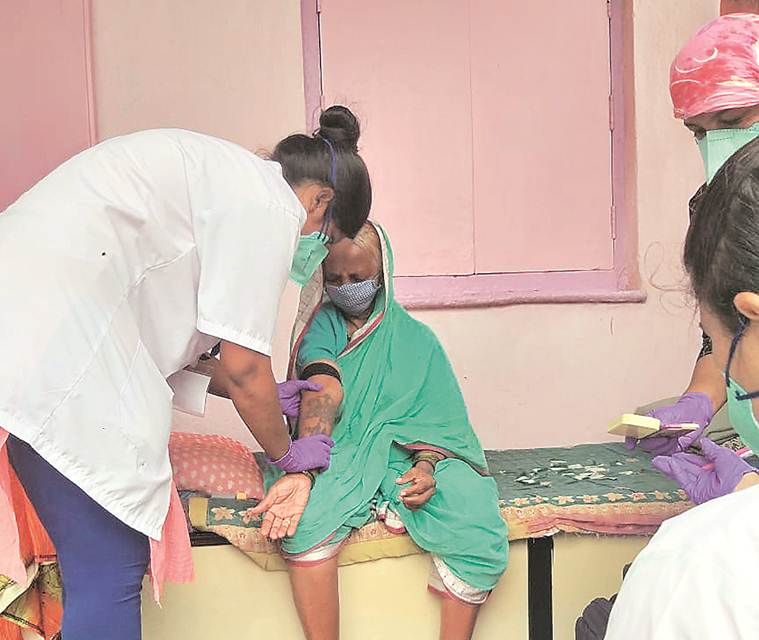
The serosurvey was conducted on about 1,650 individuals in five prabhags (each consisting of three to four municipal wards) of Pune. (Express Photo)
The study shows that while a majority of infected people do develop immunity, a significant proportion (15% in this case) who do not become immune even after getting infected. That would mean that they are at risk of reinfection. Although very few cases of reinfection have been documented in the current epidemic, it cannot be ruled out. That is why people who have recovered from the disease are also urged to continue to take protective measures such as practice physical distancing and wearing a mask.

An Expert Explains | How to read the Covid-19 serosurveys

Is immunity permanent?

It can be against some infections, but in the case of the novel coronavirus, it is not yet known whether the immunity acquired through natural infection lasts for weeks, months or years. The longevity of the immunity against a disease depends on a variety of factors, including the quantity of neutralising antibodies generated by a patient.

Story continues below this ad

In the Pune study, for example, about half the people with neutralising antibodies had generated high levels of these antibodies, while the others had relatively low levels. Those with a high quantity of neutralising antibodies (or specific protein molecules) could be expected to remain immune to the disease for a longer time.

“There are many important caveats to this, and the amount of neutralising antibodies would be just one factor, but in general one can say that higher quantities of neutralising antibodies would be associated with longer-lasting immunity against the disease,” said Vineeta Bal, an immunologist who is a co-author of this study. 📣 Express Explained is now on Telegram

This is because neutralising antibodies, as also other antibodies, decrease with time. The rate of decline varies in different diseases and individuals. So, in the same time that people with low neutralising antibodies see their immunity becoming ineffective, those with higher levels could still have enough to continue to fend off the virus.

In general, those with higher amounts of neutralising antibodies are also better protected. What is difficult to ascertain, however, especially in the case of a new virus like the one behind the present epidemic, is the optimum level above which a person would be definitely immune to the disease.

Story continues below this ad

Also, scientists do not fully understand why certain people do not generate neutralising antibodies. “Their immune system seems to be working fine, but for whatever reason they do not create those specific proteins. No biology that we know of can explain this as of now,” Bal said.

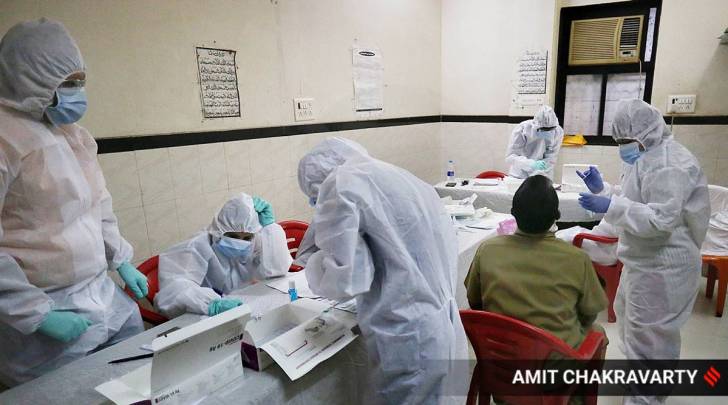
Rapid Antigen test in progress at Baiganwadi, Mumbai. (Express Photo: Amit Chakravarty)
What about vaccine-induced immunity?

As in the case of naturally-acquired immunity, we do not know, as of now, how long the immunity provided by a vaccine would last against the novel coronavirus. Dr Aarti Nagarkar, one of the investigators for the Pune study, said the level of immunity generated by a vaccine is usually expected to be longer and better. That is because the vaccine is designed to trigger a strong immune response with a high fraction of neutralising antibodies.

But since the vaccines currently under production have been under trial for only a few months, the duration of immunity they provide is not known. If the vaccines that are eventually approved for use do not provide long-lasting immunity, they are unlikely to have high acceptance among the general public.

Also from Explained | How effective are the top Covid-19 vaccines, when will they be available

Story continues below this ad

Is Pune approaching ‘herd immunity’?

That is something that scientists are careful not to assert. The serosurvey was conducted on about 1,650 individuals in five prabhags (each consisting of three to four municipal wards) of the city. About 51% of those who were tested, or about 850, were found to have antibodies. Of those with antibodies, now 85% have been found to have developed immunity.

Disease prevalence in Pune, like any other city, is not uniform. But the findings of the study could be applied well in the small population groups within the prabhags where the serosurvey was conducted. The findings do suggest that the disease prevalence within these population groups had reached such levels that the concept of herd immunity could be playing out.

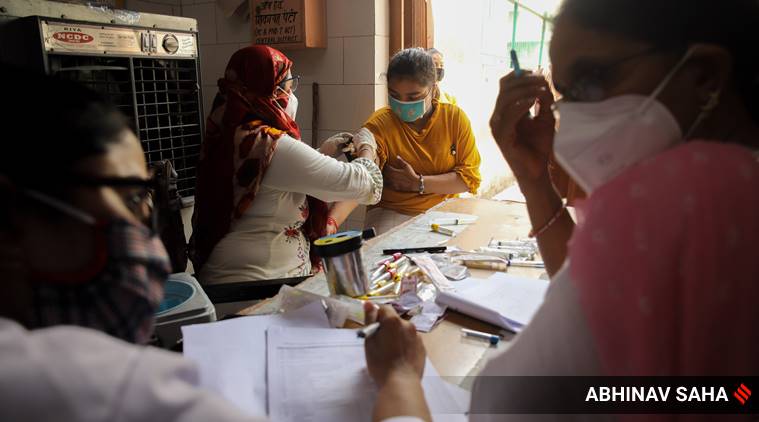
Health workers collect blood samples and take details during the sero survey at a dispensary in Majnu Ka Tila in New Delhi. (Express Photo: Abhinav Saha)

This is also supported by the fact that in Lohianagar, the prabhag with the highest disease prevalence detected in the serosurvey, the incidence rate had fallen sharply in the last three months.

“I don’t think we can still say that Pune has achieved, or is reaching, herd immunity. But the study is important because it shows that wherever there was high seropositivity, incidence rate has fallen subsequently,” said Dr Gagandeep Kang, a professor at Christian Medical College, Vellore, and one of the co-authors of the study.

Story continues below this ad

This article first appeared in the print edition on November 21, 2020 under the title ‘Which antibodies give immunity?’

x

Anuradha Mascarenhas is a Senior Editor at The Indian Express, based in Pune. With a career spanning three decades, she is one of the most respected voices in Indian journalism regarding healthcare, science and environment and research developments. She also takes a keen interest in covering women's issues . Professional Background Education: A gold medalist in Communication and Journalism from Savitribai Phule Pune University and a Master’s degree in Literature. Author: She authored the biography At The Wheel Of Research, which chronicles the life and work of Dr. Soumya Swaminathan, the former Chief Scientist at the WHO. Key Focus: She combines scientific accuracy with storytelling, translating complex medical research into compelling public and human-interest narratives. Awards and Recognition Anuradha has won several awards including the Press Council of India's national award for excellence in journalism under the gender based reporting category in 2019 and the Laadli Media award (gender sensitivity -2024). A recipient of the Lokmat journalism award (gender category-2022), she was also shortlisted for the RedInk awards for excellence in journalism-2021. Her debut book At The Wheel Of Research, an exclusive biography of Dr Soumya Swaminathan the inaugural chief scientist of World Health Organisation was also nominated in the Popular Choice Category of JK Paper AUTHER awards. She has also secured competitive fellowships including the Laadli Media Fellowship (2022), the Survivors Against TB – New Research in TB Media Fellowship (2023) and is part of the prestigious 2025 India Cohort of the WomenLift Health Leadership Journey.” Recent Notable Articles (Late 2025) 1. Cancer & Specialized Medical Care "Tata Memorial finds way to kill drug-resistant cancer cells" (Nov 26, 2025): Reporting on a breakthrough for triple-negative breast cancer, one of the most aggressive forms of the disease. Discipline, diet and purpose; How a 97-year-old professor defies ageing'' (Nov 15, 2025) Report about Prof Gururaj Mutalik, the first Head of Department at Pune's B J Government Medical College who at 97 credits his longevity to healthy habits and a strong sense of purpose. 2. Environmental Health (The "Breathless Pune" Series) Long-term exposure even to 'moderate' air leads to chronic heart, lung, kidney issues" (Nov 26, 2025): Part of an investigative series highlighting that even "safe" pollution levels are damaging to vital organs. "For every 10 µg/m3 increase in PM2.5 level, there was 6-8% jump in medicine sales" (Nov 23, 2025): Using commercial data to prove the direct link between air quality and respiratory illnesses in Pune. 3. Lifestyle & Wellness News "They didn't let cancer, diabetes and heart disease stop them from travelling" (Dec 22, 2025): A collaborative piece featuring survivors who share practical tips for traveling with chronic conditions. At 17, his BP shot up to 200/120 mmHG; Lancet study flags why child and teen hypertension doubled between 2000 and 2020'' (Nov 12,2025)--A report that focusses on 17-year-old-boy's hypertensive crisis and reflects the rising global trend of high blood pressure among children and adolescents. 4. Scientific Recognition & Infrastructure For promoting sci-comm, gender diversity: IUCAA woman prof highlighted in Nature" (Nov 25, 2025): Covering the global recognition of Indian women scientists in gender studies and physics. Pune researchers find a spiral galaxy like the Milky Way from early universe'' (December 3, 2025)- A report on how Indian researchers discovered a massive galaxy that existed when the universe was just 1.5 billion years old , one of the earliest to have been observed so far. Signature Beat: Health, Science & Women in Leadership Anuradha is known for her COVID-19 reportage, where she was one of the first journalists to provide detailed insights into the Covishield and Covaxin trials. She has a dedicated interest in gender diversity in health and science, often profiling women researchers who are breaking the "leaky pipeline" in STEM fields. Her writing style is scrupulous, often featuring interviews with top-tier scientists and health experts from various institutions.   ... Read More


Latest Comment
Post Comment
Read Comments
Advertisement
Advertisement
Advertisement
Advertisement