Tamil Nadu CM J Jayalalithaa.
On the day that Tamil Nadu went to the polls, AIADMK chief J Jayalalithaa had two guests: first, the family of her advisor Sheela Balakrishnan to invite her to Sheela’s son’s wedding in early June and then the family of her other advisor Venkataraman to invite her home for his grandchild’s first birthday in the last week of May. Jayalalithaa accepted both invitations “as the swearing in ceremony would be over by then.” That was how sure she was of victory.
The people’s verdict has been decisive but what remain uncertain is the state’s financial status—it’s economy has seen the steepest rise in debt, about 92 per cent, according to various reports, in the last five years. The 2016 poll manifesto of Jayalalithaa raised many eyebrows as part of the state expenditure will now go towards unproductive sectors.
For instance, one of the major promises that Jayalalithaa made was the 100 unit free power for households, in two month bill cycles. Power experts worry that the sector is already facing an accumulated debt of nearly one lakh crores rupees. A debt of around Rs 12,500 crore will be added every year. To make matters worse, the free 100 units power per household in a six round cycle a year would escalate the government’s total expenditure –far higher than was expected.
Private power purchases further derail the state power sector daily when a regularized power tariff system suggested by experts over the years could save at least Rs 4,000 crore per year. For instance, power is available for purchase from other states at Rs 3.80 to Rs 4.20 per unit but the state power firm Tangedco buys power at Rs 5.05 to Rs 6.40 per unit from private players.
[related-post]
In this scenario, the promise of 100 units power to nearly 20 million customers, means some 12,000 million units free power per year which translates into a burden of over Rs 8,000 crore annually on the state. And the number of power consumers added every year is in the vicinity of Rs 10 lakh.
“Already the state is in a serious crisis as we are spending some Rs 7,300 crore annually for power subsidy. This additional Rs 8,000 crore for the free 100 unit scheme will increase it to around Rs 15,000 crore in power subsidy alone. What kind of an economy model is that? How will these debts be paid for?” asks S Gandhi, an expert in the state power sector and the president of the Power Engineers Society of Tamil Nadu (PESOT).
Then there is the issue of prohibition. Although Jayalalithaa did not promise complete prohibition, she has already decided to reduce the working hours of liquor retail shops by two hours and closed down 500 shops as part of the prohibition ‘in a phased manner’ policy. This is another source of crucial revenue for the state – between Rs 25,000 to Rs 30,000 crore. How will the government compensate for the loss of the liquor revenue? No answers so far.
Story continues below this ad
The government also spends thousands of crores on free laptops, uniform sets, shoes, geometry boxes and even cycles besides breakfast for school children and a dozen schemes for poor and women. While Jayalalithaa has already waived crop loans, what remains unclear is whether she will take up the real cause of farmers to strengthen their networks as promised by manifestos of AIADMK and many other parties.
Regularising school fee and regulating medical education sector are few other pressing issues that Jayalalithaa needs to address in the coming days. Above all, what will make her job more challenging will be the more powerful opposition. In the assembly, she will will face Stalin and senior DMK leaders with more experience in governance than her new ministers in the cabinet. A powerful opposition will however, make the system stronger than ever, decisions will be better scrutinized and governance will become more accountable.


 4 min read


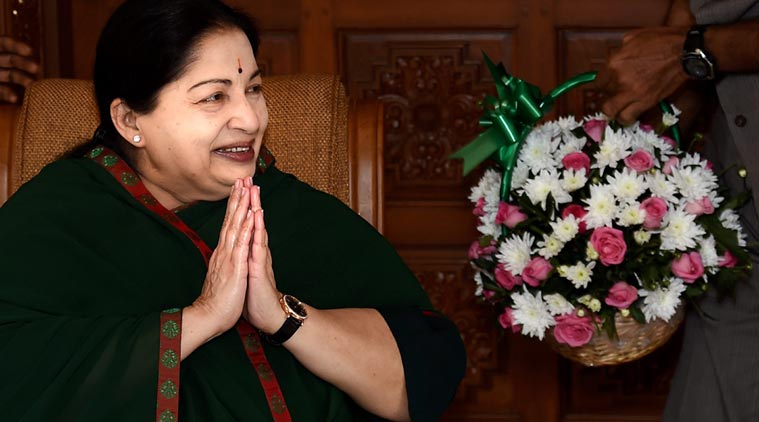 Tamil Nadu CM J Jayalalithaa.