5 min read
© The Indian Express Pvt Ltd



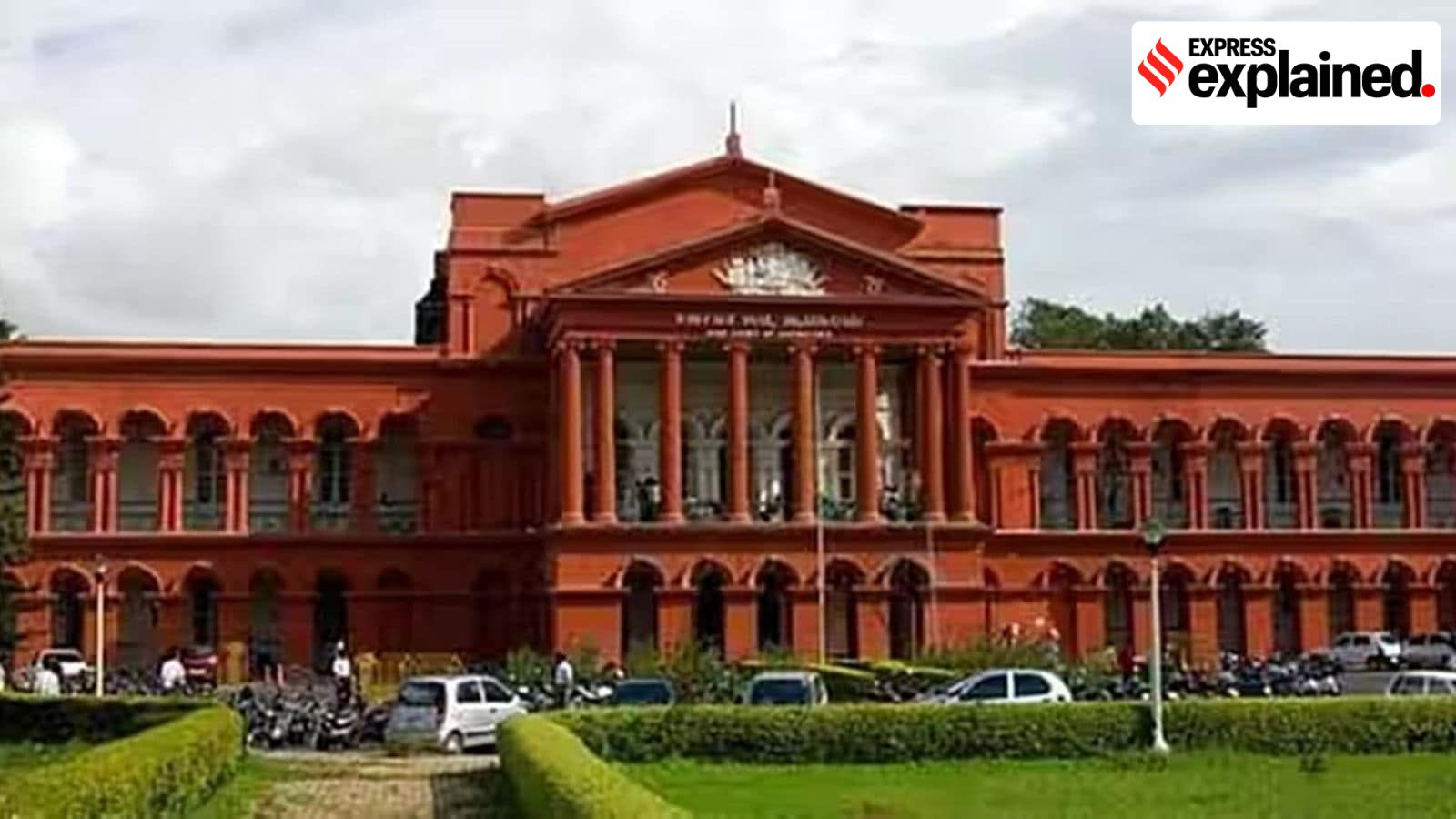 The Karnataka HC, in a recent order dealing with a dispute over compensation for land acquisition, had made extensive comments raising concerns over the BMIC project. (Photo: File)
The Karnataka High Court has asked the state government to scrap the existing version of the Bengaluru-Mysuru Infrastructure Corridor (BMIC), noting that out of the total 111 km of the proposed expressway, only one km has been built since the project was first proposed in 1995. The court has asked the government to “re-look at the project and take appropriate action for fresh and new project”.
What is the BMIC project?
The project was envisioned under the HD Deve Gowda government in 1995, when a consortium of Indian and American firms signed a memorandum of understanding to develop a corridor between Bengaluru and Mysuru.
After the government examined the proposal, an order was passed constituting Nandi Infrastructure Corridor Enterprises as a Special Purpose Vehicle of a consortium of firms to implement the project.
The project involved building a 111-km-long expressway between the two cities, in a four-lane system expandable to six lanes. Alongside the expressway and required peripheral roads, five new satellite townships were also envisioned, each supporting a population of one lakh.
Originally, 10 years had been allotted for construction, while the company would have operated the project for thirty years with the right to collect tolls.
The proposed infrastructure corridor and expressway are not to be confused with the existing Bengaluru-Mysuru Expressway, which is a distinct project that the NHAI has previously described as an “access-controlled highway” under NH 275.
What did the Karnataka HC say?
The Karnataka HC, in a recent order dealing with a dispute over compensation for land acquisition, had made extensive comments raising concerns over the BMIC project, including issues such as the infrastructure having remained largely “on paper” while also becoming a magnet for extensive litigation.
The court said with regard to the progress of the project on the ground, “Out of 111 kilometres Bangalore Mysore infrastructure road, only 1 kilometre has been constructed by Nandi Infrastructure Corridor Enterprise. It has constructed 47 kilometres of peripheral roads from which it collects toll tax to its profit. But the ambitious and the project of such a public interest to decongest the city and to develop new satellite township has remained only on papers.”
Highlighting the congestion that the city had suffered in the intervening years and considering the long period of effective dormancy of the project construction, the court then suggested that it be scrapped and a fresh look taken at the project.
With regard to litigation, the court noted that 2,000 cases related to the project had been filed before it, including six that had eventually gone before the Supreme Court.
The Indian Express had previously reported on another such case, where a one acre land parcel marked for acquisition had not been taken possession of for the project, or been compensated by the state for more than 17 years. The court had found in favour of the landowner and set aside the acquisition, labeling it a situation of “extraordinary dormancy”.
How is the prior SC order likely to affect this?
The SC had also dealt with the BMIC in an earlier order (Bangalore Mysore Infrastructure Corridor Area Planning Authority v Nandi Infrastructure Corridor Enterprise Limited), which was also examined by the HC, in the same case where the HC recommended scrapping the BMIC.
The apex court had here stated that land acquired from landowners for the project could only be used to implement this project. It had also stated that the “project proponents” could not unilaterally develop the land in a way that was not specified in the relevant Framework Agreement. It also stated that township construction had to be done in a manner consistent with this framework.
With the SC having made these stipulations with regard to the order, it is not certain if the project would be started afresh, in light of certain comments made earlier by Deputy Chief Minister DK Shivakumar.
As previously reported by the Indian Express, Shivakumar had stated in response to a query in the legislative council that, ” The direction of the (Supreme) court is to the effect that the project be executed as conceived originally and that the framework agreement be implemented in letter and spirit while executing the project.” The Deputy CM had also made comments to the effect that even if he wanted to drop the project, he was prevented from doing so by the order of the court.