4 min read
© The Indian Express Pvt Ltd



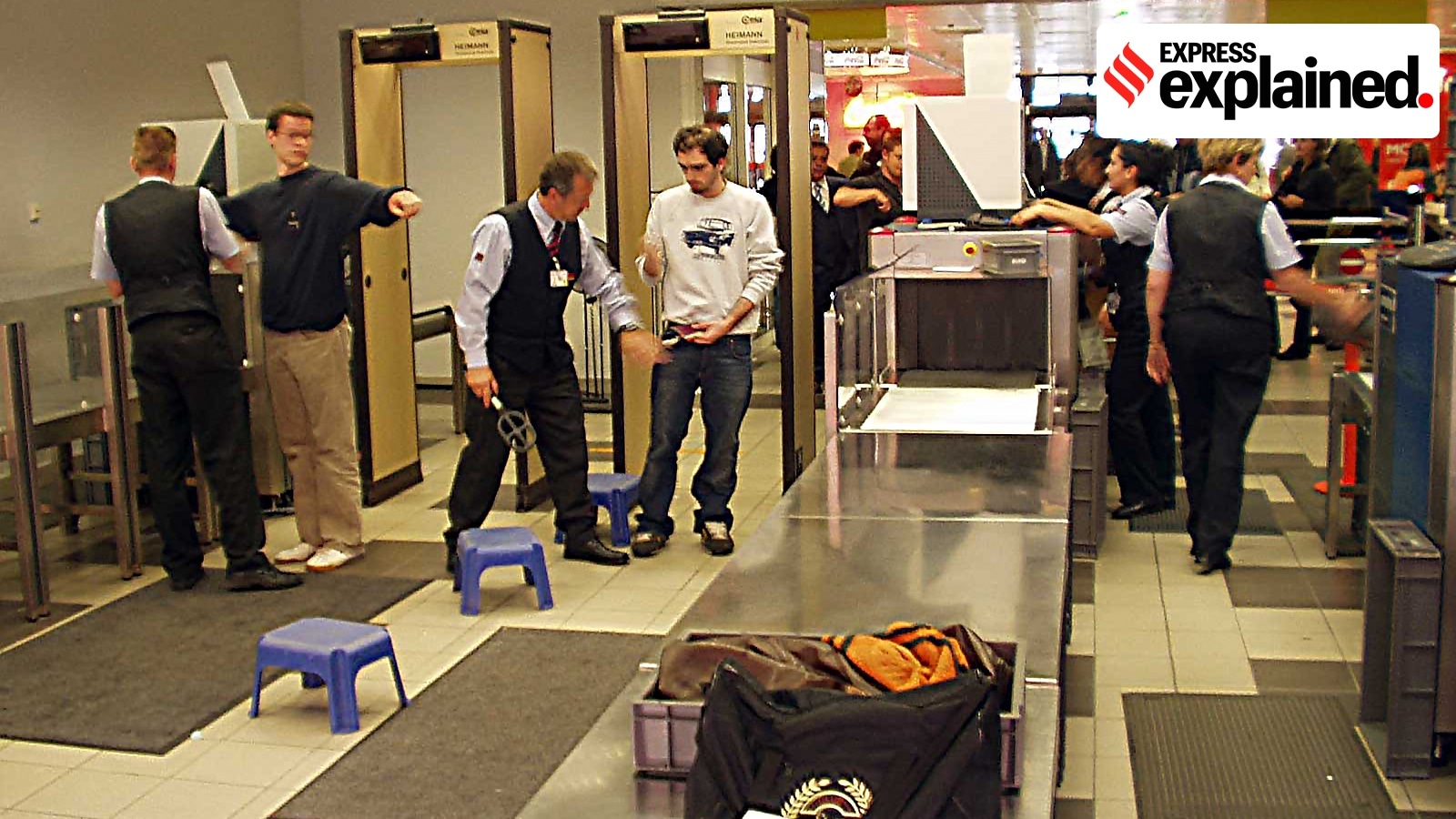 Only 5 per cent of bags in the US were screened before 9/11; this was ramped up to 100 per cent. (Representational image/Wikimedia Commons)
The attacks on the World Trade Center in New York and the Pentagon in Washington DC on September 11, 2001 showed the fragility and vulnerability of air travel. The 9/11 terrorist attacks shook up things on both the consumer as well as the operator end.
They led to profound, permanent changes in the way the world flew — a range of new processes were implemented to improve security at airports and within aircraft. These steps were intended to instil confidence in people that flying was safer than before — but for some time at least, they ended up causing a further decline in non-essential air travel.
How flying changed
In the United States — and most other places — flying was a relaxed, enjoyable activity prior to 9/11. People could go till the boarding gate of aircraft to see off loved ones, passengers could carry baseball bats and small cutting devices on board, and many pilots invited some wide-eyed passengers into the cockpit to enjoy the marvel of flying from the front row.
The 9/11 attacks changed everything.
Hijackers who took knives and boxcutters on board had taken over aircraft and turned them into bombs — and among the most significant security changes was in the way passengers and their baggage were checked before they were allowed to get on planes.
Only 5 per cent of bags in the US were screened before 9/11; this was ramped up to 100 per cent, according to PBS. Mandatory identity verification of passengers and their luggage was implemented at places it wasn’t already being done. Over the years, the verification of identity has evolved from matching with government-issued IDs to fingerprint and biometric scanners and, now, facial recognition technology.
Frisking or pat-downs of passengers was made mandatory — full-body scanners at airports were still some years away. Passengers travelling to the US were required to subject all carry-on items to a security check before boarding.
In November 2001, the George W Bush administration established a new body, the Transportation Security Administration (TSA), to take charge of security at airports and other transportation points — jettisoning the earlier practice of outsourcing to private security agencies appointed by airlines or airports. More than 60,000 employees were recruited to the TSA across the country, American media reports said.
Steps were taken to seal off the cockpit, making it difficult for terrorists to commandeer aircraft. Aircraft manufacturers standardised bullet-proof and locked cockpit doors on commercial aircraft, and regulators prohibited passengers from entering the cockpit during flight.
As part of regulations that are now standard everywhere, pilots were required to make sure who was trying to enter the cockpit before the door was unlocked. Most aircraft are now equipped with cameras above the cockpit door to allow the crew to check who is knocking.
The US doubled down on having in-flight air marshals, and increased the numbers of these security personnel on board aircraft.
How the aviation industry coped
The shock of the attacks, and the impact of the changes in air travel, lingered for several years. According to the US Bureau of Transportation Statistics, it took five years for US-based airlines to recoup their losses. And this was after the Air Transportation Safety and System Stabilization Act (2001) provided $5 billion in compensation and $10 billion in loan guarantees.
As per the International Air Transport Association (IATA), global airline revenues plummeted to $307.5 billion in 2001, compared with $328.5 billion in 2000. In 2002, they fell further to $306 billion.