5 min read


Click here to follow Screen Digital on YouTube and stay updated with the latest from the world of cinema.
© IE Online Media Services Pvt Ltd



 Vyjayanthimala turns 91. (Photo: IMDb)
Vyjayanthimala — a rare pearl necklace worn by Lord Vishnu — was the name given to the veteran actress, who at 91 still stuns people with her dancing skills. While the veteran star gained immense fame for her acting and dancing skills, she was equally criticised for her personal life. Some called her a home-breaker for falling in love with a married man, others linked her with the legendary Dilip Kumar, claiming he was so much in love with her that he reportedly handpicked the shade of saree Vyjayanthimala would wear in every scene of Gunga Jumna (1961). The veteran star was also linked with Raj Kapoor, but the actress called it a publicity stunt, leading to a public disagreement with the thespian’s son Rishi Kapoor.
Right from stepping into the tinsel town at the age of 16 after her arangetram (debut performance of a Bharatnatyam dancer) to becoming a politician and defying norms, the actress challenged conventions time and again.
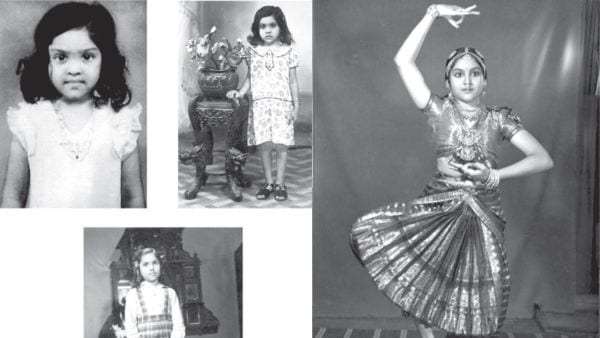 Vyjayanthimala during her childhood. (Photo: Bonding Memoir)
After making her debut with the Tamil film Vaazhkai in 1949, the actress starred in a series of Tamil, Telugu, and Hindi films, eventually playing the role of Chandramukhi in Bimal Roy’s Devdas (1955). However, she was far from being the first choice for the role. It came to her after Nargis, Suraiya and Bina Rai refused to play the courtesan.
The makers cast her without showing much confidence in her and against the will of the film’s scriptwriter Nabendu Ghosh, who thought she was too young for the role. Her exceptional performance didn’t just prove everyone wrong but also bagged her a Filmfare Award for Best Supporting Actress. Mature beyond her years, a proud Vyjayanthimala refused to accept the award, claiming she was as much a leading lady as Suchitra Sen (who played Paro).
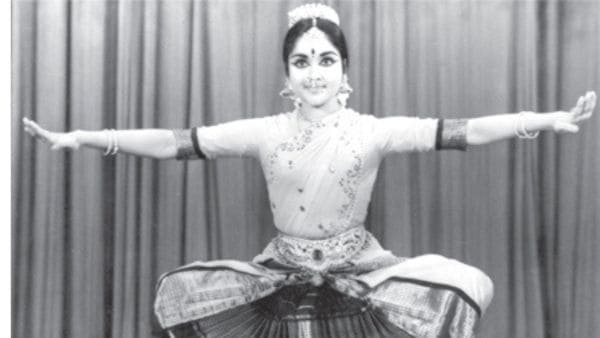 (Photo: Bonding Memoir)
She was also the first South Indian actress to wear a swimsuit on screen, a bold move considering she came from an orthodox Tamil Brahmin Iyengar family in Chennai. This was the time when actresses were supposed to conform to a sanskari archetype and transgressions were frowned upon. The actress wore a swimsuit in Raj Kapoor’s Sangam. She was arguably the first female superstar of India, ruling three industries and being one of the first pan-India stars.
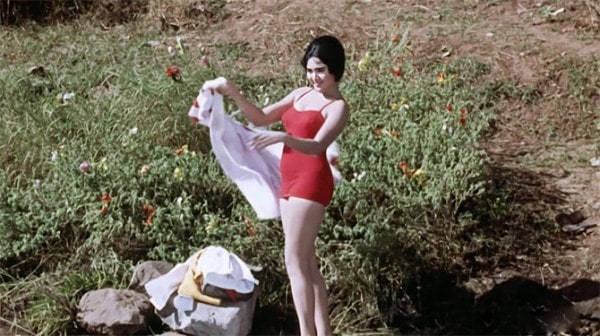 Vyjayantimala was the first South Indian actress to wear a swimsuit. (Photo: IMDb)
At the peak of her career, the actress retired from acting as she married the love of her life Dr Chamanlal Bali. In her memoir, Bonding, the actress recalled that while shooting for a film in Kashmir, she fell ill. Chamanlal came from Bombay to treat her. He was married and a father of three. But after their love blossomed, Chamanlal divorced his first wife to get married to Vyjayanthimala. The couple have a son Suchindra Bali.
Not only a successful actress and a dancer, Vyjayanthimala is also a powerful politician. The actress joined the Congress in 1984, winning with an exceptional margin in the Tamil Nadu General Election in the same year against all odds.
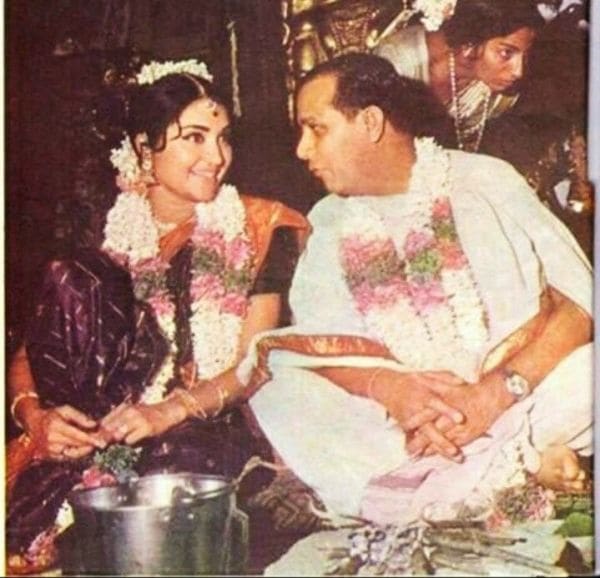 Vyjayantimala and Dr Chamanlal. (Photo: IMDb)
Vyjyantimala’s memoir Bonding says, “Being a member of Parliament also meant facing people’s preconceived notions about her. “How would she fare?” they asked derisively. A pretty fairy from the arena of fine arts, what was she doing in the hard as nails battle ground of politics? Would she make it? She won like she had always done, by silently proving the detractors wrong.”
In 1989, she once again emerged victorious. In 1993, the actress was nominated to Rajya Sabha for a six-year term. In 1999, she resigned from INC. In her letter to Sonia Gandhi, the actress wrote, “Painfully watching the party drifting from its avowed principles after the death of Rajiv Gandhi, the party has lost touch with its grassroots and one can see day in and day out that sincere party workers are being steadily ignored.” In 1999, she joined Bharatiya Janata Party.
Vyjayanthimala was awarded the Padma Shri by the Government of India in 1968, and was recently honoured with Padma Vibhushan — the second-highest civilian honour in India. The actress still actively practices dance. On her 90th birthday celebrations, she took the internet by surprise with her graceful performance.
Click here to follow Screen Digital on YouTube and stay updated with the latest from the world of cinema.