This is an archive article published on April 27, 2021
Pune start-up that is fighting COVID, other diseases with AI-driven radiology service
DeepTek's platform allows the automation of repetitive tasks, enabling experts to focus on the disease, and creation of structured reports with just a few clicks, thereby minimising the efforts in writing or dictation.
On regular days, there used to be a number of X-Rays, CTs and MRIs to be analysed on DeepTek, an AI-driven medical imaging platform that works on analysing scans — X-Rays, CT and MRI.
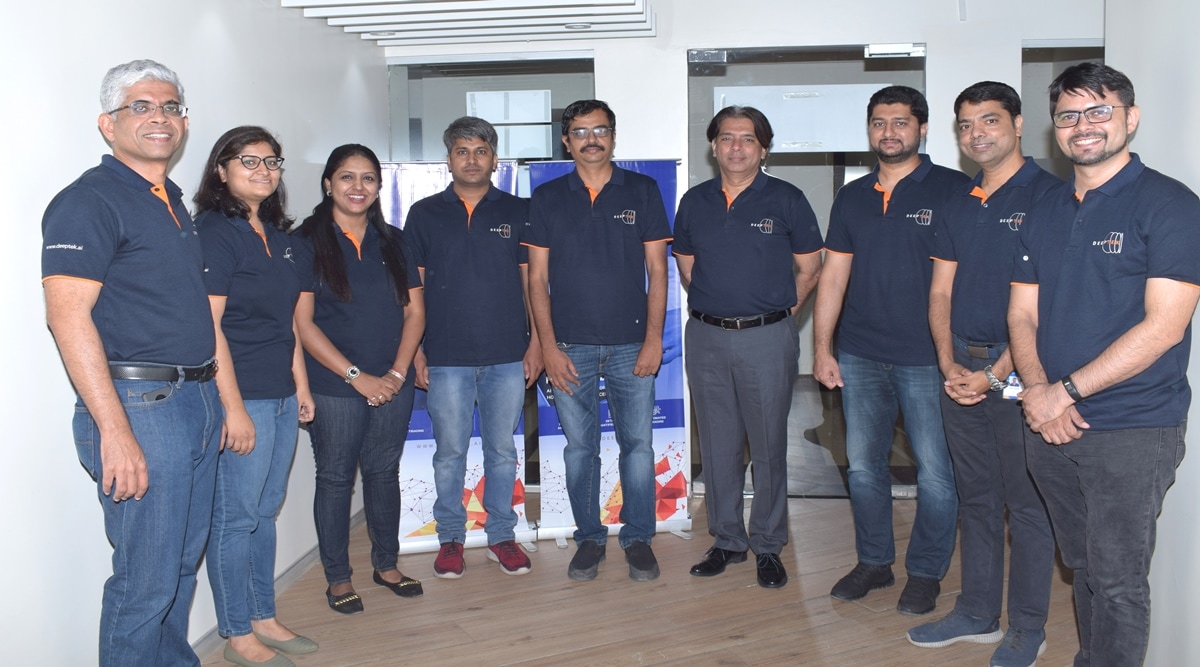
In late March 2021, however, the number of CT scans for chest on the platform began to shoot up on a daily basis. That’s when the founders of DeepTek, Dr Amit Kharat, Ajit Patil, realised that the Covid-19 second wave was here. The speed of the diagnosis was going to be critical to match the increase in CT studies and ensure patients and hospitals receive reports on time.
Reading of a scan is a time-consuming activity that culminates with a radiologist going through 200 to 2,000 of images to come to a diagnosis. This is a cognitive process, and requires many years of experience, to reach a conclusion about a case. Add to this the fact that India has, according to several reports, around 10,000 radiologists catering to a population of 1.3 billion. Using technology, DeepTek is attempting to ease the stress by enabling experts to analyse and report faster. The platform allows the automation of repetitive tasks, enabling experts to focus on the disease, and creation of structured reports with just a few clicks, thereby minimising the efforts in writing or dictation. The platform reduces the margin of error that could be caused by visual fatigue or technical reasons.
“If, for instance, there is a CT study having COVID-pneumonia like pattern, AI has the ability to segregate the study with classic imaging findings from normal scans. It also enables experts to quantify lung lesions. Critical studies are moved up the list so that reports can be delivered earlier for these, this function of triage is critical to ensuring quick reports to critical patients. Triaging is usually done in a war setting — if there is a wounded soldier and there is another who is critically wounded, which is the one which needs to move first?” says Dr Kharat. “For the radiologist, their imaging worklist is actually a virtual war room where they are fighting against time to deliver critical reports to ensure quick delivery of care. Here, in the same way, the AI does the screening and segregates the critical studies and allows the experts to act quickly on them,” he adds.
DeepTek, which was founded less than three years ago, has generated a revenue of $1 million in its first year of going live. It handles more than 2,000 scans every day and is used by more than 150 hospitals and imaging centres across India. “Onboarding a center to provide this service is done remotely and these imaging clinics can be onboarded within 15 minutes. The team is enabling subspeciality reports, critical studies triage and virtual radiologist consultation in almost all corners of the country making imaging accessible and available. We are adding four to five hospitals and imaging centres per week,” says Patil.
Dr Kharat, who has 18 years of experience in practicing radiology before co-founding DeepTek, adds that the present Covid scenario has resulted in, apart from RT-PCR, High Resolution CT (HRCT) being recommended to assess the lung condition, score the lung involvement and exclude other complications or preexisting disease. “That has suddenly stressed medical imaging clinics and hospitals. Initially, the demand seemed only in Maharashtra state, however, it seems to be a pan-India as we get enquiries from all across the country. Enabling the imaging experts with the power of the platform to ease out the pressure is the best we can do in these trying circumstances” says Dr Kharat.
DeepTek is also working in the screening of tuberculosis from digital chest X-rays — which kills 1.4 million people annually. For TB, an X-ray chest is an important component of screening patients. Implementing AI for screening in such situations is helpful as AI currently works well as a point solution. The solution has also been audited by organizations supported by WHO such as Stop TB Organization and Friends of International Tuberculosis Relief (FIT).
Story continues below this ad
The company has two major investors from Japan and a number of other smaller strategic investors. Having raised their seed round, they are planning to look for Series A funding in six to eight months “for strengthening the platform and developing AI models across modality, and varied disease spectrum”.
“This industry is at an early stage; it is an innovation in process. We have 7 patents, each defining a unique process which allows experts to create value. There are several challenges to be addressed while creating AI models. If you develop AI models for one hospital data, there is a chance that it may not work for another hospital dataset initially unless customized. Models need to be robust and they need to be integrated well in the existing workflows to ensure adoption. It will be a journey to cover the space and create comprehensive value,” says Patil.
Dipanita Nath is a Senior Assistant Editor at The Indian Express, based in Pune. She is a versatile journalist with a deep interest in the intersection of culture, sustainability, and urban life.
Professional Background
Experience: Before joining The Indian Express, she worked with other major news organizations including Hindustan Times, The Times of India, and Mint.
Core Specializations: She is widely recognized for her coverage of the climate crisis, theatre and performing arts, heritage conservation, and the startup ecosystem (often through her "Pune Inc" series).
Storytelling Focus: Her work often unearths "hidden stories" of Pune—focusing on historical institutes, local traditions, and the personal journeys of social innovators.
Recent Notable Articles (December 2025)
Her recent reporting highlights Pune’s cultural pulse and the environmental challenges facing the city during the winter season:
1. Climate & Environment
"Pune shivers on coldest morning of the season; minimum temperature plunges to 6.9°C" (Dec 20, 2025): Reporting on the record-breaking cold wave in Pune and the IMD's forecast for the week.
"How a heritage tree-mapping event at Ganeshkhind Garden highlights rising interest in Pune’s green legacy" (Dec 20, 2025): Covering a citizen-led initiative where Gen Z and millennials gathered to document and protect ancient trees at a Biodiversity Heritage Site.
"Right to breathe: Landmark NGT order directs PMC to frame norms for pollution from construction sites" (Dec 8, 2025): Reporting on a significant legal victory for residents fighting dust and air pollution in urban neighborhoods like Baner.
2. "Hidden Stories" & Heritage
"Inside Pune library that’s nourished minds of entrepreneurs for 17 years" (Dec 21, 2025): A feature on the Venture Center Library, detailing how a collection of 3,500 specialized books helps tech startups navigate the product life cycle.
"Before he died, Ram Sutar gave Pune a lasting gift" (Dec 18, 2025): A tribute to the legendary sculptor Ram Sutar (creator of the Statue of Unity), focusing on his local works like the Chhatrapati Shivaji statue at Pune airport.
"The Pune institute where MA Jinnah was once chief guest" (Dec 6, 2025): An archival exploration of the College of Agriculture, established in 1907, and its historical role in India's freedom struggle.
3. Arts, Theatre & "Pune Inc"
"Satyajit Ray, Ritwik Ghatak were not rivals but close friends, says veteran filmmaker" (Dec 17, 2025): A deep-dive interview ahead of the Pune International Film Festival (PIFF) exploring the camaraderie between legends of Indian cinema.
"Meet the Pune entrepreneur helping women build and scale businesses" (Dec 16, 2025): Part of her "Pune Inc" series, profiling Nikita Vora’s efforts to empower female-led startups.
"How women drone pilots in rural Maharashtra are cultivating a green habit" (Dec 12, 2025): Exploring how technology is being used by women in agriculture to reduce chemical use and labor.
Signature Style
Dipanita Nath is known for intellectual curiosity and a narrative-driven approach. Whether she is writing about a 110-year-old eatery or the intricacies of the climate crisis, she focuses on the human element and the historical context. Her columns are often a blend of reportage and cultural commentary, making them a staple for readers interested in the "soul" of Pune.
X (Twitter): @dipanitanath ... Read More


 5 min read