Anirudh Nair (left) and Oroon Das as Adil and Partho
Playwright and theatre director Neel Chaudhuri had set out to write a “slightly untidy love story” when he brought Partho and Adil together. Partho is an older man and a writer. Adil is a student whose politics is expressed through gay pride marches and campus parties. At the time of writing, Chaudhuri was travelling regularly by metro to rehearse for plays and he would observe how every station brought strangers together and thrust them against one another. “There was a sense of distance as well as proximity between people thus forced together,” he says. As the intimate and impersonal scenes played out around him, his story of Partho and Adil began to transform. The Delhi Metro became a metaphor for emotional and contextual distance between people.
Like Tadpole Repertory’s previous award-winning play Taramandal — based on Satyajit Ray’s short story Patol Babu, Film Star — Still and Still Moving breaks the linear action by juxtaposing the main love story with unrelated scenes set on a metro. The 90-minute play was a part of Writer’s Bloc workshop in Mumbai two years ago and is being staged in Delhi.
The venue, too, is unusual — a hall at Max Mueller Bhavan rather than a theater. The sets are white, a colour that highlights flaws. “My approach to theatre is that I don’t want to hide anything. Even in fade-outs, we use blue light so that the audience knows it is in a theatre space,” says the director. Excerpts from an interview:
Why did you use the Delhi Metro as a metaphor in a story about a gay relationship?
I don’t approach the story as a gay love story, for me it is a love story set in the city. I did not want a story that had a neat arc because relationships are illogical in how they tend to start and how they end. I knew I wanted an older man and a younger man, with a physical distance. In the play, I included certain moments and images from life in the metro to punctuate the love story. In most artwork, when a moment or storyline is juxtaposed against another, it automatically creates a meaning. That happened with Still and Still Moving while I was writing or rehearsing.
How many scenes were drawn from real life?
Many incidents really happened around me, such as the one with the Bihari labourers locked in an intimate embrace. I went close to them and heard them talking about work at a site and even using swear words. Later, we had two actors board the metro and stand embracing and we observed the reactions of the other commuters. Some were uncomfortable with the idea of male intimacy taking place right up their faces while others whispered among themselves. Such scenes have been positioned in the play either to consolidate the events in Partho and Adil’s life or prove a counter point.
Like your previous plays, especially Taramandal, Still and Still Moving frequently introduces Bengali conversations.
I think there should be some degree of realistic dialogue. In India, we have bilingual and multilingual speech patterns in our daily lives. Most Bengalis break into Bangla when they talk to each other, when they think that English sounds too neat and scripted.
Is it challenging to direct your own plays?
After seven or eight productions in which I have directed my own writings, I have got to the point where I have a distance from the text. One opening scene that I liked very much was a part of the play in Mumbai but we deleted it later. I now have an emotional detachment as a writer to deal with it. I have got to the point where I would not want to direct my own plays. This is probably the last play I have written that I am directing.
Story continues below this ad
The play is being held at Max Mueller Bhavan till tomorrow. Entry: Free. Contact: 23329604
Dipanita Nath is a Senior Assistant Editor at The Indian Express, based in Pune. She is a versatile journalist with a deep interest in the intersection of culture, sustainability, and urban life.
Professional Background
Experience: Before joining The Indian Express, she worked with other major news organizations including Hindustan Times, The Times of India, and Mint.
Core Specializations: She is widely recognized for her coverage of the climate crisis, theatre and performing arts, heritage conservation, and the startup ecosystem (often through her "Pune Inc" series).
Storytelling Focus: Her work often unearths "hidden stories" of Pune—focusing on historical institutes, local traditions, and the personal journeys of social innovators.
Recent Notable Articles (December 2025)
Her recent reporting highlights Pune’s cultural pulse and the environmental challenges facing the city during the winter season:
1. Climate & Environment
"Pune shivers on coldest morning of the season; minimum temperature plunges to 6.9°C" (Dec 20, 2025): Reporting on the record-breaking cold wave in Pune and the IMD's forecast for the week.
"How a heritage tree-mapping event at Ganeshkhind Garden highlights rising interest in Pune’s green legacy" (Dec 20, 2025): Covering a citizen-led initiative where Gen Z and millennials gathered to document and protect ancient trees at a Biodiversity Heritage Site.
"Right to breathe: Landmark NGT order directs PMC to frame norms for pollution from construction sites" (Dec 8, 2025): Reporting on a significant legal victory for residents fighting dust and air pollution in urban neighborhoods like Baner.
2. "Hidden Stories" & Heritage
"Inside Pune library that’s nourished minds of entrepreneurs for 17 years" (Dec 21, 2025): A feature on the Venture Center Library, detailing how a collection of 3,500 specialized books helps tech startups navigate the product life cycle.
"Before he died, Ram Sutar gave Pune a lasting gift" (Dec 18, 2025): A tribute to the legendary sculptor Ram Sutar (creator of the Statue of Unity), focusing on his local works like the Chhatrapati Shivaji statue at Pune airport.
"The Pune institute where MA Jinnah was once chief guest" (Dec 6, 2025): An archival exploration of the College of Agriculture, established in 1907, and its historical role in India's freedom struggle.
3. Arts, Theatre & "Pune Inc"
"Satyajit Ray, Ritwik Ghatak were not rivals but close friends, says veteran filmmaker" (Dec 17, 2025): A deep-dive interview ahead of the Pune International Film Festival (PIFF) exploring the camaraderie between legends of Indian cinema.
"Meet the Pune entrepreneur helping women build and scale businesses" (Dec 16, 2025): Part of her "Pune Inc" series, profiling Nikita Vora’s efforts to empower female-led startups.
"How women drone pilots in rural Maharashtra are cultivating a green habit" (Dec 12, 2025): Exploring how technology is being used by women in agriculture to reduce chemical use and labor.
Signature Style
Dipanita Nath is known for intellectual curiosity and a narrative-driven approach. Whether she is writing about a 110-year-old eatery or the intricacies of the climate crisis, she focuses on the human element and the historical context. Her columns are often a blend of reportage and cultural commentary, making them a staple for readers interested in the "soul" of Pune.
X (Twitter): @dipanitanath ... Read More


 4 min read


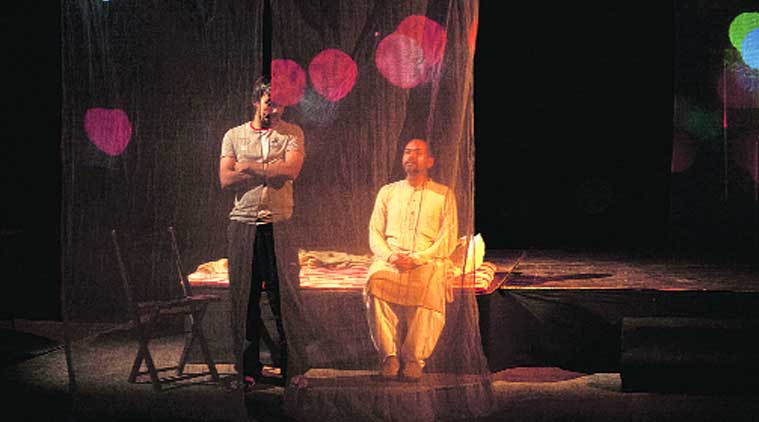 Anirudh Nair (left) and Oroon Das as Adil and Partho