Premium
This is an archive article published on September 8, 2021

‘I was framed for being a Dalit, 6 years of my life were taken away from me’

Released last month, after a city court held that he was “falsely framed” because of his Dalit identity, the 55-year-old man — he did not want to be named — says the dreams have stopped.

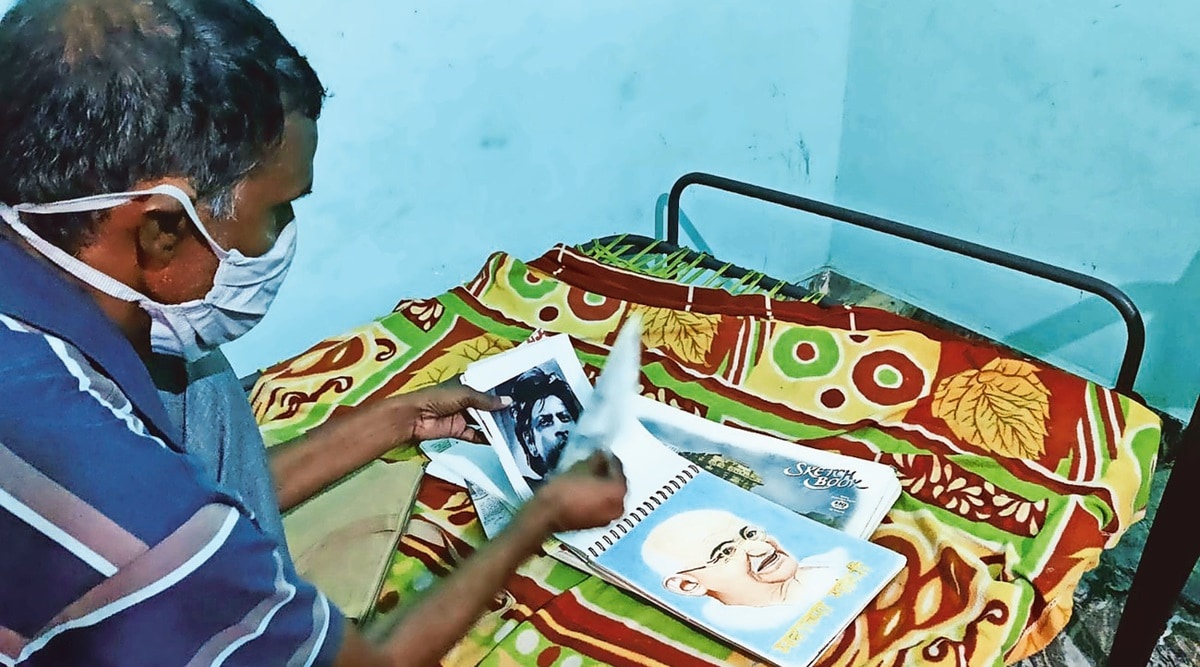
The 55-year-old was acquitted in a POCSO case last month.The 55-year-old was acquitted in a POCSO case last month.

DURING HIS six years in prison, he had a recurring dream: he would fly, but fall to the ground when he saw his worried wife. Then, he says, he would catch a bus home. And that was when he would wake up to reality, inside his cell at Tihar jail, awaiting trial in a POCSO case.

Released last month, after a city court held that he was “falsely framed” because of his Dalit identity, the 55-year-old man — he did not want to be named — says the dreams have stopped.

“I always used to fly in my dreams. The strange thing is that now that I have been released, I have stopped flying in my dreams. I want to fly again, one more time,” he says.

The case against him was registered on the complaint of a man who accused him of sexually assaulting four minor girls. The prosecution accused him of being a “serial sexual” offender. He was arrested on May 18, 2015, when the alleged incident took place.

On August 7, a Delhi court acquitted him, observing that he had been “falsely framed due to prejudicial disposition of the parents towards the accused, who belongs to the Dalit community”. He was released the same night.

The complainant was found to have filed a false case after the 55-year-old objected to his dog defecating outside his house in outer Delhi district.

The court, in its order, said the “parents of the victim girls indulged in the sinister act of tutoring their daughters in a most brazen and shameless manner and merely because accusations or charges against the accused are grave, severe or despicable”.

Story continues below this ad

In a rare instance, it also ordered the state to pay a compensation of Rs 1 lakh to the accused within two months, observing that this was a “symbolic amount and without prejudice to his legal rights and contentions.”

When the judge announced the verdict, the 55-year-old broke down. After six years, he would be with his family.

A month after his release, he is still trying to get used to his freedom. He has been vaccinated, but doesn’t want to step out. “Everything has changed. Everyone wears a mask, people think twice before going out. I spent an even harsher lockdown in jail. To be honest, I am not in a right frame of mind. I will take my time going outside,” he says.

He says for the first few years in prison, he was angry, but has now learnt to forgive. Taking out a copy of the Bible, he says: “I barely understand what is written in this. But I now know God is one. I forgive them for filing the case. I feel no anger anymore. I was framed for being a Dalit and six years of my life were taken from me”.

Story continues below this ad

His wife, 58, works as a ragpicker, earning Rs 100 on a good day. His 30-year-old son gets Rs 12,000 per month, working 12-hour shifts at a denim factory. They have a debt of Rs 5 lakh – the cost of moving houses, seeking to flee from discrimination, and mounting daily expenses.

The family of 12, including his wife, children, grandchildren and other relatives, lives in two cramped rooms, sleeping on makeshift beds. They have defaulted on their rent for three months now, and owe Rs 20,000 to the landlord. But this is not their biggest challenge.

“The last place where we stayed, the people of the area hated us for being born as Dalits. Day and night, they would try to make us leave,” says the wife.

Six years ago, the 55-year-old worked as a security guard. “He had a spring in his step and worked overtime,” says his former employer, a senior bank manager who testified on his behalf in court.

Story continues below this ad

Now, he is afraid of crossing the road, the honking sound of vehicles disturbs him and he often forgets his way home. “I have forgotten how to use a smartphone. I have learnt to switch it on and off. I can’t even buy groceries. I have lost my appetite. I am exhausted all the time. I can’t work,” he says.

In Tihar, he learnt how to paint. His favourite subjects were politicians, Hindu gods, bank-related advertisements, and portraits of actor Deepika Padukone.

“This kept me sane. I spent the lockdown in jail. It was harsher. I slept inside a cell with a dozen other people, without maintaining social distancing. I could not speak to my wife due to the lockdown. But I survived,” he says.

Now that his trial is over, he wants to visit his ailing mother in Rajasthan. “She keeps calling me, crying on the phone. I don’t have money for the trip. Nor do I have the strength. I want to go and see her,” he says.

Anand Mohan J is an award-winning Senior Correspondent for The Indian Express, currently leading the bureau’s coverage of Madhya Pradesh. With a career spanning over eight years, he has established himself as a trusted voice at the intersection of law, internal security, and public policy. Based in Bhopal, Anand is widely recognized for his authoritative reporting on Maoist insurgency in Central India. In late 2025, he provided exclusive, ground-level coverage of the historic surrender of the final Maoist cadres in Madhya Pradesh, detailing the backchannel negotiations and the "vacuum of command" that led to the state being declared Maoist-free. Expertise and Reporting Beats Anand’s investigative work is characterized by a "Journalism of Courage" approach, holding institutions accountable through deep-dive analysis of several key sectors: National Security & Counter-Insurgency: He is a primary chronicler of the decline of Naxalism in the Central Indian corridor, documenting the tactical shifts of security forces and the rehabilitation of surrendered cadres. Judiciary & Legal Accountability: Drawing on over four years of experience covering Delhi’s trial courts and the Madhya Pradesh High Court, Anand deconstructs complex legal rulings. He has exposed critical institutional lapses, including custodial safety violations and the misuse of the National Security Act (NSA). Wildlife Conservation (Project Cheetah): Anand is a leading reporter on Project Cheetah at Kuno National Park. He has provided extensive coverage of the biological and administrative hurdles of rewilding Namibian and South African cheetahs, as well as high-profile cases of wildlife trafficking. Public Health & Social Safety: His recent investigative work has uncovered systemic negligence in public services, such as contaminated blood transfusions causing HIV infections in thalassemia patients and the human cost of the fertilizer crisis affecting rural farmers. Professional Background Tenure: Joined The Indian Express in 2017. Locations: Transitioned from the high-pressure Delhi City beat (covering courts, police, and labor issues) to his current role as a regional lead in Madhya Pradesh. Notable Investigations: * Exposed the "digital arrest" scams targeting entrepreneurs. Investigated the Bandhavgarh elephant deaths and the impact of kodo millet fungus on local wildlife. Documented the transition of power and welfare schemes (like Ladli Behna) in Madhya Pradesh governance. Digital & Professional Presence Author Profile: Anand Mohan J at Indian Express Twitter handle: @mohanreports ... Read More

Stay updated with the latest - Click here to follow us on Instagram

Latest Comment
Post Comment
Read Comments
Advertisement
Loading Taboola...
Advertisement