PGIMER short of 3,000 nurses, staff overburdened amid rising patient load
Manjeek Kaur, president of the PGI Nursing Association, said the institute has been raising the demand for new nursing posts since 2022, but the focus remains largely on vacant sanctioned posts instead of fresh appointments based on the current workload.
The problem is compounded by vacancies in senior positions. As many as 194 posts of senior nursing officers are lying vacant.
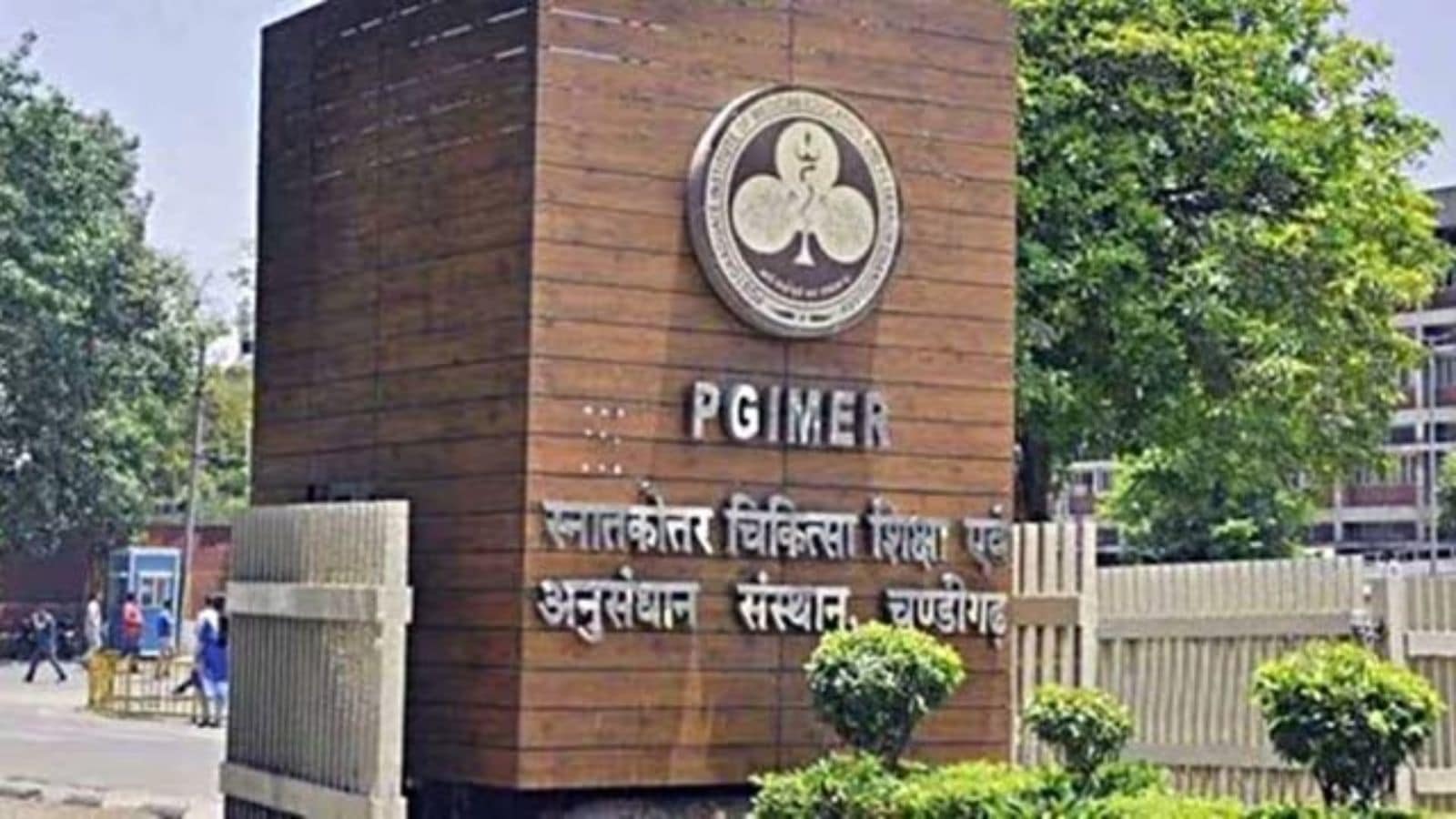
The Postgraduate Institute of Medical Education and Research (PGIMER) is grappling with an acute shortage of nursing officers, with over 3,000 positions lying vacant as per the staffing norms set by the Staff Inspection Unit (SIU), a central government body under the Ministry of Health and Family Welfare.
Manjeek Kaur, president of the PGI Nursing Association, said the institute has been raising the demand for new nursing posts since 2022, but the focus remains largely on vacant sanctioned posts instead of fresh appointments based on the current workload. “Departments like ICUs, gynaecology, post-labour and medical-surgical wards, and adult urology are severely understaffed. Nurses are handling three to four times the recommended patient load, which puts both patients and staff at risk,” she said.
According to Kaur, the actual burden is far worse than what official numbers reflect. “Only bedded patients are counted, while hundreds of patients on trolleys in the emergency and in hospital corridors also receive full nursing care — but this invisible workload remains unaccounted for. Our staff is at a breaking point,” she added.
The problem is compounded by vacancies in senior positions. As many as 194 posts of senior nursing officers are lying vacant. Only 12 of the 22 posts of deputy nursing superintendents are filled. Kaur said the recruitment criteria for senior roles are so stringent that very few candidates qualify, and there has been a long-standing demand to revise the eligibility norms.
“There are many eligible nursing officers waiting for promotions, but the file has been pending for over three years. The last large-scale recruitment of nursing staff happened in 2015. Since then, PGI has repeatedly sent proposals to the Ministry, including one for 1,500 new posts, but nothing has moved,” said Kaur.
In the Emergency department, where nearly 350 patients arrive at any given time, just seven to eight nurses are on duty — each attending to as many as 50 patients. The rising daily OPD numbers — up from 6,000 before the pandemic to around 10,000–11,000 now — have only added to the strain.
“Nursing is a female-dominated profession. Many nurses in their late 50s are still working night shifts. Leave, including child care leave, is hard to come by. The physical and mental toll is enormous — back pain, stress, fatigue, and disrupted family lives are now commonplace,” Kaur said.
Story continues below this ad
She pointed out that behavioural complaints from patients have risen, largely because overworked nurses do not have time to talk to them. “We are perceived as rude. Verbal and even physical abuse in high-stress zones like Emergency and Trauma is increasing. Nursing is not just about administering medicines; it is an art that requires time, care and connection — all of which are being lost.”
Kaur also flagged that two major new centres — the Advanced Neurosciences Centre and the Maternal and Child Care Centre — cannot be operationalised without new nursing staff. “This is not about choice, it’s about compulsion.
Patient safety demands it. You cannot silence unions and expect quality care. Real solutions require fair promotions, transparent planning, and timely recruitment,” she said.
When contacted, PGI’s Deputy Director (Administration) Pankaj Rai said the institute is aware of the crisis and that steps are being taken to resolve the issue. “There are ongoing discussions and several meetings have been scheduled to expedite the process,” he said.
Parul is a Principal Correspondent at The Indian Express in Chandigarh. She is a seasoned journalist with over 25 years of experience specializing in public health, higher education, and the architectural heritage of Northern India.
Professional Profile
Education: Graduate in Humanities with a specialized focus on Journalism and Mass Communication from Panjab University, Chandigarh.
Career Path: She began her career covering local city beats and human interest stories before joining The Indian Express in 2009. Over the last decade and a half, she has risen to the rank of Principal Correspondent, becoming the publication’s primary voice on Chandigarh’s premier medical and academic institutions.
Expertise: Her reporting is deeply rooted in the institutional dynamics of PGIMER (Post Graduate Institute of Medical Education and Research) and Panjab University. She is highly regarded for her ability to navigate complex administrative bureaucracies to deliver student-centric and patient-centric news.
Recent Notable Articles (Late 2024 - 2025)
Her recent work highlights critical reporting on healthcare infrastructure, academic governance, and urban culture:
1. Public Health & PGIMER
"PGIMER expands digital registry: Centralized patient records to reduce wait times by 40%" (Nov 20, 2025): A detailed look at the digital transformation of one of India's busiest medical institutes to tackle patient influx.
"Robotic Surgery at PGI: Why the new urology wing is a game-changer for North India" (Oct 12, 2025): Reporting on the acquisition of state-of-the-art medical technology and its impact on affordable healthcare.
"Shortage of life-saving drugs: Inside the supply chain crisis at government pharmacies" (Dec 5, 2025): An investigative piece on the logistical hurdles affecting chronic patients in the tri-city area.
2. Education & Institutional Governance
"Panjab University Senate Election: The battle for institutional autonomy" (Dec 18, 2025): In-depth coverage of the high-stakes internal elections and the friction between traditional governance and central reforms.
"Research funding dip: How PU’s science departments are navigating the 2025 budget cuts" (Nov 5, 2025): An analysis of the fiscal challenges facing researchers and the impact on India's global academic ranking.
3. Art, Culture & Heritage
"Le Corbusier’s legacy in peril: The struggle to preserve Chandigarh’s Capitol Complex" (Dec 22, 2025): A feature on the conservation efforts and the tension between urban modernization and UNESCO heritage status.
"Chandigarh Art District: How street murals are reclaiming the city’s grey walls" (Oct 30, 2025): A cultural profile of the local artists transforming the aesthetic of the "City Beautiful."
Signature Style
Parul is known for her empathetic lens, often centering her stories on the individuals affected by policy—whether it is a student navigating university red tape or a patient seeking care. She possesses a unique ability to translate dense administrative notifications into actionable information for the public. Her long-standing beat experience makes her a trusted source for "inside-track" developments within Chandigarh’s most guarded institutions.
X (Twitter): @parul_express ... Read More


 3 min read