Journalism of Courage



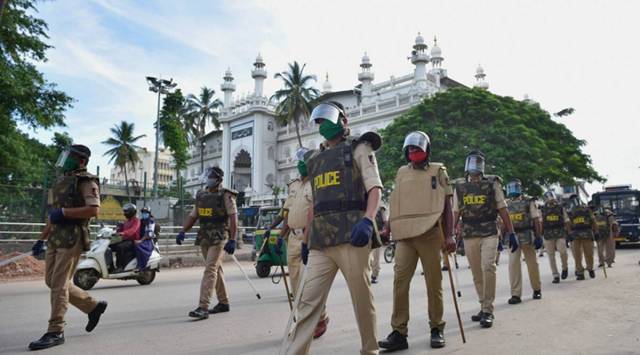 To finance his purchases totalling Rs 48 lakh, the techie borrowed Rs 17 lakh from his wife and parents, took a loan of Rs 20 lakh from HDFC Bank, and borrowed Rs 10 lakh from a friend, according to the FIR. (Representational Photo)
On February 6 this year, two unidentified men on a scooter snatched an iPhone 11 from Shruti Kharge, the wife of former Karnataka IT minister and Congress leader Priyank Kharge, when she was on a morning walk at around 6.45 am in the posh Sadashivanagar locality of Bengaluru.
Within a month of the robbery, the local police arrested two people and recovered the stolen phone. The arrested men were part of a gang involved in street robberies, the police discovered.
Rising incidents of phone snatching in the city have set off alarm bells for the Bengaluru police, who have started taking what was once considered a petty crime seriously.
The city police, however, are focusing on catching the culprits rather than blocking the International Mobile Equipment Identity (IMEI) of the stolen phones, a standard procedure now being followed by the Delhi police.
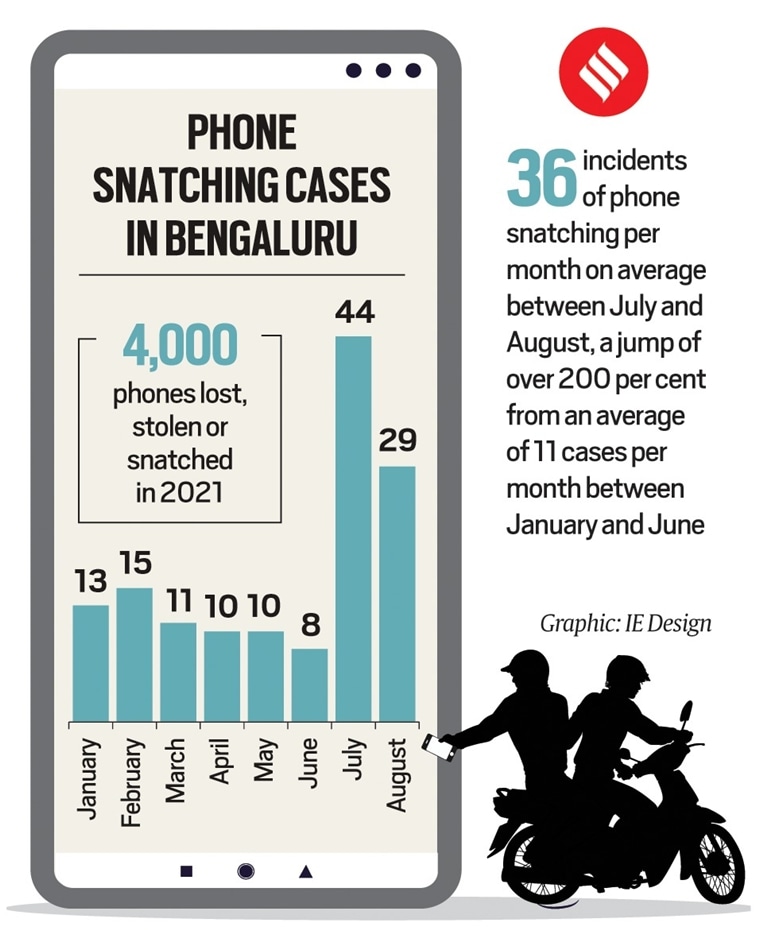
Police data reveals that, on an average, 36 incidents of phone snatching per month were reported across Bengaluru between July and August, a jump of over 200 percent from an average of 11 cases per month between January and June.
The Bengaluru police say that the surge in the number of cases is because phone snatching incidents are no longer classified under the ‘e-lost’ category, which does not reflect in the city’s crime records, but registered as a serious crime of robbery under section 392 of the Indian Penal Code.
No quick fix: Why blocking IMEI will not help
Unlike their counterparts in Delhi, the Bengaluru police have decided against introducing an automated system to render stolen or lost mobile phones unusable by blocking their IMEI.
The Delhi police, with the help of the Department of Telecommunications, introduced the IMEI blocking system two months ago to gradually squeeze the demand for stolen phones and deter snatchers.
Incidentally, the Bengaluru police also have a similar mechanism in place, developed with the help of Centre for Development of Telematics, but it is yet to be put to use.
“We are not introducing the IMEI blocking system in Bengaluru. We will study the effectiveness of the system in Delhi and decide. One of the issues is that stolen phones are not always reused. Often, they are dismantled, and the parts sold separately,” Bengaluru police commissioner CH Prathap Reddy said, adding that the central government has also been planning to introduce the system in all states.
Senior police officers said they were concerned that the IMEI blocking system, instead of serving as a deterrent to phone snatchers, will induce a culture of complacency with cases of phone robbery being ignored as a serious crime by the police.
“Often, the high-end phones are not snatched for resale but for harvesting their parts. An iPhone camera and touchscreen will fetch a lot of money in the second-hand market. Blocking the IMEI could work in curbing the crime to some extent, but won’t be very effective overall,” a senior Bengaluru police officer said.
According to senior police officers, a centralized system where police receive alerts if a stolen phone is used at any location in the country would work better in recovering phones and preventing robberies compared to an IMEI-blocking system.
From snatching to recovery: Restoring citizens’ faith
Police sources told The Indian Express that reports of around 4,000 phones being lost, stolen or snatched were received across police stations in Bengaluru in 2021, with the majority of cases registered under the ‘e-lost’ category.
“After the new police commissioner took charge in May, an internal order was issued in June to register all cases of phone snatching as robberies. Since July, we have been reopening old cases registered under the e-lost category and classifying them as robbery cases if the complaint mentions snatching. The number of cases of phone snatching remains the same in the city but the spike is due to the new classification,’” a police officer said.
A senior police officer said that phone snatching was categorized as a serious offence because it tends to sow fear among people regarding their safety on the streets.
“The recovery of a victim’s phone must remain a key objective of the police. This would instill confidence and trust among citizens regarding their safety on the streets. Instead of blocking a stolen phone, we would prefer a pan-India system where the IMEI numbers of all stolen phones are collected, and alerts issued when the phone is activated. This would reduce recovery efforts,” the officer said.
Phone snatching has replaced chain snatching as one of the major street crimes in Bengaluru.
In July, the Central Crime Branch unit of the Bengaluru police announced the seizure of 512 phones worth Rs 78.84 lakh following the arrest of a gang of snatchers.
“The gang had seven to eight members and was involved in phone robberies across Bengaluru. The phones were being sold off for as little as Rs 2, 000 to agents, who would resell the devices later in Mumbai, Delhi and Hyderabad,” a CCB police officer had said after the recovery was announced.
In September, the west division of the Bengaluru police announced the recovery of 928 phones following a month-long operation that led to the arrest of 108 people.

 5 min read