5 min read


© The Indian Express Pvt Ltd



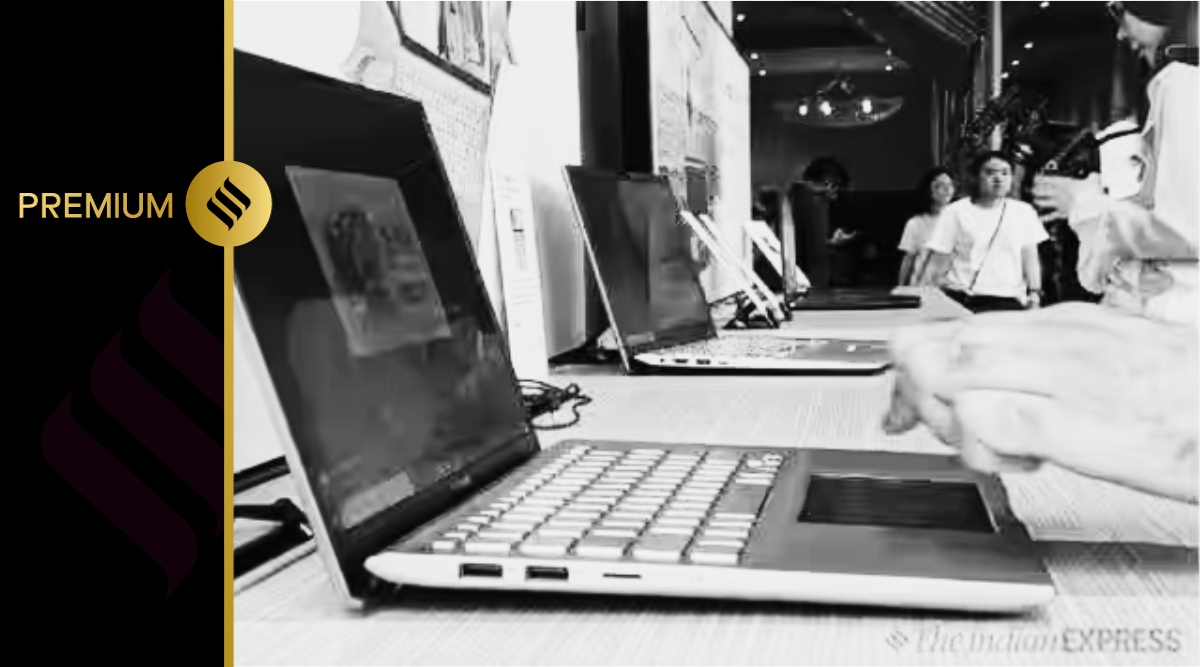 India has seen an increase in imports of electronic goods and laptops/ computers in the last few years. During April-June this year, the import of electronic goods increased to $6.96 billion from $4.73 billion in the year-ago period, with a share of 4-7 per cent in overall imports. (File Photo)
The Union government may delay import restrictions on laptops and personal computers till November 2024, potentially providing major relief to IT hardware companies that had been seeking time of one to two years before the curbs kicked in, The Indian Express has learnt.
A month back, the government had attempted to impose a licensing requirement on these imports but was forced to delay the directive’s implementation till October 31 after strong pushback from the industry.
But the latest relief will likely come with a few conditions, it is learnt.
The import limitation will be dependent on companies registering on a government portal, called the import management system, where they will have to share how many laptops and computers are being imported.
The second — and more important — condition is that the extension to companies will be given on account of them reorienting their supplies from “trusted sources”.
The Indian Express was first to report that the government was working on a proposal that IT hardware such as laptops, personal computers and servers could only be imported from “trusted geographies”, a move aimed at curbing imports from China amid a deepening rift between New Delhi and Beijing.
Companies, however, are learnt to have sought time to figure out new sources for importing laptops and computers, given that most of them are currently doing so from China. The year-long relaxation is set to be given to soften the blow for when the curbs kick in.
During a meeting chaired Friday by Minister of State for Electronics and IT Rajeev Chandrasekhar, companies including Dell, HP and Apple were told that the import allowance could also be linked to companies’ domestic production numbers, a senior government official said. The official requested anonymity since the talks are currently private.
“The IT companies’ imports will be offset based on how much they manufacture in India,” the official said. “So if they manufacture more here, their quota of imports could be higher.”
The official clarified that the government will take overall electronics manufacturing into account, since companies like Apple and Samsung have not shown an interest in locally manufacturing laptops, but do manufacture smartphones in the country.
“There is a provision that the companies can ask for additional imports if they are from a trusted source,” the official said.
When contacted, Chandrasekhar told The Indian Express: “We have repeatedly met the big IT hardware companies over the last month and have quelled any misgivings they may have had about the import restriction notification. All that is in the past. Now, we are moving towards a new regime to re-architect supply chains to meet Indian demand”.
India has seen an increase in imports of electronic goods and laptops/computers in the last few years. During April-June this year, the import of electronic goods increased to $6.96 billion from $4.73 billion in the year-ago period, with a share of 4-7 per cent in overall imports.
The highest share of imports is in the category of personal computers, including laptops and palmtops, under which imports from China stood at $558.36 million in April-May this year as against $618.26 million in the year-ago period. China accounts for roughly 70-80 per cent of the share of India’s imports of personal computers, laptops.
Last month, as the window for the Centre’s production-linked incentive (PLI) scheme closed, 40 companies — including Dell, HP, Asus, Acer and Lenovo — applied to participate in the programme to manufacture laptops, computers and servers in India. Apple and Samsung opted to skip it.
The Centre had more than doubled the IT Hardware PLI in May to Rs 17,000 crore after it was first cleared in 2021 with an outlay of Rs 7,350 crore. The first version of the scheme was a laggard, with only two companies — Dell and Bhagwati — managing to meet first year (fiscal year 2022) targets and the industry calling for a renewed scheme with increased budgetary outlay.