6 min read


© The Indian Express Pvt Ltd



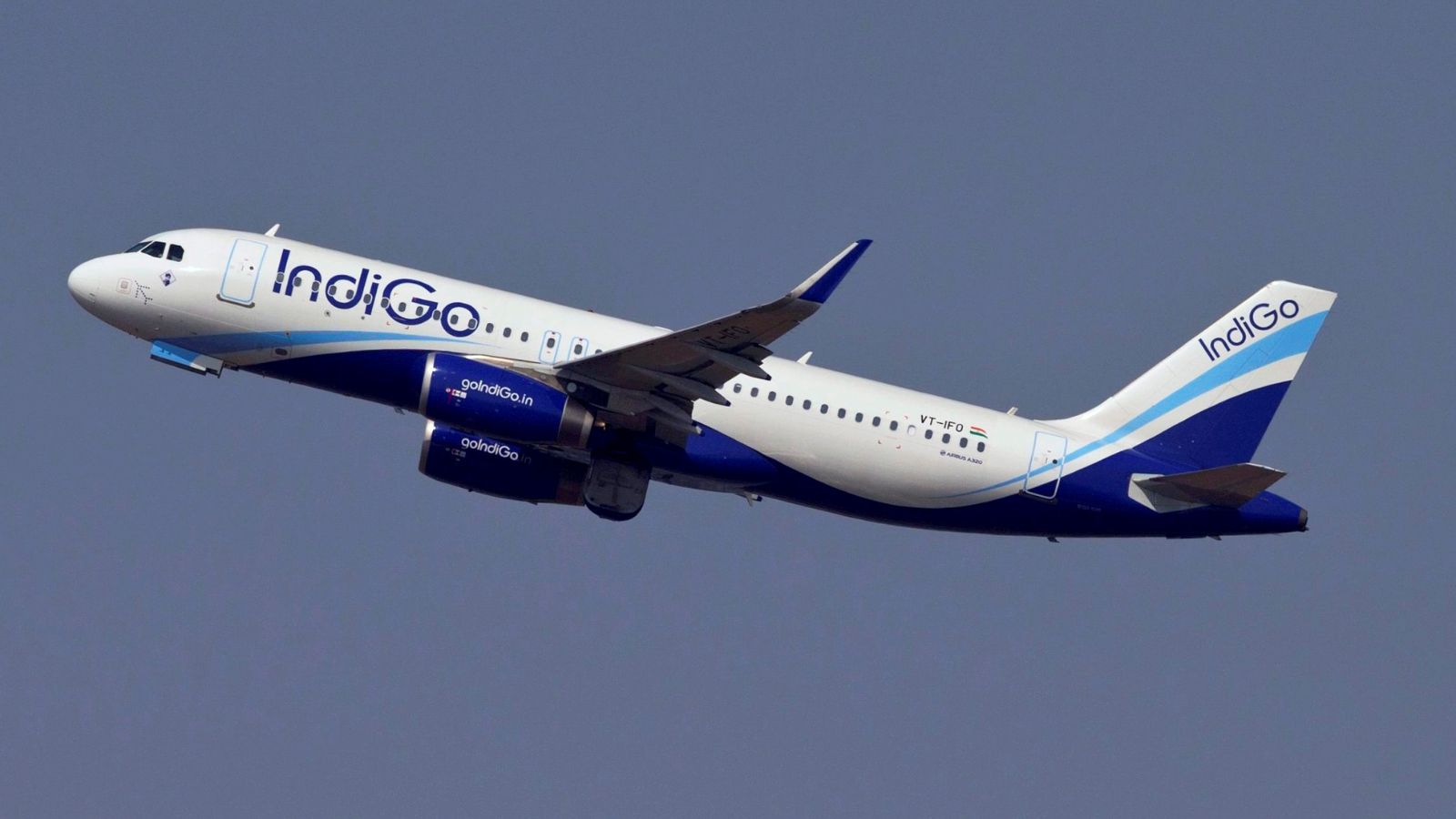 The airline acknowledged being impacted by flight delays and cancellations in recent days, saying that they were due to various reasons including “technology issues, airport congestion, and operational requirements”. (File Photo)
The country’s largest airline IndiGo has been hit with flight disruptions over the past few days due to a combination of factors—primarily crew shortage being faced by the carrier following the implementation of new crew rest and duty norms. With the scale of disruption worsening on Tuesday and Wednesday with widespread delays and numerous cancellations across the IndiGo network, the airline has decided to initiate “calibrated adjustments” to its schedule. Apart from crew shortages, some technology-related issues and congestion at airports has added to the cascading delays and flight cancellations, according to the airline.
While IndiGo did not elaborate on the calibrated adjustments, which will be in place for 48 hours, sources indicated that it would involve rescheduling and cancellation of some flights to stabilise operations in line with crew availability. Over 150 IndiGo flights are estimated to have been cancelled so far on Wednesday, with many more facing long delays at airports across India. Social media was replete with IndiGo passengers expressing their frustration at long delays and cancellations.
Taking cognizance of the issue, aviation regulator Directorate General of Civil Aviation (DGCA) said that it is investigating the flight disruptions at IndiGo, and has asked the airline to present the “facts leading to the current situation” and submit mitigation plans.
“A multitude of unforeseen operational challenges including minor technology glitches, schedule changes linked to the winter season, adverse weather conditions, increased congestion in the aviation system and the implementation of updated crew rostering rules (Flight Duty Time Limitations) had a negative compounding impact on our operations in a way that was not feasible to be anticipated,” IndiGo said in a statement on Wednesday.
“To contain the disruption and restore stability, we have initiated calibrated adjustments to our schedules. These measures will remain in place for the next 48 hours and will allow us to normalize our operations and progressively recover our punctuality across the network. Our teams are working around the clock to ease customer discomfort and ensure operations stabilize as quickly as possible. Furthermore, the affected customers are being offered alternate travel arrangements to reach their destinations or refunds, as applicable,” the airline added.
The disruptions are evident from the airline’s on-time performance (OTP) data—merely 35 per cent of the IndiGo flights operated on time on Tuesday, while the figure was around 50 per cent on Monday, as per the Ministry of Civil Aviation. IndiGo’s OTP typically used to be upwards of 80 per cent prior to the second phase of the new FDTL norms taking effect in November. IndiGo’s 35 per cent OTP for Tuesday compares to Air India’s 67.2 per cent, Air India Express’s 79.5 per cent, Akasa Air’s 73.2 per cent, and SpiceJet’s 82.5 per cent.
To be sure, none of the other airlines match IndiGo in the scale of operations, with the carrier having a dominant domestic market share of over 60 per cent. With its fleet of over 400 aircraft, the airline operates over 2,300 flights a day, connecting over 90 domestic and 45 international destinations.
A narrow-body aircraft like the Airbus A320—which forms the bulk of IndiGo’s fleet—usually operates multiple flights a day. This means that delays and cancellations can quickly cascade. The situation becomes worse and more complicated if flight crews reach their duty hour caps, in which case, the airline has to scramble to find a replacement crew to operate the flight. A champion of the low-cost carrier model, IndiGo’s aircraft and crew utilisation levels are higher than other Indian carriers. The airline also has more high-volume night-time flights than other carriers, which helps it keep its aircraft use high and efficient. This, combined with the size and scale of IndiGo’s operations, have made the airline a lot more susceptible to FDTL-related disruptions that other Indian airlines.
The new flight duty time limitation (FDTL) norms, under which the weekly rest period for pilots has been increased to 48 hours from 36 and night landings have been limited to two from six earlier, are learnt to have impacted IndiGo’s crew rostering significantly. The new norms have also extended the night hours by an hour, which has also imposed additional constraints on operations.
The new FDTL norms, which were initially planned to be implemented from march 2024, had been opposed by IndiGo and other Indian airlines, and the rollout was delayed. The airlines’ primary argument was that the new norms would require them to increase crew strength considerably, and therefore, they wanted the implementation to be done in a step-by-step manner over an extended period. However, the new norms were implemented this year by the Directorate General of Civil Aviation (DGCA) following a direction from the Delhi High Court. They were implemented in two phases—from July and November. The nearly 67 per cent cut in permitted night landings for the flight crew, which took effect last month, has hit IndiGo harder than other airlines, sources indicated.
Pilot associations blamed IndiGo for the disruptions, saying that the airline was ill-prepared for the new FDTL rules despite having sufficient notice. Airline Pilots’ Association of India (ALPA) said the flight disruptions reflected a failure of proactive resource planning by dominant airlines, adding that there could be an effort to pressurise the DGCA to dilute the new norms.
The Federation of Indian Pilots (FIP) said that that the disruption is a direct consequence of IndiGo’s “prolonged and unorthodox lean manpower strategy across departments, particularly in flight operations”. It also claimed that there are growing concerns that the flight delays and cancellations may be used to “arm-twist regulators” whenever rules do not suit the airlines.