4 min read

© The Indian Express Pvt Ltd



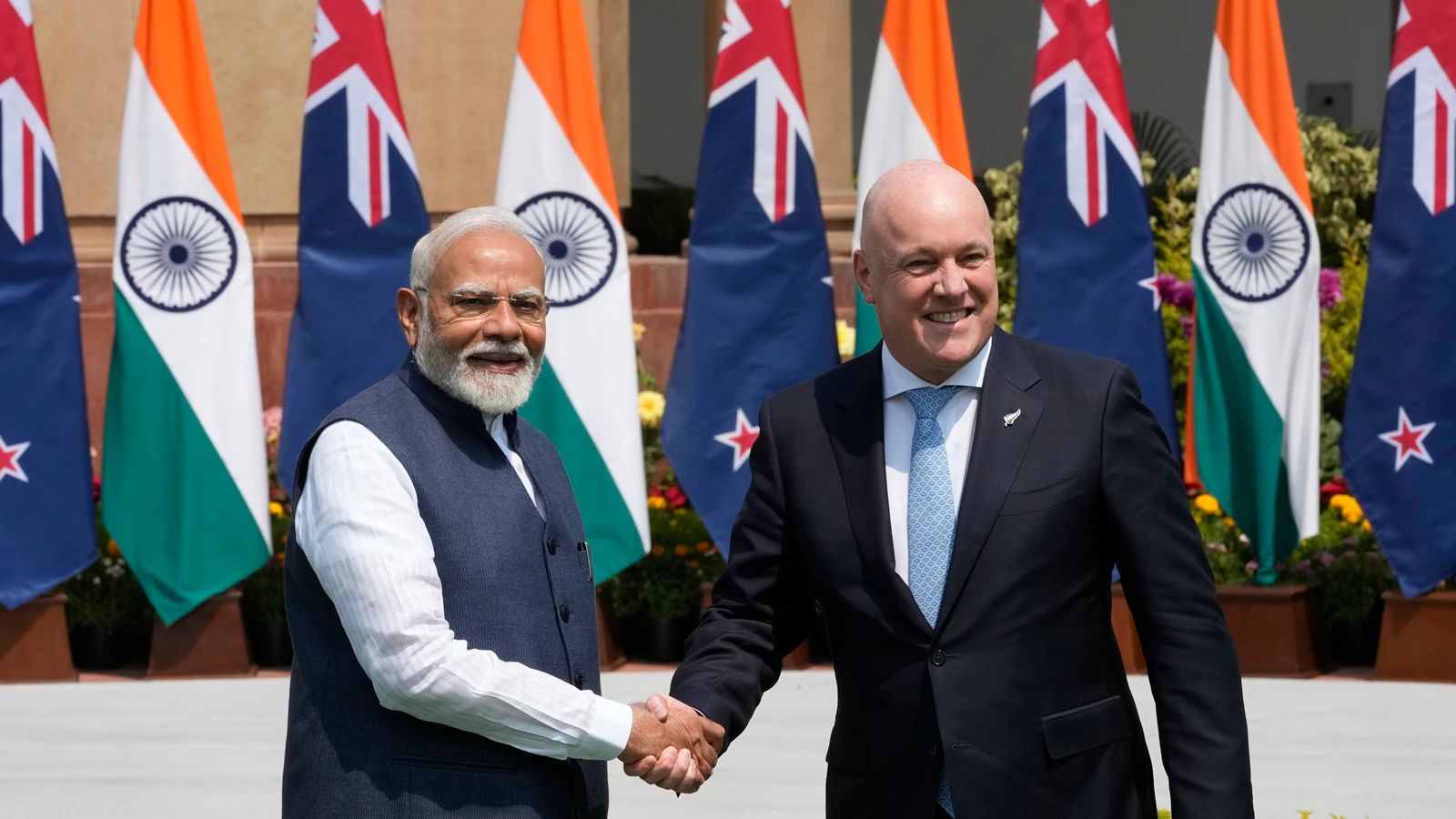 New Zealand has "committed” $20 billion investments into India over the next fifteen years in exchange for receiving market access in a high-tariff
 India on Monday concluded free trade agreement (FTA) negotiations with New Zealand amid high US tariffs that have caused investment uncertainty and resulted in cancelled orders from India’s largest export destination. The New Zealand deal, when signed, would be India’s second FTA after the Oman, coming in the backdrop of 50 per cent US tariffs and is the third deal this year as India pushes for export diversification.
Details released by the government showed that while India has agreed to reduce tariffs on 95 per cent of the exports from New Zealand, Wellington would eliminate tariffs on 100 per cent of its tariff lines for all Indian exports. However, average tariffs in New Zealand are one of the lowest in the world, in the range of 2-3 per cent, and elimination alone may not result in immediate export growth.
Bringing some parity into the deal, New Zealand has “committed” $20 billion investments into India over the next fifteen years in exchange for receiving market access in a high-tariff (over 15 per cent) and fast-growing Indian consumer market. The lopsided nature of the tariff rates could result in higher gains for New Zealand than for India in goods trade.
India and New Zealand have little bilateral trade, standing barely at $1.3 billion in 2024–25. Commerce Minister Piyush Goyal said: “This FTA opens doors for Indian businesses in the region through well-integrated directional exports and gives our youth choices to learn, work and grow on a global stage”.
Commerce Secretary, Rajesh Agrawal, said: “India’s strengths are expanding exports, supporting labour-intensive growth and power services. New Zealand gains deeper, more predictable access to India’s large and growing economy. The movement of people, students, professionals, and skilled workers converges these strengths.
The Commerce and Industry Ministry said that apart from tariff liberalisation, the FTA includes provisions to address non-tariff barriers through enhanced regulatory cooperation, transparency, and streamlined customs, Sanitary and Phyto-sanitary (SPS) measures and Technical Barriers to Trade disciplines.
“All systemic facilitations and fast-track mechanisms for imports that serve as inputs for our manufactured exports ensure that tariff concessions translate into effective and meaningful market access,” the Ministry said.
The ministry said that cooperation has been agreed in AYUSH, culture, fisheries, tourism, forestry, horticulture and traditional knowledge systems. The FTA promotes India’s AYUSH systems internationally, encourages medical value travel, and positions India as a global wellness hub, it added.
“Tariff asymmetry has shaped the deal. New Zealand’s average import tariff is just 2.3 per cent, compared with India’s 16.2 per cent, and 58.3 per cent of New Zealand’s tariff lines are already duty-free. As a result, Indian exporters already enjoy wide access in New Zealand markets,” former trade officer and founder of think tank GTRI, Ajay Srivastava said.
Srivastava said that an FTA alone is unlikely to unlock the full potential of India–New Zealand economic ties, as trade volumes remain modest. Business groups on both sides say the pact must be backed by practical steps to deepen commercial links. New Zealand could expand dairy and horticulture exports to India even at MFN tariffs, while India could scale up exports of pharmaceuticals, textiles and IT services to New Zealand, he said.
“For India, the agreement strengthens access to a high-income, rules-based Pacific market and supports its broader Indo-Pacific economic strategy. For New Zealand, the deal offers more secure entry into one of the world’s fastest-growing large economies at a time of rising global trade uncertainty. New Zealand could expand dairy and horticulture exports to India even at MFN tariffs, while India could scale up exports of pharmaceuticals, textiles and IT services to New Zealand. Wellington could also diversify by growing education, tourism and aviation training services for Indian students and professionals,” Srivastava said.