5 min read


© The Indian Express Pvt Ltd



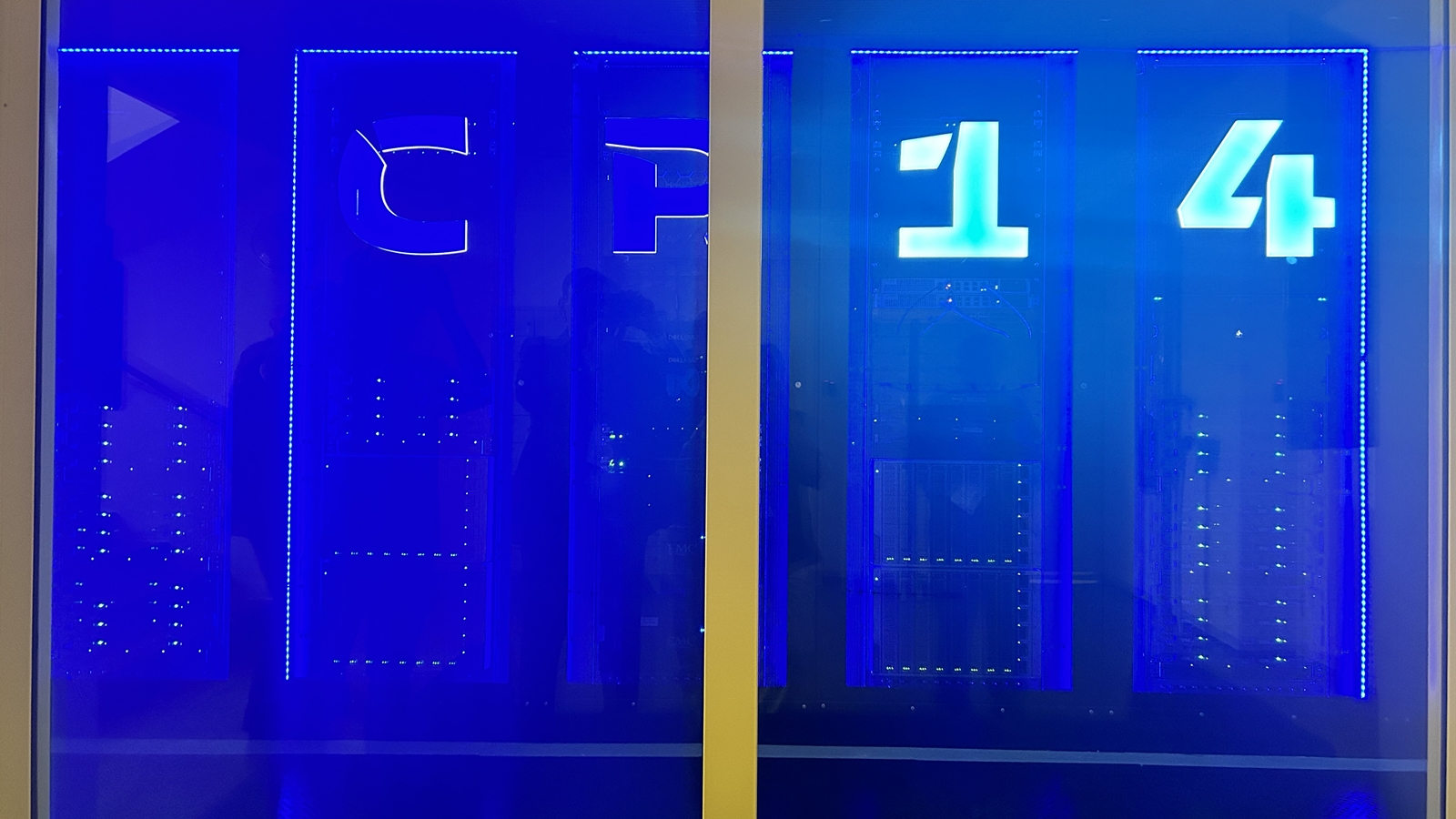 A server farm of CR14 (Cyber Range 14), which is a foundation established by the Estonian Ministry of Defence, whose responsibility is to offer and develop cybersecurity training. (File Photo)
Estonia, one of the world’s most advanced digital countries, is looking to partner with India to collaborate on strengthening the two countries’ cybersecurity infrastructure, multiple officials from the Baltic country’s government said.
Estonia, courtesy its vicinity to Russia, faces a barrage of cyberattacks from the country, more so because of the former’s stance on the war between Russia and Ukraine. India, meanwhile, faces a similar threat from its neighbour China.
“We are keen to work with India and to conduct cyber exercises here. Globally, there is a rise in cyber attacks and Estonia is also facing attacks from hackers,” Jonatan Vseviov, secretary general, Ministry of Foreign Affairs, told a delegation of Indian journalists. He also highlighted areas like digital services and education systems as potential areas for collaboration between the countries.
Estonia, with a population of about 1.3 million, was a former member of the Soviet Union, and faced one of the largest cyberattacks on its digital infrastructure in 2007 by means of a distributed denial of service (DDoD) attack. At the time, the attack took place in the backdrop of riots by ethnic Russian Estonians, prompted by the removal of a Soviet war memorial from the centre of the country’s capital, Tallinn.
Since the war between Russia and Ukraine, the country has experienced similar threats from Russian actors, government officials said. Government officials in India have previously said that New Delhi faces much of a similar challenge from Beijing, where a group of independent, and state-backed actors have increased attacks on critical infrastructure in New Delhi. China’s army of hackers is part of the country’s information warfare apparatus and its aim is to access information and primarily hold it as ransomware, said Mart Noorma, director of the North Atlantic Treaty Organisation (NATO) Cooperative Cyber Defence Centre of Excellence, told reporters. Ransomware attacks are where a cyber-actor gains access to sensitive information of an entity and encrypts, with the condition of decrypting the data only after receiving a payment.
The NATO (CCDCOE) is a NATO-accredited knowledge hub, which was established in 2008, and offers an interdisciplinary approach to the most relevant issues in cyber defence. It has a group of international experts from the military, government, academia and industry from 39 countries.
Noorma said: “We wholeheartedly welcome like-minded democratic nations like India to join us. This will help in cyber knowledge and exchanging methods to address cyber-attacks. The cooperation will help a large-scale coalition through research, training, and exercises.”
The ties between Estonia and India are increasingly growing. An Indian contingent was, for the first time, observers in an NATO-run cyber security exercise in Estonia last month. The exercise was the largest of its kind in Europe, Tiit Riisalo, Estonian economic affairs and information technology minister, said. It involved 32 NATO countries and a handful of invitees.
Although, it is worth noting that the Estonian security establishment does not view favourably the fact that India has become one of the largest purchasers of Russian oil since the war began. The Indian Express had earlier reported that India’s Russian oil imports climbed to a 10-month high in May as low Russian refinery capacity use due to Ukrainian drone strikes made more of Moscow’s oil available for the export market.
Estonian defence minister, Hanno Pevkur, said that the northern European country and India have worked together on cybersecurity issues previously and could further that collaboration not just from government engagements, but by involving the two nations’ private sector as well.
The Estonian Secretary General Vseviov said that European countries are keen to diversify their bases in various industries over concerns emanating from over-reliance on specific countries, especially those with authoritarian regimes. In this context, Estonian officials highlighted, India could emerge as a potential partner for Europe and Estonia, despite the significant population and size differences between the countries. Courtesy of its NATO membership, Estonia has also become a crucial market for a number of Indian start-ups in the defence space as well.
There’s another key similarity between Estonia and India – both the countries possess a ubiquitous national identity system, e-ID in the former, and Aadhaar in the latter, which are tied to a number of government services. In fact, in the early days of Aadhaar, when the system was being worked upon, Indian officials had closely studied Estonia’s system, a former official at the Unique Identity Authority of India (UIDAI),said.